

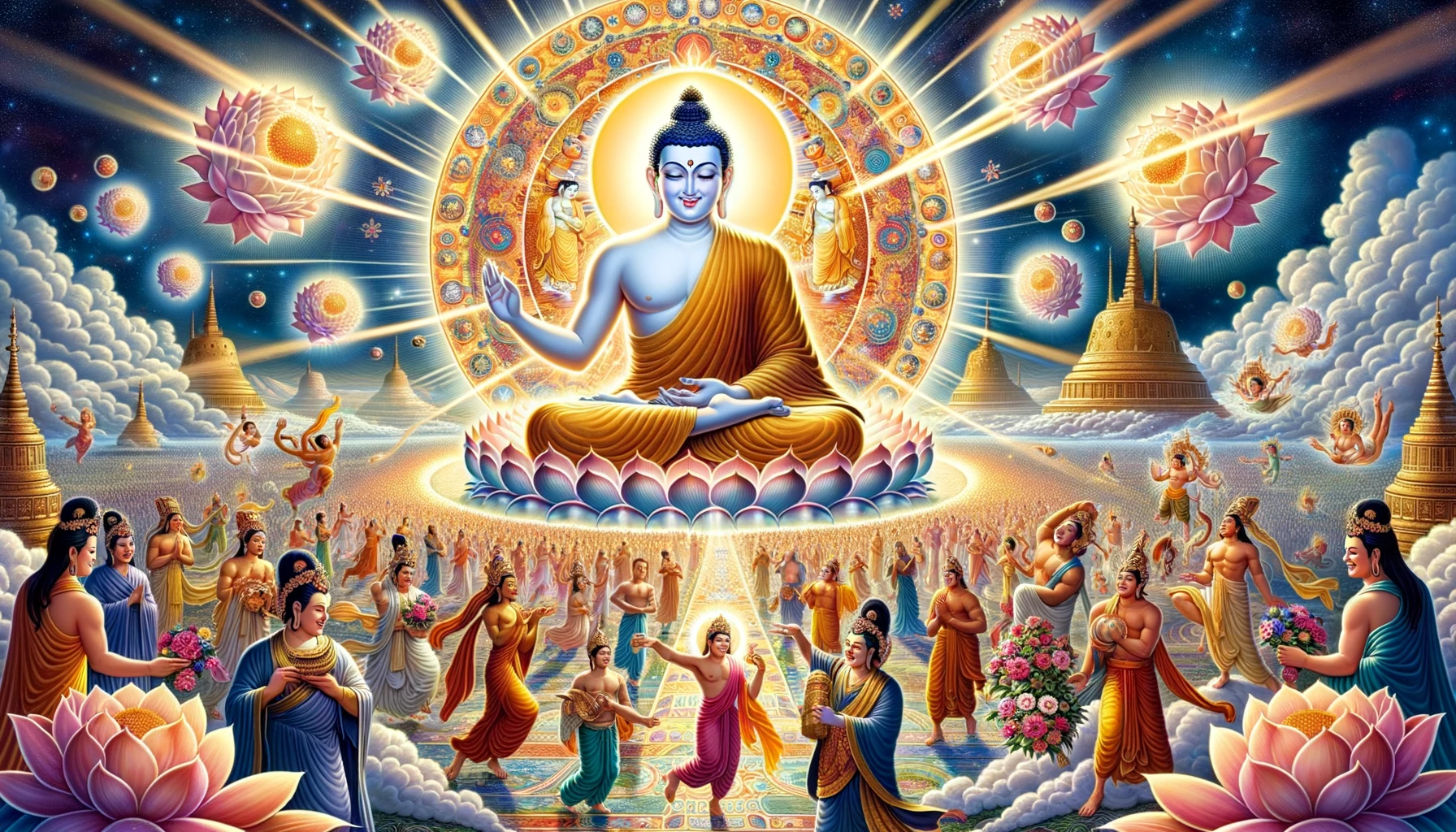
The entire cosmos seemed to join in this glorious celebration, commemorating the auspicious occasion when the Buddha, like the sun rising on the horizon of enlightenment, began to expound the profound truths of the Dharma. It was a moment of profound significance, igniting the path of liberation for countless beings.
As the verses echoed through space, the spirits of all present were uplifted, and they were filled with renewed inspiration to follow the path of wisdom and compassion, just as the Tathagata exemplified. This historic event became a guiding light, illuminating the way for generations to come, inspiring them to embark on the noble journey towards awakening and ultimate liberation.
Then Sariputta, full of conviction, addressed the Lord, saying, “O Master, my doubts are now gone, and uncertainty has fled, for I have heard from you about my destiny to attain supreme enlightenment. However, there are twelve hundred self-disciplined disciples whom you have placed on the stage of Saikshas. They were instructed with these words: ‘The essence of my teachings, dear monks, lies in liberation from birth, aging, illness, and death, inseparably linked with Nirvana.’
Yet, the two thousand monks, your disciples, both those still in training and the adept ones, all of them free from false views about the soul, existence, and cessation of existence—truly, they are free from all false notions. They had come to believe they had attained Nirvana, but upon hearing this new teaching from you, O Lord, they’ve become uncertain and troubled. Thus, I implore you to address these monks, to allay their unease and dispel their doubts, so that all four classes of your audience may find relief from perplexity.”

In response to Sariputta’s speech, the Lord said, “Didn’t I already tell you, Sariputta, that the Tathagata and others teach the Dharma using skillful means, adapting their approach, explanations, and fundamental concepts to suit the diverse dispositions and inclinations of all living beings? The purpose of all these teachings is none other than to lead beings towards supreme and perfect enlightenment, inspiring them to embark on the path of the Bodhisattva.

However, to explain this further, let me share a parable with you. Parables are a powerful way to convey meaning, and those with discerning minds will easily grasp the essence of the teachings presented in this form.”
Imagine this scenario, Sariputta: In a certain village or town, there lived an elderly, wealthy householder. He was advanced in years, and his mansion, a grand and spacious place, had been standing for ages, hosting hundreds of residents. The house, with only one door and a thatched roof, showed signs of wear and tear—the terraces were unstable, pillars decaying, and the walls’ coverings and plaster were loose.
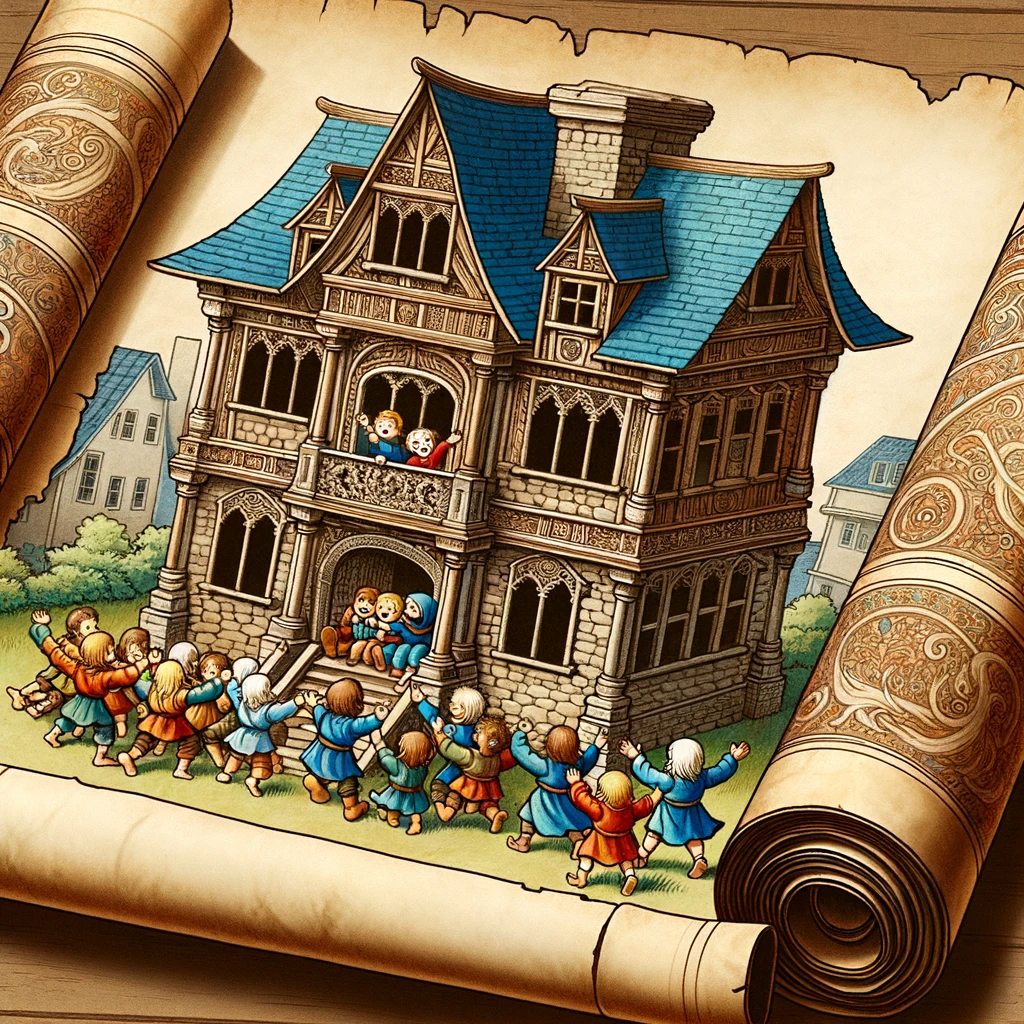
Unexpectedly, a massive fire broke out, engulfing the entire house from all sides. The flames spread rapidly, and the old householder managed to escape, leaving behind his cherished home. Now, let’s say this man had several young children—perhaps five, ten, or even twenty—all still inside the burning house when he fled.
Now, Sariputta, in that moment, the man witnessed his house engulfed in flames all around, and fear, worry, and anxiety gripped his heart. He realized that he could swiftly and safely escape through the door, avoiding the scorching fire. However, his beloved children, still inside the burning house, were completely unaware of the danger. Oblivious to the raging fire, they were engrossed in their games and amusements, not perceiving the imminent peril.

Despite the intense heat and the pain it caused, they seemed undisturbed, not even considering the idea of fleeing to safety.
Now, Sariputta, this man, being strong with mighty arms, thought to himself, “I have the strength to save my little ones from this perilous situation. Let me gather them close to my chest and lead them out of the burning house to safety.” However, as he contemplated further, he realized that the house had only one exit, and the door was shut. Knowing how playful, fickle, and inexperienced his children were, he feared that they might get lost or injured in the midst of the raging fire. Therefore, he decided to warn them.
He called out to his children, “Come, my beloved ones! The house is on fire; hurry and leave, or you’ll get burnt and face terrible consequences!” Unfortunately, the children, lacking awareness and understanding, didn’t pay heed to their caring father’s words. Untroubled and unaware of the danger, they remained unafraid, showing no concern. They didn’t comprehend the gravity of the situation or the meaning of “burning.” Instead, they aimlessly ran around, oblivious to the urgency of the situation, occasionally glancing at their father, all because of their innocence and lack of knowledge.
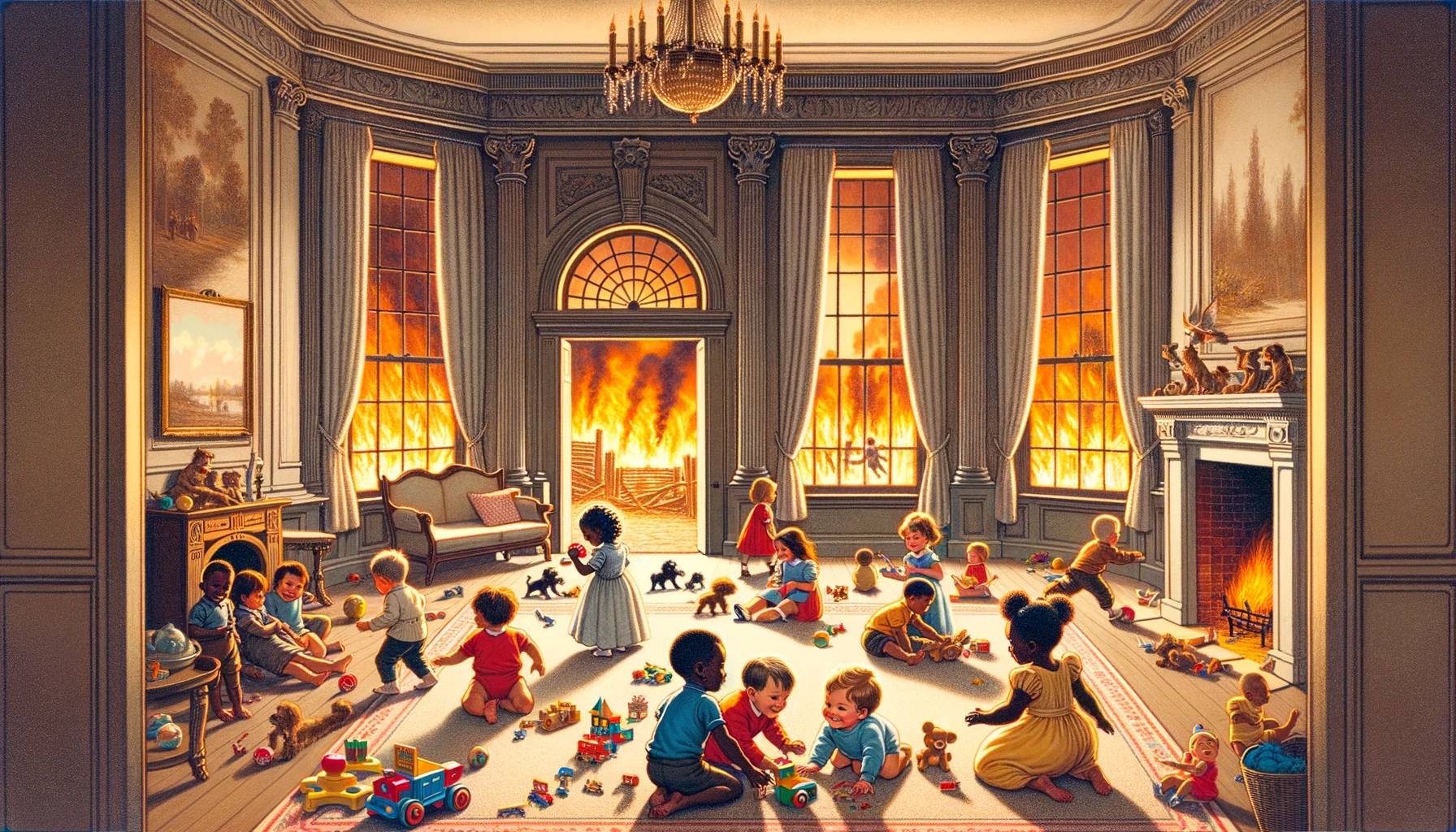
Then the man realizes the gravity of the situation – the house is engulfed in flames, and both he and his children are in danger. He knows that immediate action is necessary to ensure their safety. Being familiar with his children’s personalities and preferences, he comes up with a clever plan to get them out of the house.
He knows that his children have a multitude of toys that they cherish and enjoy. These toys are delightful, and friendly, and hold sentimental value for them. The man decides to use this knowledge to his advantage. He calls out to his children, “Hey, my dear ones! All your favorite toys – the ones you love and treasure, like bullock carts, goat carts, and deer carts – I’ve placed them right outside the house for you to play with! Come on, let’s go outside, and I’ll give each of you exactly what you desire. Hurry! Leave the house now, and your toys will be waiting for you!”
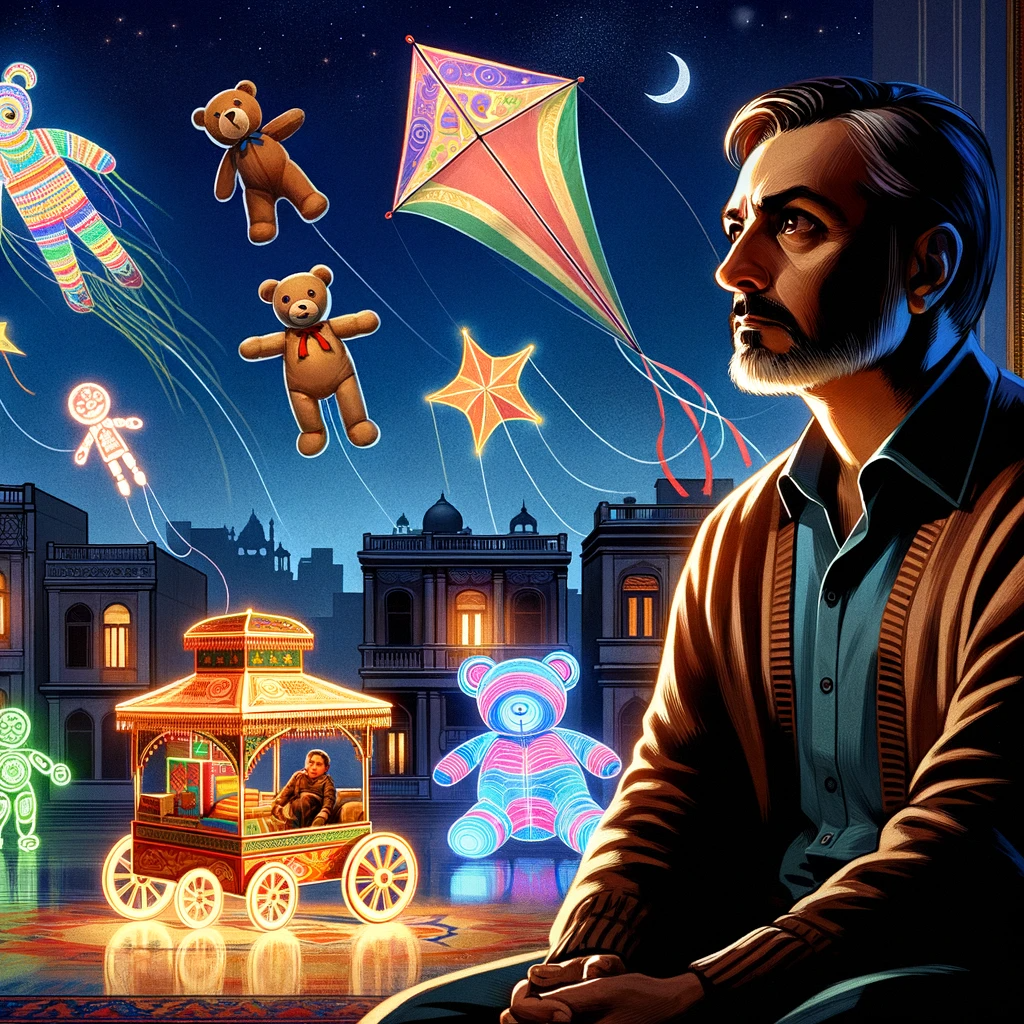
Upon hearing about the playthings they adore, the children are excited and eager to get their hands on them. The toys they longed for are just within reach, and they can’t wait any longer. With great enthusiasm and a competitive spirit, they rush out of the burning house, each one striving to be the first to reach their beloved toys, pushing each other playfully and shouting, “Who will be the first to get there?”

After making sure that his children are safe and out of harm’s way, the man sits down in relief at the village square, feeling joyful and at ease, free from worries and obstacles. His children come up to him and excitedly ask, “Dad, can we have those awesome toys to play with – the bullock carts, goat carts, and deer carts?” Then, with a big smile, the man grants his children’s wish.

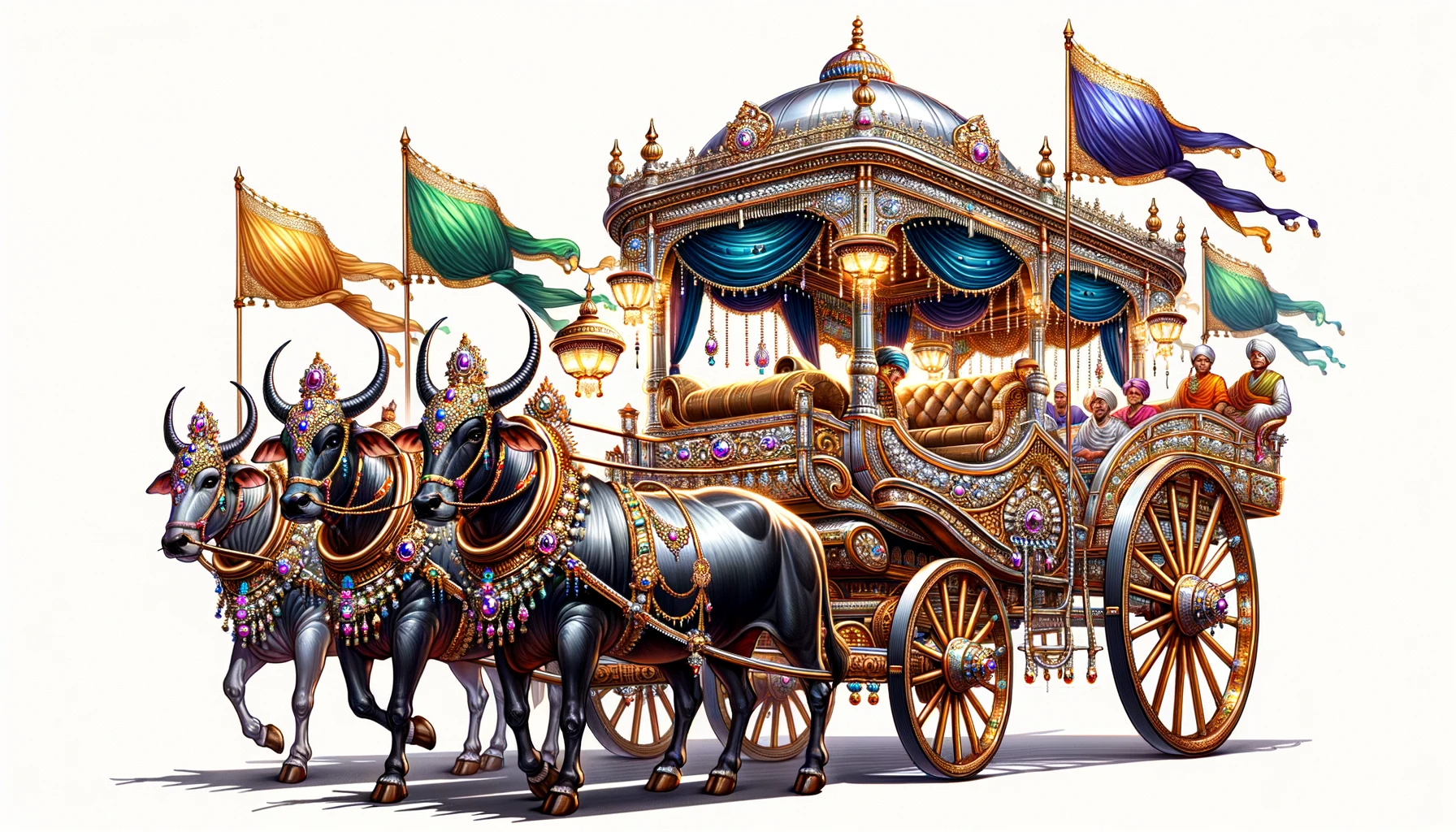
He presents them with bullock carts made of precious materials, adorned with beautiful jewels, and fitted with soft cushions and cozy mattresses. The bullock carts are pulled by swift and elegant bullocks, led by a team of attendants. Each child receives several of these splendid bullock carts, all alike, each one designed with flags, and they are as fast as the wind. The man is wealthy, owning numerous treasures and abundant resources. He believes in treating all his children equally and generously, so he gives them the best vehicles without any bias. He reasons, “Why should I give them inferior carts when I have such magnificent ones? I have plenty, and I should treat all my children alike, even more so because they are my own.”
The children are overjoyed and amazed as they climb aboard these extraordinary vehicles. Now, Sariputta, what do you think? Has the man been dishonest by initially mentioning three types of vehicles and then gifting the most magnificent and grand ones instead?
Sariputta replied, “Absolutely not, Lord! Absolutely not, Sugata! The man cannot be labeled as a liar because his intention was only to skillfully convince his children to leave the burning house and save themselves. Moreover, not only did they escape unharmed, but they also received all those wonderful toys. Even if the man hadn’t given a single cart, he still wouldn’t have been dishonest, as his main aim was to find a clever way to rescue the children from their intense suffering. In this case, he wouldn’t have been guilty of falsehood, and now, with his abundance of treasures and driven solely by love for his children, he gives equal and magnificent vehicles to each of them, coaxing them to safety. That man, Lord, is not a liar.”
The venerable Sariputta spoke, and the Lord replied, “You’re absolutely right, Sariputta, that’s exactly how it is. The Tathagata, and so forth, is completely free from all dangers, misfortune, despair, suffering, grief, and the thick fog of ignorance. The Tathagata, equipped with Buddha knowledge, unwavering resolve, extraordinary abilities, and mighty magical powers, is like a compassionate and merciful father to the world. He appears in this world, which is like a decaying house engulfed in misery, to rescue beings trapped in the cycle of affection, hatred, and delusion, bound by birth, old age, disease, death, and various forms of suffering.
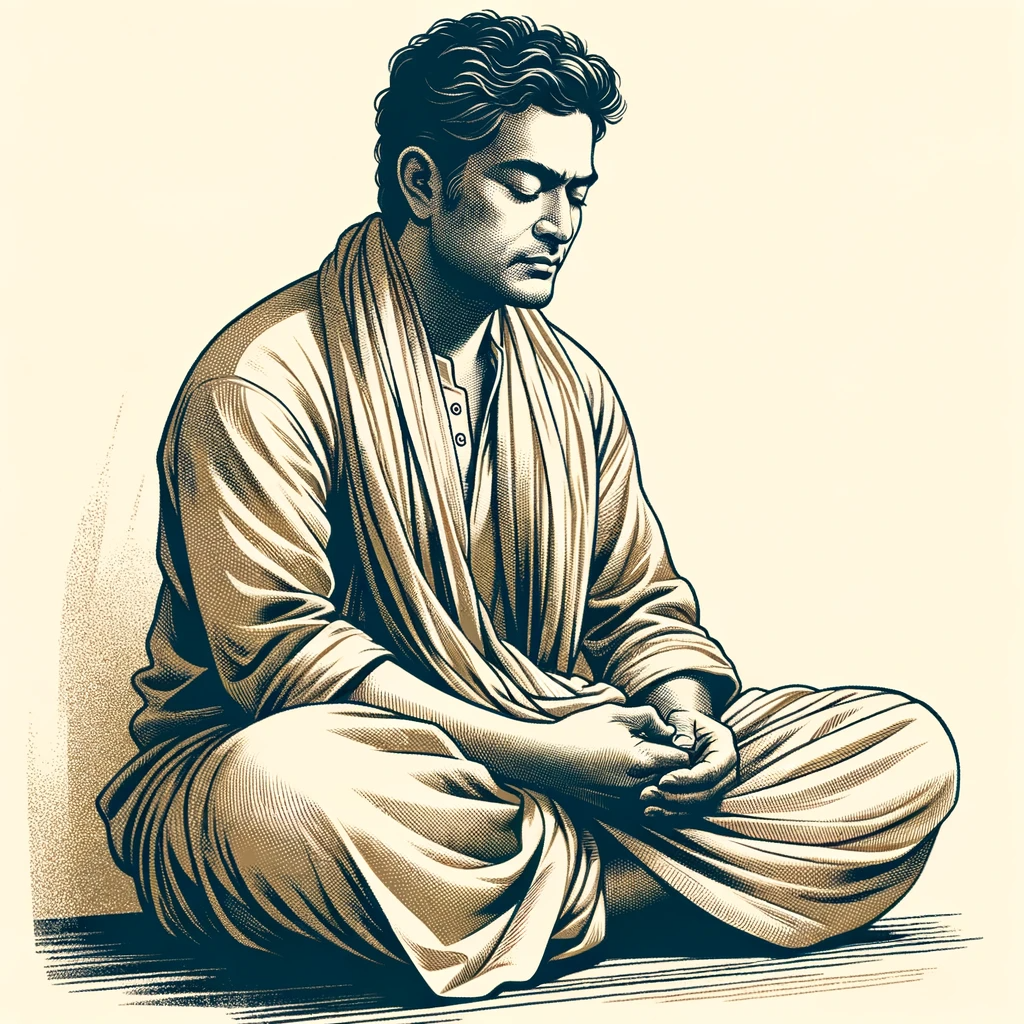
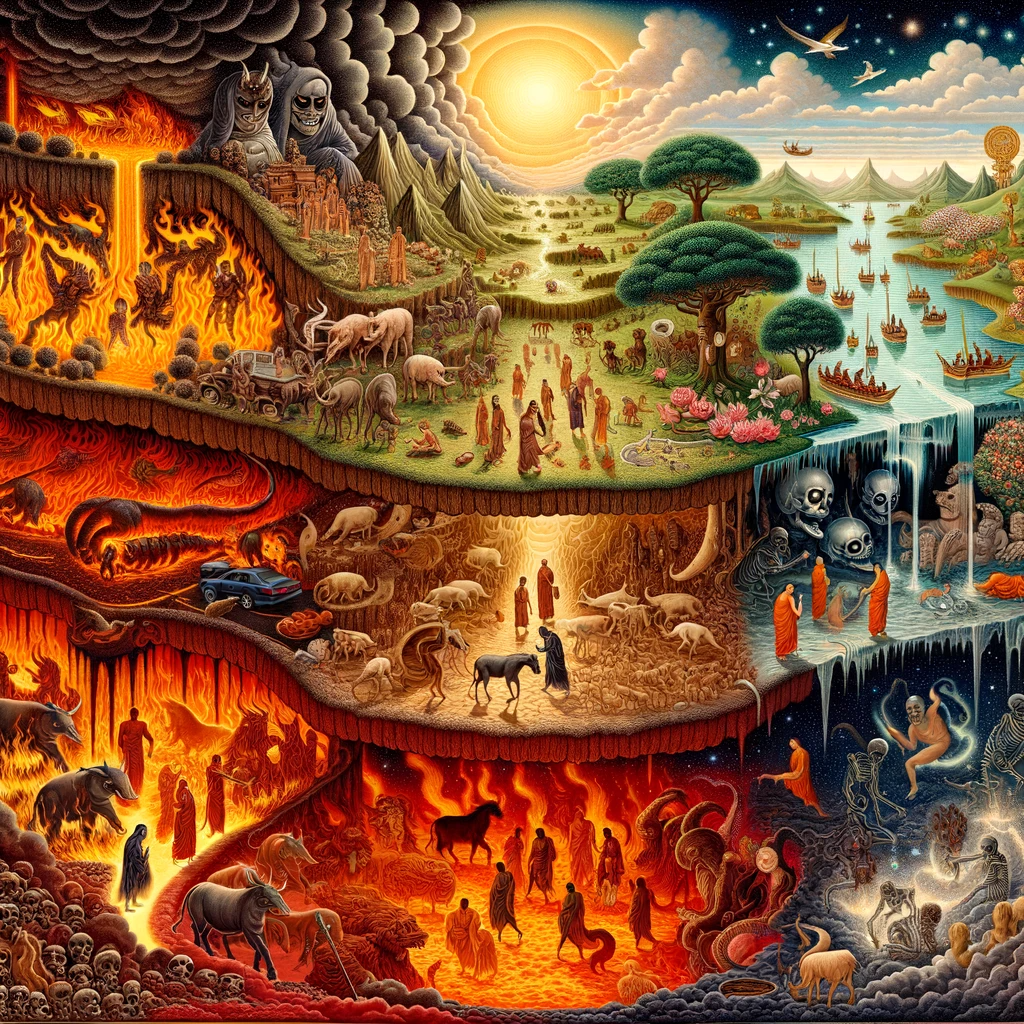
Seeing the suffering and distress caused by the cycle of existence, the Tathagata seeks to awaken beings to supreme enlightenment. He observes how beings are tormented by birth, old age, disease, and death, and how their desires lead them to experience various forms of pain and suffering. He knows that their pursuit of pleasures and worldly possessions will result in future sufferings, whether in hell, as animals, or in the realm of Yama.
Despite being caught in this cycle of suffering, beings continue to indulge in worldly pursuits without fear or concern. They are unaware of the need to escape from this suffering, and they fail to see the importance of seeking liberation from their troubles.”
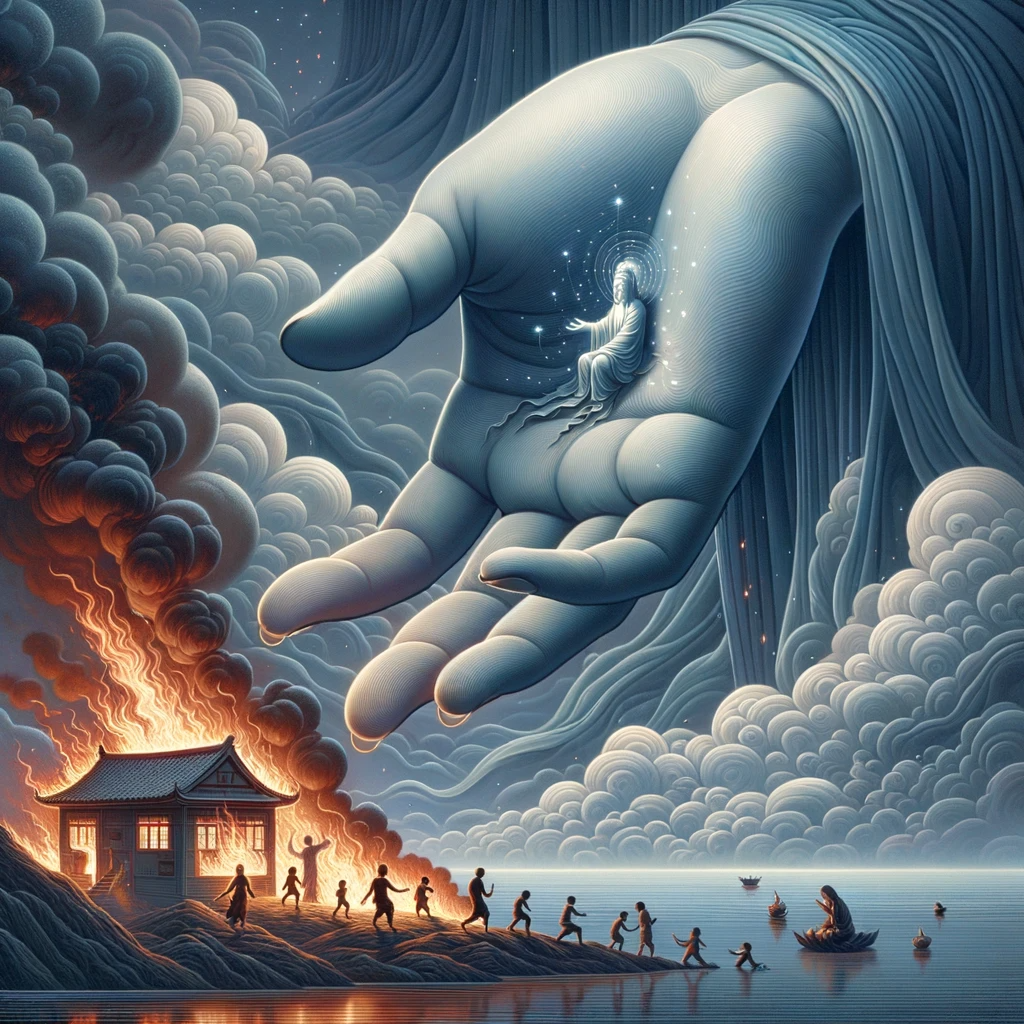
In such a situation, Sariputta, the Tathagata contemplates: “Truly, I am like a caring father to these beings. I must rescue them from this cycle of suffering and offer them the profound and unimaginable bliss of Buddha knowledge, where they can find solace, play, and delight.”
Then, Sariputta, the Tathagata further reflects: “If I were to reveal my knowledge, abilities, and unwavering resolve as the Tathagata without using skillful means, these beings would not be able to escape. They are deeply attached to sensory pleasures and worldly enjoyments. They are bound by the cycles of birth, old age, disease, death, grief, and pain, suffering from distress and turmoil. How can they ever come to know the profound wisdom of the Buddha if they are still caught up in the burning house of the triple world, with its fragile shelter and roof ablaze?”
Now, Sariputta, just like that strong man who skillfully coaxes his children out of the burning house without using his physical strength and later rewards them with magnificent, splendid carts, the Tathagata, the Arhat, possessing supreme knowledge and unwavering resolve, attracts beings out of the triple world, which resembles a burning house with a decaying roof and shelter. Using his profound wisdom and able devices, he presents three paths to them: the path of disciples, the path of Hermit Buddhas, and the path of Bodhisattvas.
Through these three paths, he allures beings and speaks to them like this: “Don’t find joy in this triple world, which is like a burning house, with its sorrowful forms, sounds, smells, tastes, and touches. Delighting in this world, you’ll be consumed by the thirst for sensory pleasures. Instead, seek refuge in the three paths: the path of disciples, the path of Hermit Buddhas, and the path of Bodhisattvas. I assure you, I will grant you access to these three paths. Strive to escape from this triple world.”
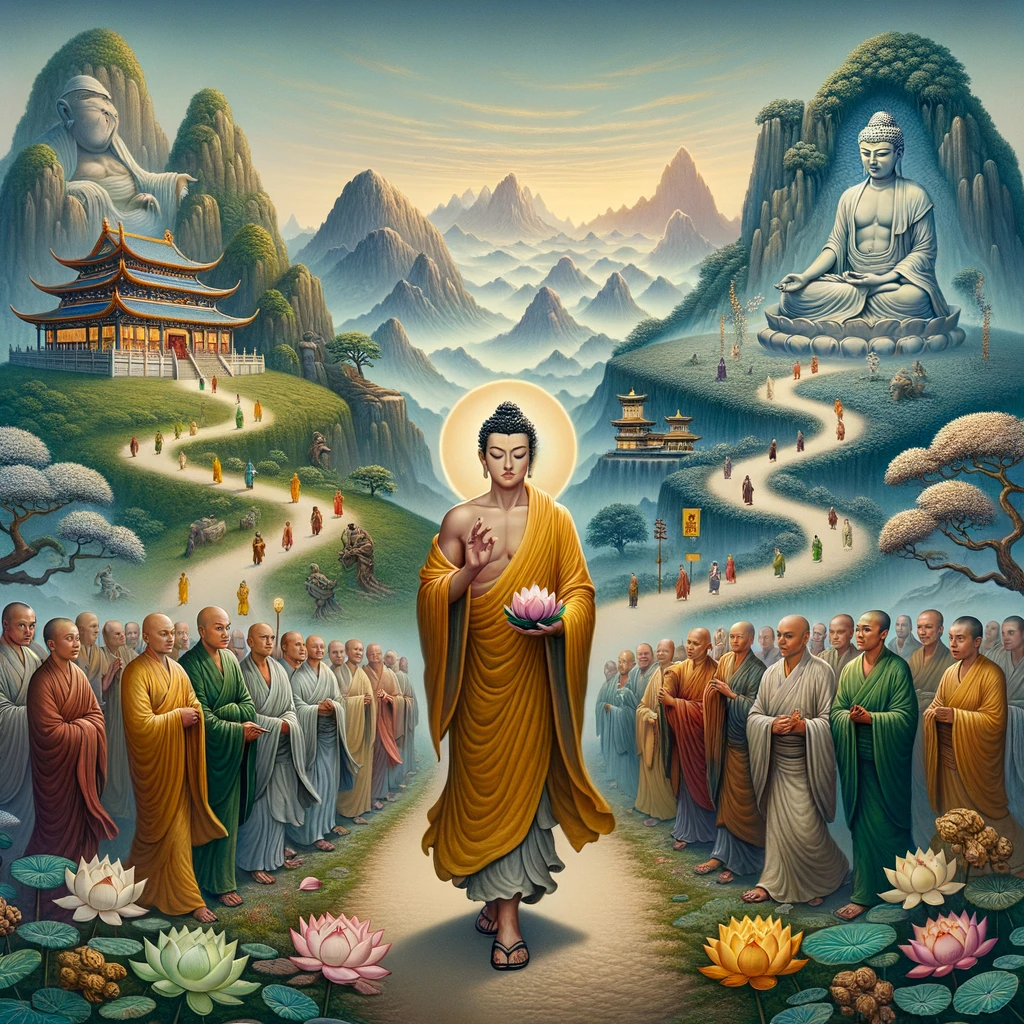
To attract them, the Tathagata says: “These paths are magnificent, praised by enlightened beings, and filled with delightful experiences. Embrace these paths and find true joy as you engage in noble practices. You’ll experience the immense delight of faculties, powers, elements of enlightenment, profound meditations, the eight stages of liberation, self-awareness, and the fruits of inner focus. Through these paths, you’ll attain great happiness and inner contentment.”
Now, Sariputta, wise beings have faith in the Tathagata, the compassionate father of all, and they diligently follow his teachings. Some among them, seeking guidance from a reliable source, devote themselves to the Tathagata’s commandments to understand the four noble truths, with the ultimate goal of attaining complete Nirvana. These seekers are like children who escape the burning house, aspiring to ride in a cart drawn by graceful deer.
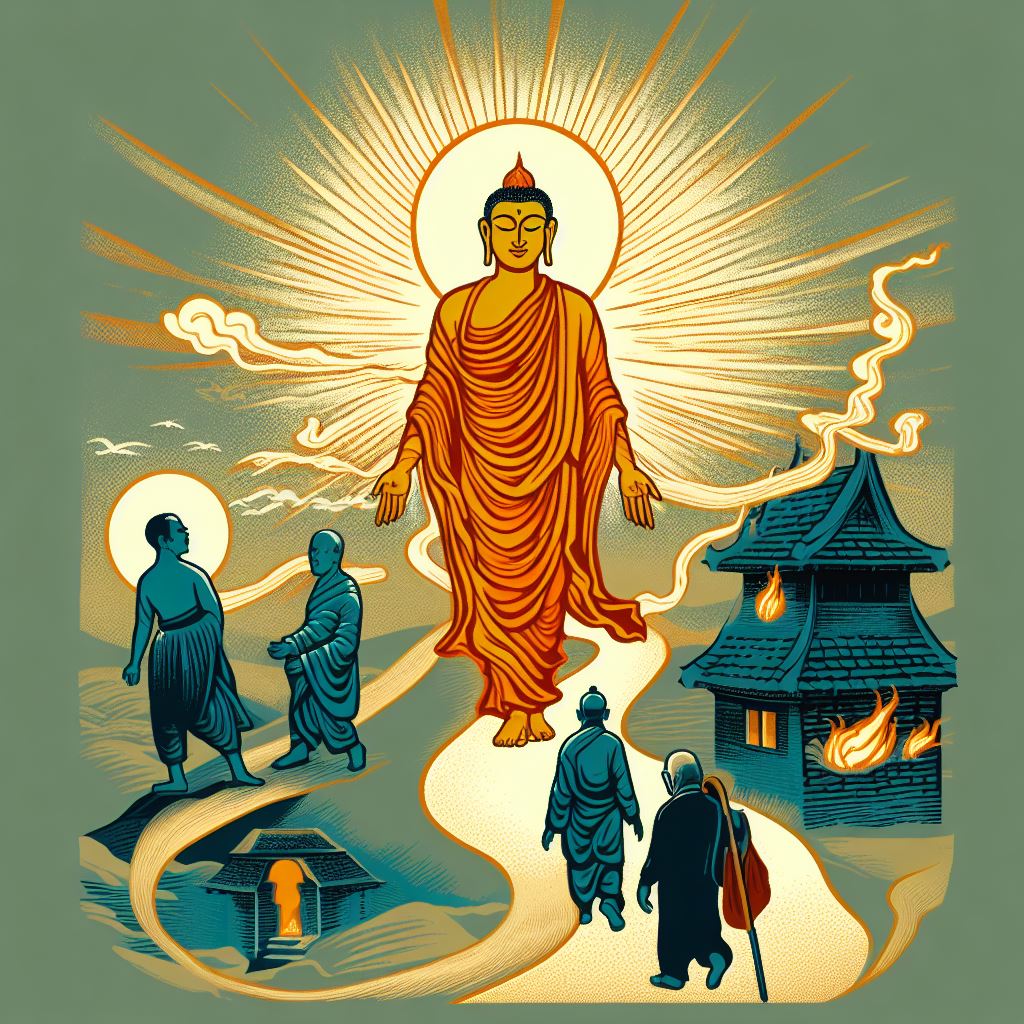
Others yearn for knowledge without dependency, seeking self-discipline and inner peace. They embrace the Tathagata’s teachings to understand the laws of cause and effect, working towards their own complete Nirvana. These seekers are like children who flee from the burning house, longing to ride in a cart drawn by swift goats.
Then there are those who desire the all-encompassing wisdom, the Buddha’s knowledge, the knowledge of the self-awakened one. They eagerly pursue the Tathagata’s teachings to comprehend the wisdom, powers, and unwavering resolve of the Tathagata, not just for their own benefit, but with compassion for the entire world—both gods and humans—for the sake of the well-being and happiness of all beings and to lead them to complete Nirvana. These noble ones are called Bodhisattvas Mahasattvas. They can be likened to the children who have escaped the burning house, aspiring to ride in a cart drawn by strong and powerful bullocks.
In the same way, Sariputta, just as that man, seeing his children safe and happy after escaping the burning house, knowing they are out of danger, and feeling the abundance of his wealth, decides to give them one grand and magnificent cart. Similarly, the Tathagata, the Arhat, and others, witnessing countless beings rescued from the troubles of the triple world, free from sorrow, fear, and calamity, having attained liberation through the guidance of the Tathagata, and reaching the blissful state of Nirvana, leads them all to full development through the Buddha-vehicle. Considering all beings as his own children and possessing vast knowledge, power, and unwavering resolve, the Tathagata does not teach different Nirvanas for each individual. Instead, he guides all beings to attain complete Nirvana, using the complete Nirvana of the Tathagata.
To these beings, the Tathagata offers the noblest gifts, akin to toys, for their enjoyment—a wealth of pleasures experienced by the wise Aryas. These include the joys of meditation, emancipation, self-concentration, and their profound results. All beings are given the same kind of precious gifts. Just as that man cannot be accused of falsehood for initially presenting the prospect of three vehicles and then granting all of them a magnificent, splendid cart made of seven precious substances, adorned with various ornaments—a singular and extraordinary vehicle—so too, the Tathagata, the Arhat, and others speak no falsehood when they skillfully present three vehicles and eventually lead all beings to complete Nirvana through the one great vehicle.
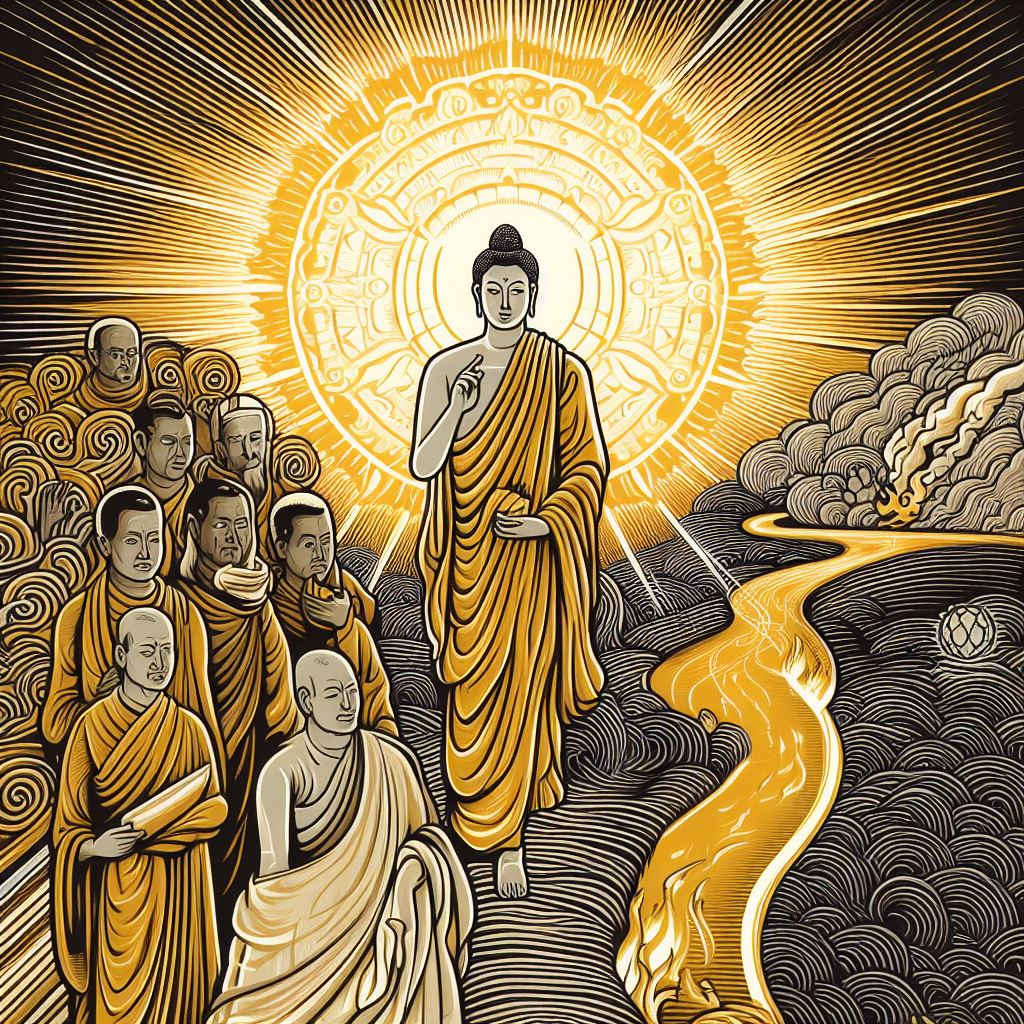
For the Tathagata, Sariputta, who possesses a vast treasure of knowledge and boundless powers, can impart the law connected with omniscient wisdom to all beings. Thus, one must understand how the Tathagata, through skillful means and guidance, reveals the one great vehicle as the ultimate path for all.
 Mr. Altig’s Overview of the Wonderful Dharma of the Lotus Sutra
Leave a comment