Mañjuśrī, a noble prince, asked the Lord: “It seems a tough task, Lord, very tough, what these Great Spiritual Seekers (Bodhisattvas Mahāsattvas) will attempt out of respect for You. How will they spread this Spiritual Teaching (Dharmaparyāya) in the future, at the end of time?”
The Lord replied to Mañjuśrī: “A Great Spiritual Seeker (Bodhisattva Mahāsattva), Mañjuśrī, who wants to spread this Spiritual Teaching at the end of time, must be grounded in four things. What are they? They must be strong in their conduct and their proper role. How? By being patient, humble, unaggressive, and not envious. They must not cling to any fixed rules but see the true nature of things, without debating or analyzing them. This is their conduct.
“And what is their proper role? They shouldn’t serve or seek favor from kings, princes, or other religious followers, nor people who are excessively fond of worldly things like literature. They shouldn’t associate with butchers, actors, wrestlers, or places of entertainment and fun, except to share spiritual teachings with them occasionally. They should also avoid monks, nuns, or followers of lesser spiritual paths, without losing opportunities to preach freely. This, Mañjuśrī, defines the proper role of a Great Spiritual Seeker.”
Again, Mañjuśrī, the Great Spiritual Seeker (Bodhisattva Mahāsattva) must act with discretion in his interactions with others, particularly women. He doesn’t seize every opportunity to preach to women, nor does he desire to see them often. He avoids frequent or overly friendly interactions with young women, whether unmarried or married. He also avoids excessive familiarity with those who don’t conform to traditional gender roles.
He doesn’t enter a house alone to receive alms, unless he’s mindful of the Enlightened One (Tathāgata) in his thoughts. And when he does preach to women, it’s without passionate attachment to the teachings or to the woman herself. He doesn’t show off his teeth when speaking or allow quick emotions to cross his face. He avoids unnecessary conversation with novices, nuns, monks, young boys, or girls, responding only when necessary and without overeagerness. This, Mañjuśrī, is considered the first proper sphere of a Great Spiritual Seeker.
Further, Mañjuśrī, a Great Spiritual Seeker (Bodhisattva Mahāsattva) views all laws and things as empty, recognizing them as they truly are: unchangeable, unmoving, and existing in the highest sense. They are like space, beyond ordinary explanation or expression, not born of complexity but simple and independent. They are seen as they are due to a misunderstanding of perception.
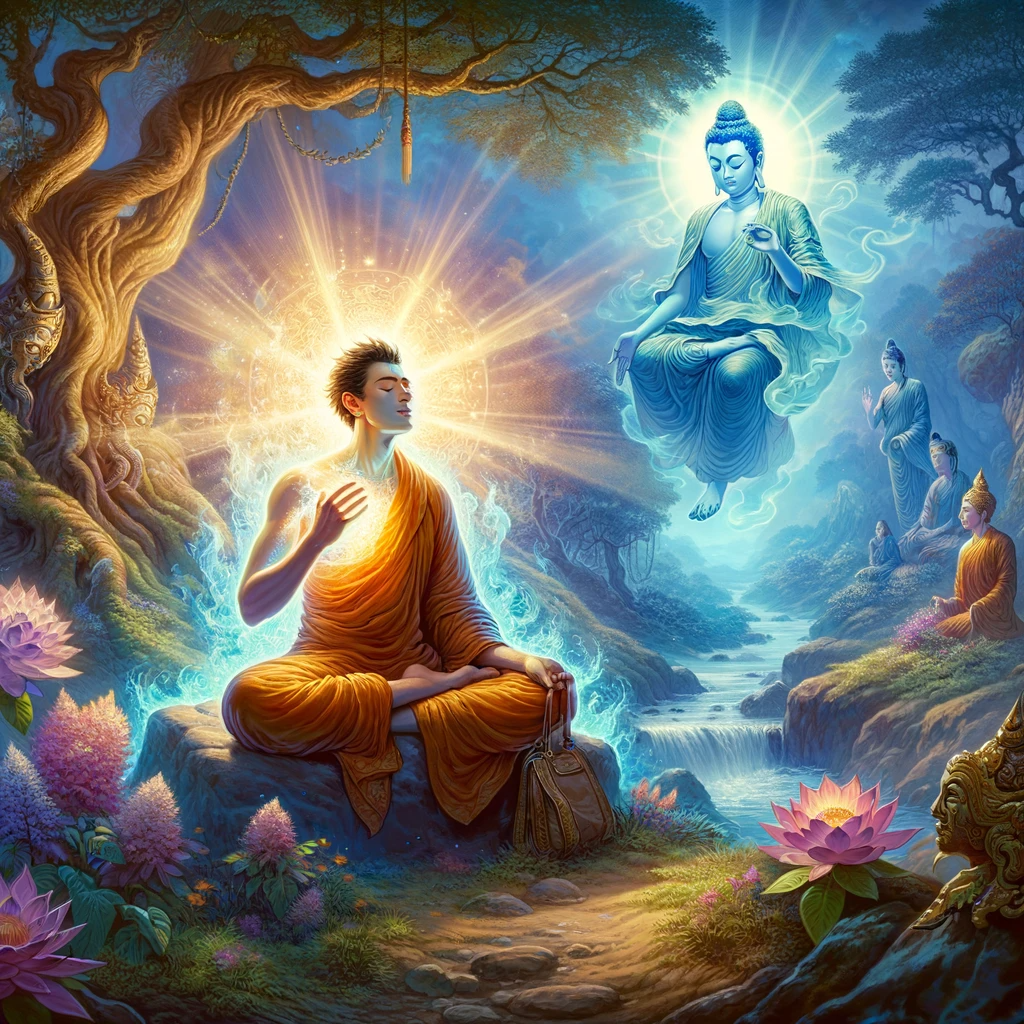
In this way, Mañjuśrī, the Great Spiritual Seeker continually sees all laws. If he stays on this path, he remains true to his spiritual role. This, Mañjuśrī, is the second proper sphere of a Great Spiritual Seeker.
 Mr. Altig’s Overview of the Wonderful Dharma of the Lotus Sutra
Leave a comment