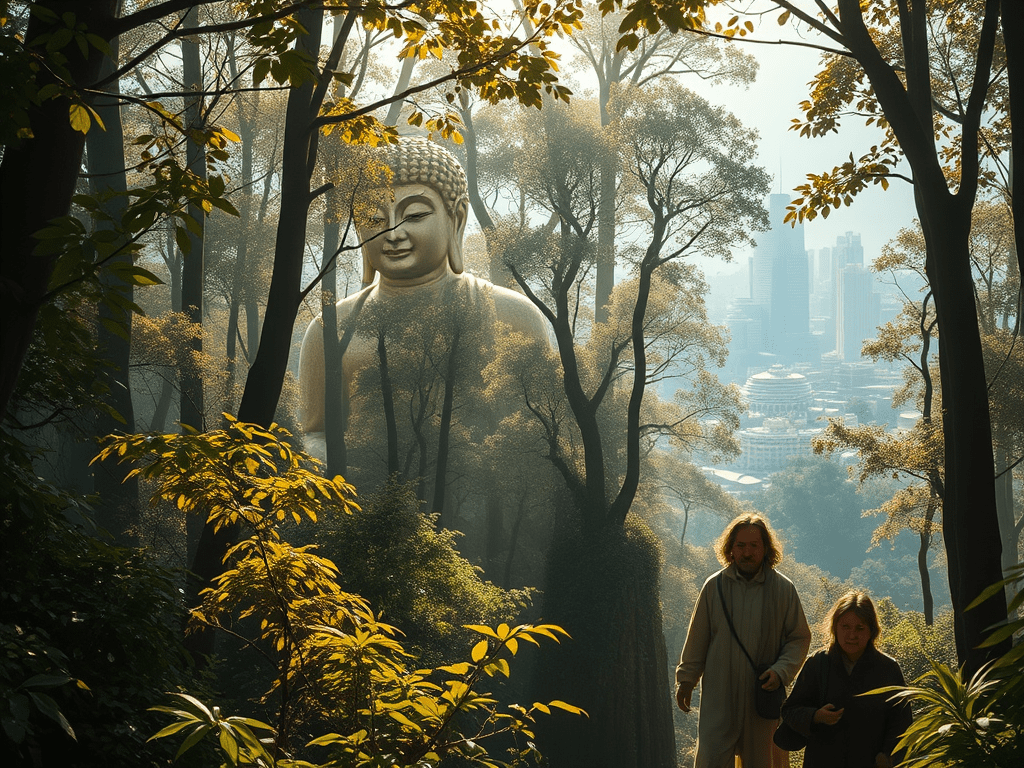

This document analyzes an excerpt from Chapter 7o of The Great Teachings of The Lotus of the True Law. Specifically from The Singular Path to Nirvana: The Tathagata’s Guiding Illusion in the Forest of Delusion. It focuses on the Tathagata’s (Buddha’s) compassionate use of “skillful means.” These are used to guide beings towards true enlightenment.
Main Theme: The excerpt uses a metaphor. It compares a guide leading travelers through a treacherous forest to the Buddha’s method of teaching. The central idea is that the Buddha understands the path to enlightenment is difficult. He employs strategic teachings. Sometimes he presents temporary destinations as the ultimate goal. This prevents discouragement and ensures continued progress.
Key Ideas and Facts:
- The Singular Path: The text emphasizes that there is only one true path to Nirvana. The journey is arduous. It can be overwhelming for those attached to worldly desires and pleasures.
- The Forest of Delusion: The forest represents the cycle of suffering (samsara). It is filled with temptations and distractions that hinder spiritual progress.
- The Guide and the City: The guide represents the Buddha. He creates an illusion of a city. This illusion provides weary travelers with a sense of accomplishment. It also offers them rest. This city symbolizes the two stages of Nirvana: the stage of the disciples and that of the Hermit Buddhas.
- Skillful Means: The creation of the illusory city is an example of the Buddha’s “skillful means.” The presentation of two stages of Nirvana illustrates this approach as well. It is a compassionate approach to teaching. This method adapts to the capabilities and understanding of his audience.
- Temporary Respite: The two stages of Nirvana are presented as rest stops, not the ultimate destination. The Buddha uses them to encourage practitioners. He prevents them from turning back due to the perceived difficulty of the true path.
Important Quotes:
- “In this world, monks, there is no second path, no second Nirvana, and certainly not a third.” This statement underscores the singularity of the path to true enlightenment.
- The guide is clever and compassionate. He realizes that it would be a shame for them to miss out on the magnificent Island of Jewels. So, to help them, he conjures up an illusion of a bustling city in the middle of the forest. This illustrates the Buddha’s compassion and his willingness to employ unconventional methods to ensure his followers reach their ultimate goal.
- “Indeed, monks, the way the Tathagatas teach is skillful. They interpret three different vehicles (or paths) to guide you.” This shows that the Buddha’s different teachings and paths are tailored. They fit the specific needs and capacities of individuals.
Conclusion:
The excerpt emphasizes that the path to true enlightenment is singular and challenging. The Buddha, as a compassionate guide, employs skillful means. These means support and encourage practitioners along the way. The concept of two stages of Nirvana serves as temporary resting points. This concept emphasizes the importance of recognizing the true goal. Practitioners must continue the journey until complete liberation is attained.
 Mr. Altig’s Overview of the Wonderful Dharma of the Lotus Sutra
Leave a comment