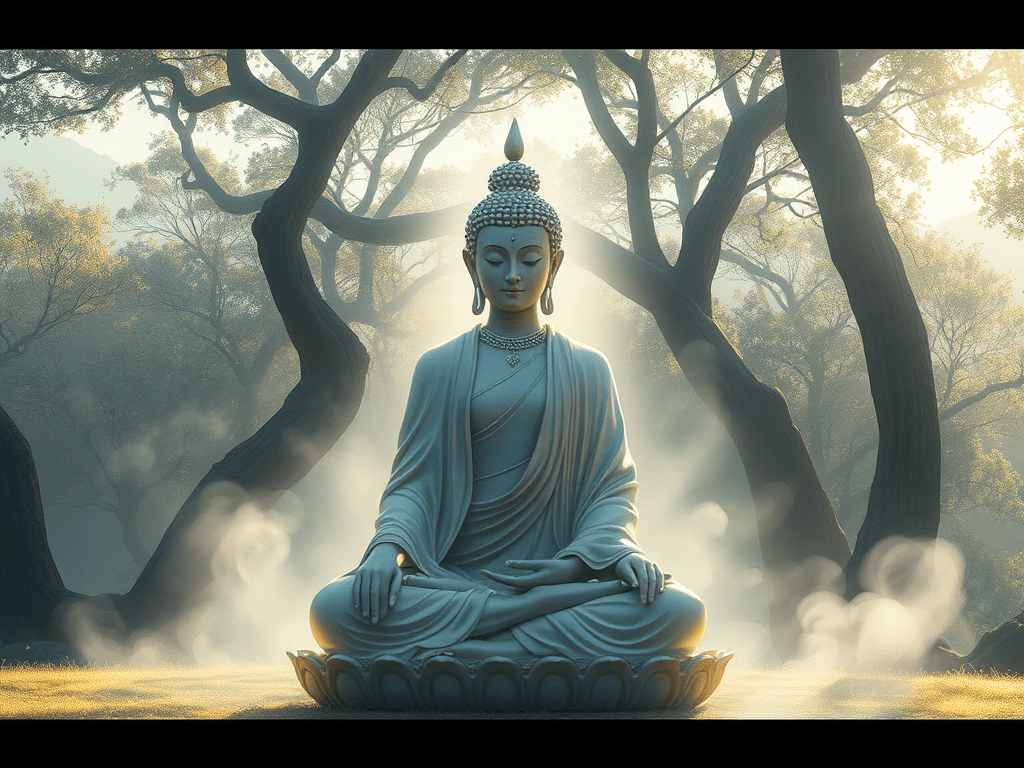
Source: Chapter 14b of The Great Teachings of The Lotus of the True Law focusing on the Bodhisattva path.
Main Themes:
- Detachment from Worldly Distractions: The text emphasizes the importance of the Bodhisattva maintaining distance from worldly influences. These influences could hinder their spiritual progress. This includes avoiding:
- Unsuitable company includes jugglers, servants, and those of low caste. Non-Buddhist practitioners and conceited individuals are also unsuitable. Immoral monks and gossiping nuns should be avoided. Avoid those attached to transient pleasures.
- Sensual temptations: women, prostitutes, and engagement in family life.
- Violence and killing: meat sellers and those who profit from killing.
- Focus on Spiritual Practice: The Bodhisattva should prioritize their spiritual development. They can do this through meditation, study, and sharing the teachings of the Sūtra. This involves:
- Restraining thoughts and meditating deeply.
- Preaching fearlessly and spreading the truth.
- Maintaining purity and retired grace.
- Understanding Emptiness and the Nature of Reality: The Bodhisattva must cultivate wisdom and insight into the true nature of reality, recognizing:
- The impermanence and emptiness of all phenomena.
- The illusory nature of societal laws and constructs.
- The non-existence of inherent self or permanence.
Key Ideas and Facts:
- The Bodhisattva’s path requires unwavering commitment and resilience, especially in challenging times. “In times to come, dreadful and vast, / The Bodhisattva, firm and steadfast… / Undaunted, unabashed, forevermore.”
- The Bodhisattva should avoid those who could negatively influence their spiritual practice. “No company with jugglers keep, / Nor Kāndālas, nor servants’ sweep, / Tîrthikas too he must decline, / His focus on the path divine.”
- The Bodhisattva should prioritize the Dharma over worldly concerns and avoid seeking pleasure or material gain. “He asks not after health or cheer, / His path is pure, his vision clear.”
- Sharing the teachings is crucial, even when facing potential resistance. “For enlightenment, if one seeks to know, / He speaks freely, his wisdom to bestow, / Firm and undaunted, night or day, / The truth he shares, come what may.”
- The Bodhisattva should recognize the emptiness of all phenomena and the illusory nature of worldly constructs. “Observing no law, low or high, / Composed or not, real or awry, / Seeing beyond gender’s simple mark, / The wise man’s path is a noble spark.”
- True understanding lies in recognizing the non-existence of inherent self, birth, and permanence. “The wise see laws as non-existing, / Misconceptions others are resisting, / Wrong notions divide what’s real and not, / Permanency, birth, all wrongly sought.”
Quotes of Significance:
- “In righteousness, he must abide.”
- “His spiritual focus, his only care.”
- “This is the Bodhisattvas’ view, / A universal truth, eternally true.”
- “The wise one’s proper line.”
- “Unquailing, fearless, wisdom unfold.”
Overall Impression:
This text offers a strict and disciplined set of guidelines for the Bodhisattva. It emphasizes detachment from worldly distractions. It stresses commitment to spiritual practice. It encourages the cultivation of wisdom through understanding emptiness. It presents a challenging yet aspirational path for those seeking enlightenment.
 Mr. Altig’s Overview of the Wonderful Dharma of the Lotus Sutra
Leave a comment