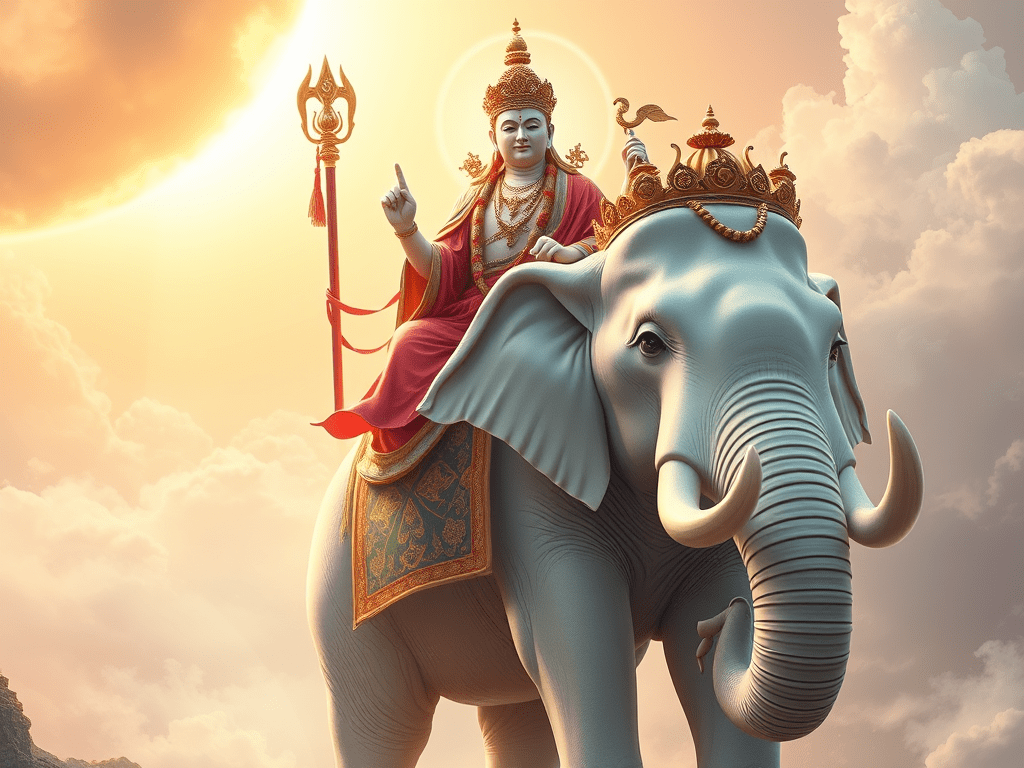
Introduction: The Ancient Promise for a Modern World
We live in a world buzzing with anxiety. We chase fulfillment in careers, relationships, and possessions, yet often feel like we’re running in place. We feel weighed down by the past, stuck with the consequences of events we can no longer change. It’s a uniquely modern sense of unease, but the most surprising answers to it can be found in a profoundly ancient text.
That text is the Lotus Sūtra, a cornerstone of Mahayana Buddhism. It contains a specific and powerful promise made for people living in what it calls a “degenerate era”—a time of widespread social instability, natural disasters, and corruption that fosters a deep sense of spiritual crisis and despair. This era, known as the “Latter Day of the Law (Mappō),” can feel strikingly similar to our own challenging times.
This article will explore three powerful and counter-intuitive takeaways from this ancient promise. They are ideas that can fundamentally reshape how you view your desires, your past, and the very nature of your present struggles.
——————————————————————————–
1. The Ultimate Paradox: Gain Everything by Letting Go of Attachment
At first glance, the central promise of the Lotus Sūtra seems like a complete contradiction. The text assures its practitioners that they will achieve a state of non-attachment to worldly things like food, clothing, and comfort. Yet, in the very next sentence, it promises that their wishes will be fulfilled. How can both be true?
The core of this teaching is found in this remarkable passage:
Universal-Sage! Anyone who keeps, reads and recites this sūtra [in the later five hundred years] after [my extinction], will not be attached to clothing, bedding, food or drink, or any other thing for living. What he wishes will not remain unfulfilled. He will be able to obtain the rewards of his merits in his present life.
To resolve this paradox, we must understand that Buddhism makes a crucial distinction between two types of “desire.” The first is taṇhā, an unwholesome and compulsive craving rooted in the delusion of a separate self. This is the “thirst” that the Buddha identified as the cause of suffering. The second is chanda, a wholesome and skillful aspiration, such as the desire to help others, master a skill, or achieve enlightenment.
The practice of upholding the Lotus Sūtra does not eliminate desire; it performs a profound reorientation. By directly addressing the existential fear of lack, loss, and death and replacing it with profound faith in the Dharma, the practice frees a person from anxious, ego-driven cravings (taṇhā). As this core anxiety dissolves, their wishes naturally shift. They become aligned with a greater, more compassionate purpose (chanda). The “wishes” that the sutra promises will be fulfilled are these noble aspirations that arise from a psychology of abundance and gratitude, not from a mindset of lack.
This redefines fulfillment entirely. It isn’t about getting everything your ego wants, but about transforming what you want into something that brings true, lasting peace for yourself and others.
——————————————————————————–
2. Instant Karma: You Can Rewrite Your Destiny in This Lifetime
The conventional understanding of karma can feel disempowering. It’s often seen as a slow, cosmic accounting system that plays out over countless lifetimes. From this perspective, our current circumstances are the inescapable result of actions in a distant, forgotten past, leaving us with a sense of hopelessness about changing our present reality.
The Lotus Sūtra shatters this paradigm of karmic causality. It declares that its practice is so powerful that a person “will be able to obtain the rewards of his merits in his present life.” This is a radical departure, suggesting that one’s destiny is not set in stone but can be fundamentally altered, right here and now.
To explain this, later commentators like the Japanese master Nichiren cited a powerful metaphor from the Treatise on the Great Perfection of Wisdom: faith in this teaching acts like a “great physician who can change poison into medicine.” Another image suggests that negative karma can instantly “vanish like frost or dew under the sun.” These metaphors reveal that negative karma isn’t simply erased; it’s actively transformed into fuel for wisdom and compassion.
This teaching dramatically shifts our sense of personal agency. It transforms a person from a passive victim of past causes into an active agent of their own destiny. The focus moves from an unchangeable past to an empowered present, where the act of practice awakens one’s inherent Buddha-nature. This new, powerful cause doesn’t erase the past but instantly restructures the expression of all past causes—like turning on a light in a dark room, the darkness is instantly dispelled, recontextualizing everything within it.
——————————————————————————–
3. Your Hardships Aren’t a Punishment; They’re Your Mission
We instinctively view our hardships—illness, financial struggles, conflict, failure—as punishments for past mistakes or simply as random, meaningless misfortune. This perspective can lead to feelings of despair and victimhood. The Lotus Sūtra, however, offers a profound reinterpretation.
It introduces the doctrine of “voluntarily assuming the appropriate karma.” This teaching posits that highly advanced spiritual beings (Bodhisattvas), out of deep compassion, relinquish the blissful rewards of their good karma and their right to be reborn in pure lands. Instead, they consciously choose to be born into difficult circumstances in this “evil world” in order to suffer alongside others and demonstrate a way to overcome adversity.
This perspective provides a powerful way to reframe personal struggles. An obstacle is no longer a sign of failure or bad karma. Instead, it can be seen as the very proof of your noble mission and a vital opportunity to demonstrate the power of your practice to overcome any challenge. Your adversity becomes the very arena where your faith is tested, your practice is perfected, and your enlightenment is forged.
As one modern commentary on this promise puts it, this mindset allows one to “set aside our fear… and gain the courage to handle situations we previously thought were impossible.” Suffering is no longer a burden to be escaped but the very ground upon which courage and wisdom are built.
——————————————————————————–
Conclusion: A Life of Gratitude, Courage, and Purpose
Taken together, these three principles offer a blueprint for a radically transformed life. They show a way to find fulfillment not by getting more, but by wanting more wisely. They reveal the power to change our destiny in this moment, freeing us from the weight of the past. And they reframe our greatest challenges as our most profound opportunities.
This is a path that leads from a life of fear to one of courage, and from a psychology of need to one of deep gratitude. It is a vision of life where every moment, no matter how difficult, is imbued with meaning and purpose. It leaves us with a final, powerful question to consider:
What if your greatest challenge wasn’t an obstacle, but the very key to unlocking your deepest purpose?
 Mr. Altig’s Overview of the Wonderful Dharma of the Lotus Sutra
Leave a comment