In our modern lives, it is a common experience to feel drained. We can feel tired in body and mind, searching for the motivation to meet the day’s demands. We look for energy in countless places, from morning coffee to productivity hacks, yet often find our enthusiasm wanes and our reserves run low.
What if the secret to boundless energy was not an external fix, but an internal focus? An ancient story from the Buddhist Lotus Sūtra offers a profound perspective on where true enthusiasm originates. The tale follows a king who discovers that the key to a tireless spirit lies not in power, but in serving a wise seer to learn a single, transformative teaching: the “Wonderful Dharma”—a term referring to the ultimate truth or the fundamental laws of the universe.
Takeaway 1: True Wealth is Wisdom, Not a Crown
The first surprising element of the story is an act of profound renunciation. The Buddha, recounting one of his previous lives, explains that he was once a king. Instead of clinging to his throne, he willingly gave it up for a singular purpose: to search for someone who could teach him.
This choice is the foundation of the entire lesson. It establishes a powerful hierarchy of values, placing the pursuit of wisdom—the “Wonderful Dharma”—far above worldly status, wealth, and authority. The king understood that true power was not in ruling a kingdom, but in understanding a timeless truth. In a world that equates success with accumulation, the king’s renunciation is a radical statement on the true meaning of wealth.
Takeaway 2: Enthusiasm Transforms Service
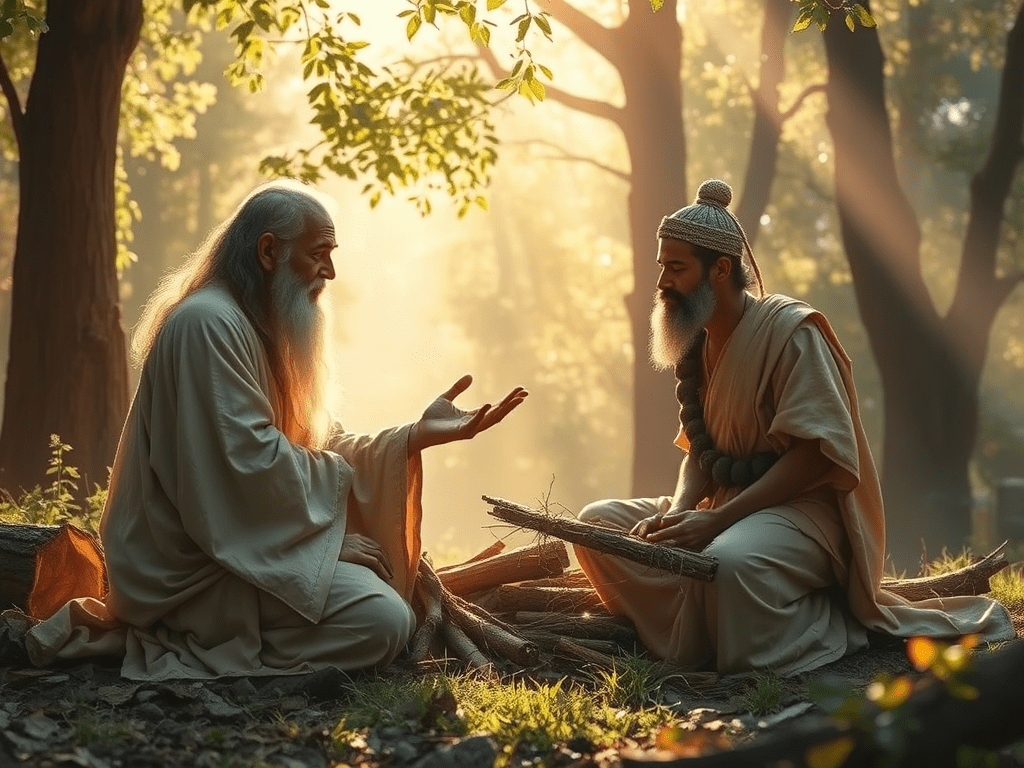
After renouncing his throne, the king’s search led him to a seer who knew the Wonderful Dharma. To learn from this seer, the former king became his humble servant. He willingly performed mundane, everyday tasks, gathering “firewood and the fruits of trees and grasses” for his teacher.
The critical insight here is how purpose transforms an act. A mundane task done for oneself can feel like a chore; the same task done for a higher purpose becomes a ritual, an act of devotion. Because his work was in pursuit of the Dharma, the king served respectfully and without complaint, imbuing every simple action with profound meaning. This demonstrates a powerful principle: the meaning of our work is determined not by the task itself, but by the purpose it serves.
Takeaway 3: A Focused Mind is a Tireless Mind
The central teaching of the story reveals the ultimate source of the king’s limitless energy. In a simple four-line verse from the Lotus Sūtra, he explains how he was able to serve his teacher without ever feeling weary:
I collected firewood and the fruits of trees and grasses,
And offered these things to him respectfully from time to time.
I never felt tired in body and mind
Because I was thinking of the Wonderful Dharma.
The message is exceptionally clear: the king’s boundless energy was not physical, but mental and spiritual. His mind was so completely absorbed in the goal of learning the Wonderful Dharma that the concepts of physical and mental fatigue simply vanished. While we seek energy in fleeting, external sources, the king manufactured his from an enduring, internal wellspring of purpose.
Conclusion: What is Your “Wonderful Dharma?”
The king’s story is not a fable, but a manual for manufacturing limitless energy. It teaches that enthusiasm is not something we find, but something we generate by focusing our minds on a purpose greater than our own comfort. When our actions are aligned with a goal we value above all else, the distinction between work and service dissolves. The story leaves us with a timeless question to ponder: What is the “Wonderful Dharma” in your own life—the purpose so great that it makes service feel like a gift and work feel effortless?
 Mr. Altig’s Overview of the Wonderful Dharma of the Lotus Sutra
Leave a comment