

When the Tathagata perceives that the moment for his total extinction is near and observes that the assembly is pure, faithful, immersed in the law of emptiness, devoted to meditation and profound contemplation, then the Tathagata, recognizing the appropriate time, gathers all Bodhisattvas and disciples to instruct them thus: In this world, monks, there is no second path, no second Nirvana, and certainly not a third. It is a wise strategy of the Tathagata to teach that Nirvana to which they are drawn, observing creatures who have strayed far from the righteous path, finding pleasure in the base and mired in the quagmire of sensual desires. This teaching is the Tathagata’s skillful means to guide them.
Imagine, monks, a dense forest that spans five hundred miles. A large group of people has ventured into this forest, which has been traversed by many before them. They are seeking to reach the Island of Jewels, guided by a skilled, wise leader who knows the forest’s challenging paths well. His task is to lead the entire group safely out of the forest.
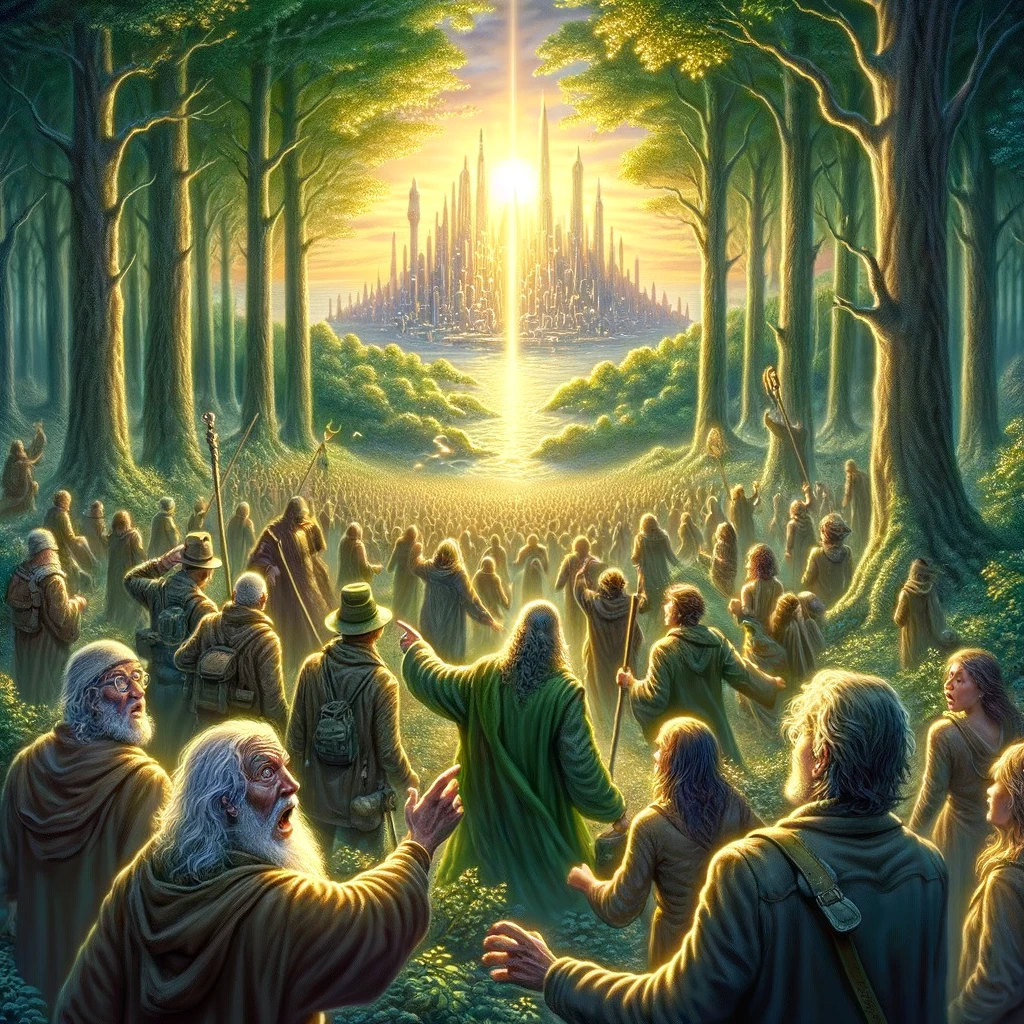
As they journey through the forest, the people become tired, scared, and anxious. They tell the guide, “We’re exhausted and frightened. This forest seems never-ending. Let’s turn back.” The guide, clever and compassionate, realizes that it would be a shame for them to miss out on the magnificent Island of Jewels. So, to help them, he conjures up an illusion of a bustling city in the middle of the forest, more than a hundred or two hundred miles wide.
He then reassures the people, “Don’t be scared; don’t turn back. Look, there’s a city up ahead where you can rest and do what you need to do. Stay there and enjoy a relaxing break. And if, after resting, you want to continue, you can proceed to the great Island of Jewels.”

Then, monks, the people in the forest are filled with amazement, thinking, “We’ve made it out of the forest; we’ve reached a place where we can rest happily. Let’s stay here.” They enter the magical city, believing they’ve arrived at their destination, feeling safe and at ease. They think, “We can relax now; we’ve found refreshment.”

After a while, when the guide sees that they’ve recovered from their fatigue, he makes the magical city vanish. He then says to them, “Come on, friends, you can see the great Island of Jewels is very close. As for this grand city, I created it solely to give you a place to rest.”
In the same way, monks, the Tathagata, the Arhat, and others, serve as your guides and the guides of all other beings. Indeed, monks, the Tathagata thinks like this: “This forest of wrongdoings must be crossed, left behind, and avoided. It shouldn’t be that these beings, after hearing about the knowledge of the Buddha, suddenly turn back and fail to proceed to the end because they think: ‘This knowledge of the Buddha is too difficult to fully comprehend and follow through to the end.’”
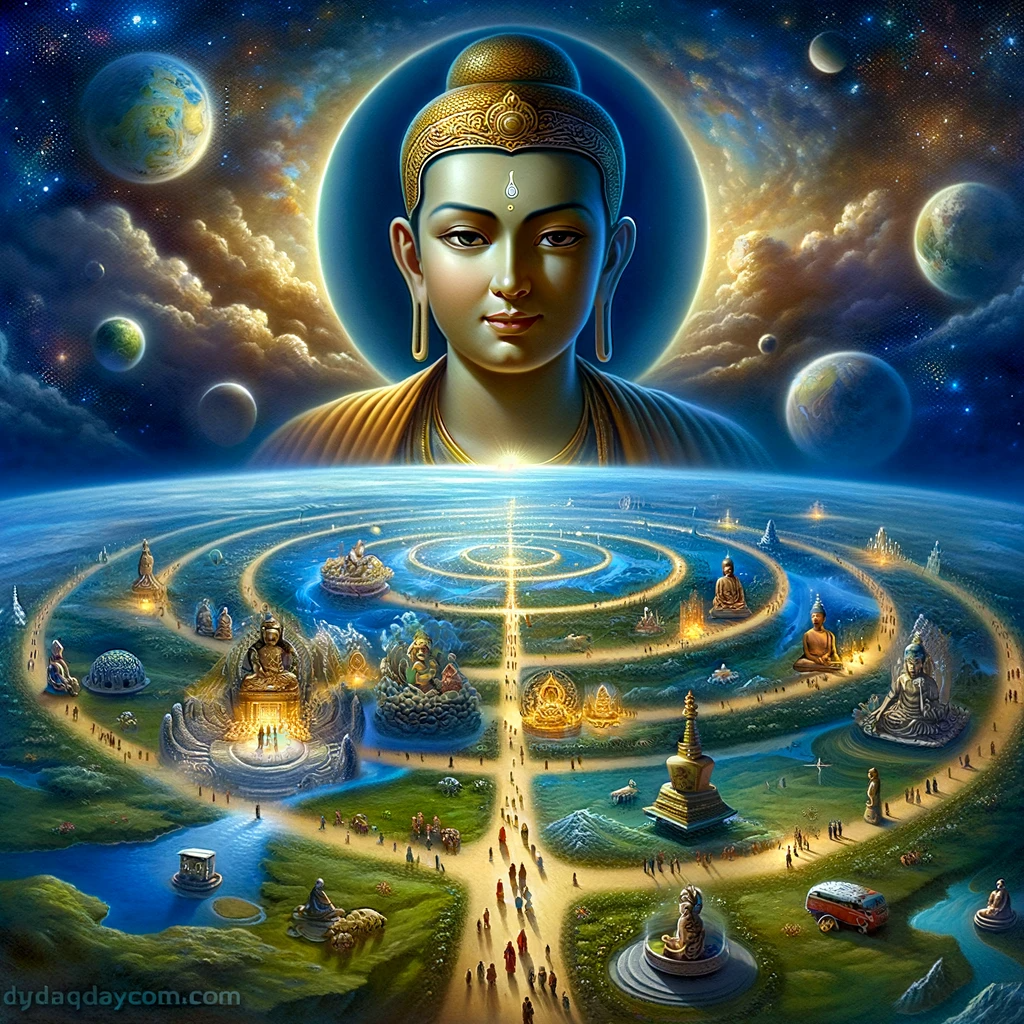
Under those circumstances, the Tathagata, knowing that people are often weak in character, acts like the guide who creates the magical city to provide those travelers with rest, and after they have rested, reveals that the city was an illusion. In the same way, monks, the Tathagata, to provide rest to all beings, skillfully teaches and proclaims two stages of spiritual development, knowing that the full path may seem daunting. His goal is to guide them step by step, ensuring they do not become overwhelmed or discouraged along the way.
The two stages of Nirvana, namely the stage of the disciples and that of the Hermit Buddhas, serve as rest stops along the spiritual journey. When beings find themselves in these stages, thinking they’ve reached their destination, the Tathagata, who sees the full scope of the path, speaks to them: “You haven’t finished your journey, monks; you still have work to do. Look closely, monks! The ultimate wisdom of the Buddha is near, but what you perceive as Nirvana is not the true Nirvana. Indeed, monks, the way the Tathagatas teach and interpret three different vehicles (or paths) is a skillful means to guide you.”

 Mr. Altig’s Overview of the Wonderful Dharma of the Lotus Sutra
Leave a comment