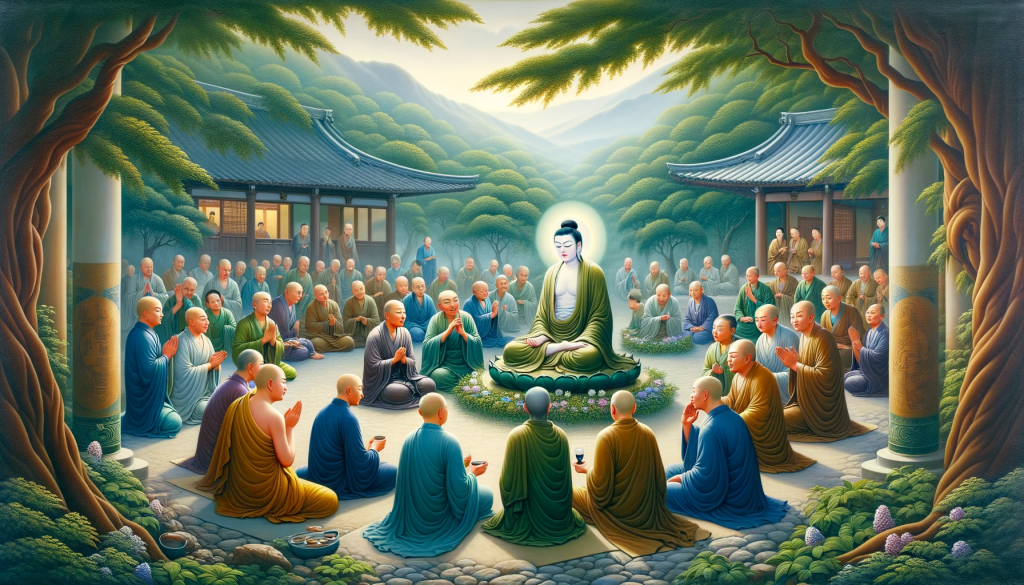
Again, Mañjuśrī, the Great Spiritual Seeker (Bodhisattva Mahāsattva) who lives after the passing away of the Enlightened One (Tathāgata) at the end of time when the true teachings are in decline, is characterized by a lack of envy, dishonesty, or deceit. The one who upholds this Sūtra does not speak ill of other spiritual seekers on the Bodhisattva path, nor does he or she defame or belittle them.
This person does not highlight the faults of other monks, nuns, male or female lay devotees, nor those following the path of discipleship or the path of the Hermit Buddhas (individual enlightenment). They do not tell others that they are far from ultimate enlightenment, criticize their efforts, or accuse them of being inconsistent or incapable of true understanding. They do not emphasize the shortcomings of any spiritual seeker on the Bodhisattva path.
Furthermore, they do not delight in or engage in disputes about spiritual teachings, always maintaining a compassionate attitude towards all beings. They regard all Tathāgatas with reverence, as if they were their fathers, and all Bodhisattvas as if they were their masters. They honor the Great Spiritual Seekers in all directions with goodwill and respect.
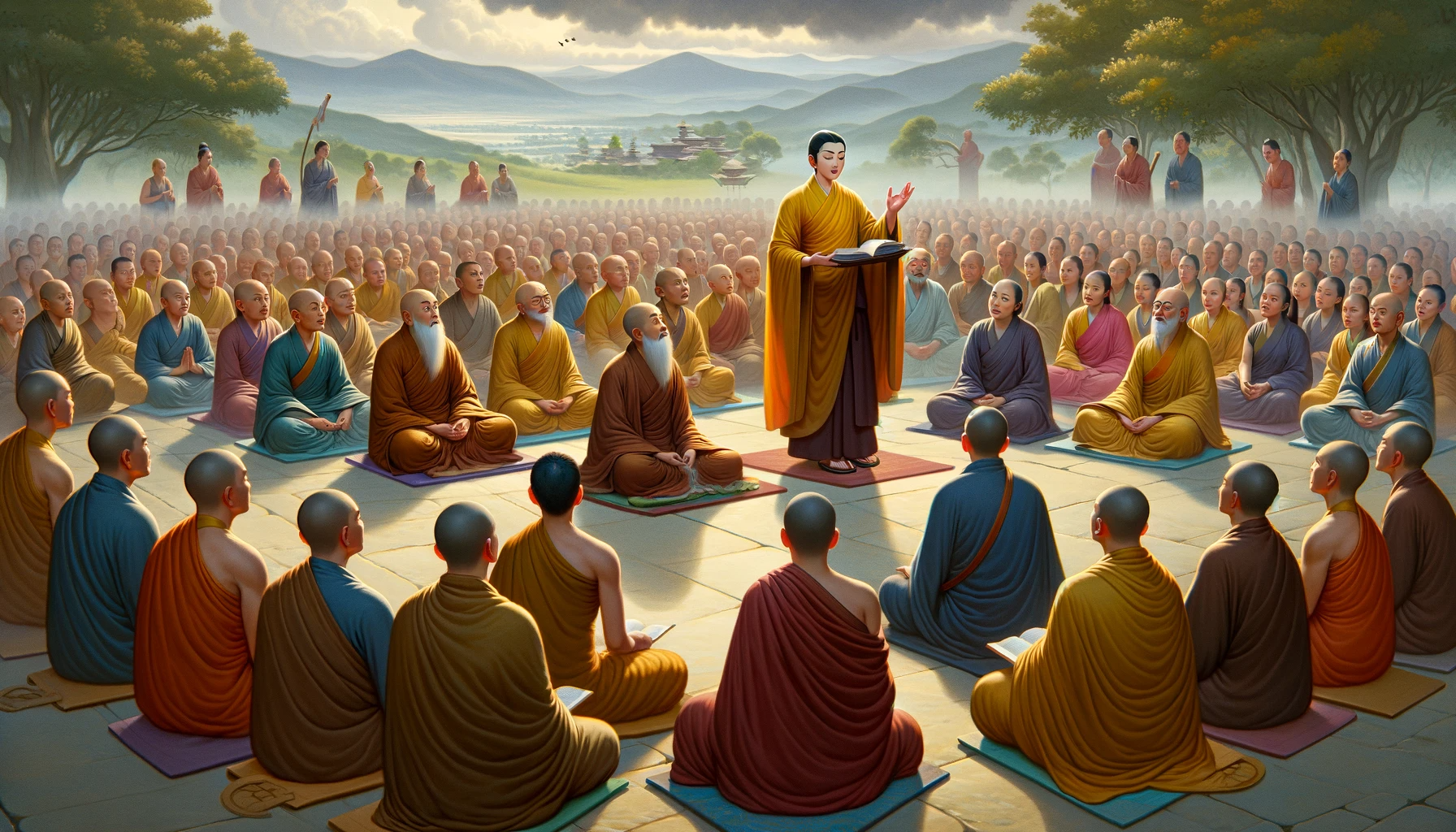
When they preach, they do so with fairness and impartiality, focusing solely on the teachings without showing favoritism to any particular aspect. Even their love for the teachings does not lead them to favor one part over another. Their approach is balanced and unbiased, reflecting a deep and comprehensive understanding of the spiritual path.
This, Mañjuśrī, is the third quality that characterizes a Great Spiritual Seeker (Bodhisattva Mahāsattva) who is to share this Spiritual Teaching (Dharmaparyāya) after the passing away of the Enlightened One (Tathāgata) at the end of time when the true teachings are in decline. This person will live comfortably and will not be troubled in the sharing of this Spiritual Teaching.
In the gatherings and spiritual communities, they will find support and allies. They will also find attentive listeners who will not only hear these teachings but will believe in them, accept them, uphold them, read them, delve into them, and write them down. These listeners will also have the teachings written by others, and after they have been transcribed and compiled, they will honor, respect, value, and revere them.
 Mr. Altig’s Overview of the Wonderful Dharma of the Lotus Sutra
Leave a comment