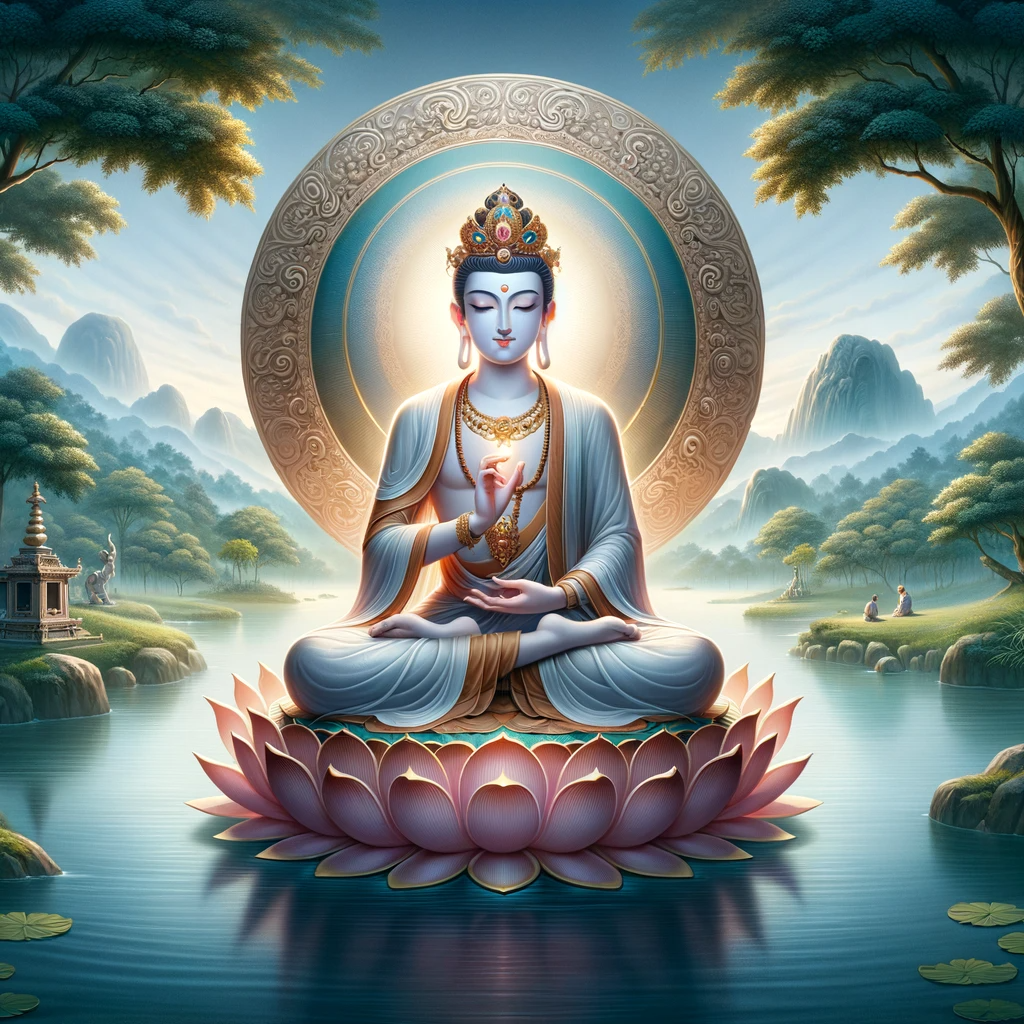
The Lord then addressed the Bodhisattva Mahasattva Mahāsthāmaprāpta (Embodiment of Wisdom’s Might). Similarly, Mahāsthāmaprāpta, one may infer from what has been said that he who rejects such a Dharmaparyaya as this, who abuses monks, nuns, lay devotees male or female, keeping this Sutra, insults them, treats them with false and harsh words, shall experience dire results, to such an extent as is impossible to express in words. But those that keep, read, comprehend, teach, and amply expound it to others shall experience happy results, such as I have already mentioned: they shall attain such a perfection of the eye, ear, nose, tongue, body, and mind as described.
In the days of yore, Mahāsthāmaprāpta, at a past period, before incalculable eons, nay, more than incalculable, immense, inconceivable, and even long before, there appeared in the world a Tathagata, named Bhishmagargitashvararaja, endowed with science and conduct, a Sugata, etc., in the eon Vinirbhoga, in the world Mahasambhava.

Now, Mahāsthāmaprāpta, that Lord Bhishmagargitashvararaja showed the law in the presence of the world, including gods, men, and demons; the law containing the four noble truths and starting from the chain of causes and effects, leading to Nirvana, he showed to the disciples; the law connected with the six Perfections of virtue, he showed to the Bodhisattvas.
The lifetime of that Lord Bhishmagargitashvararaja lasted an immense time. After his complete extinction, his actual law remained for a vast period, and the counterfeit of the existing law continued for an equally long time. When the counterfeit of the proper regulation had disappeared, another Tathagata Bhishmagargitashvararaja appeared, and so in succession, there arose many Tathagatas with the same name in that world, Mahasambhava.
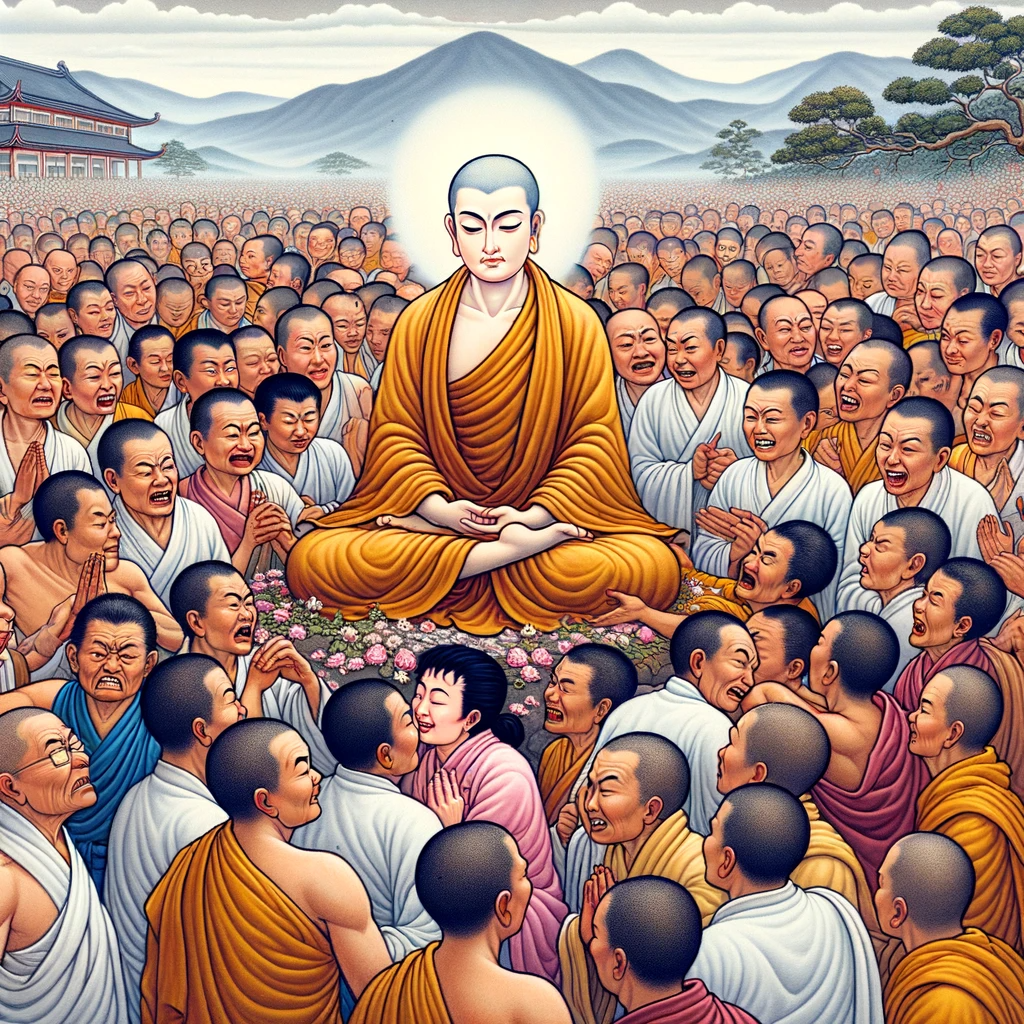
At the time, after the complete extinction of the first Tathagata, there was a monk, a Bodhisattva Mahasattva, called Sadaparibhuta (Always Reviled). He habitually exclaimed to every monk, nun, or lay devotee: “I do not despise you. You are to become Tathagatas.” In this way, he addressed everyone, but all were irritated and angry at him, abusing and insulting him.
Many years passed when that Bodhisattva Mahasattva was being abused, but he was not angry at anybody and continued to exclaim: “I do not despise you,” loudly. Those monks, nuns, and devotees named him Sadaparibhuta (Always Reviled).
Under those circumstances, Mahāsthāmaprāpta—the “Embodiment of Wisdom’s Might,” the Bodhisattva Mahasattva Sadaparibhuta, known as “Always Reviled,” happened to hear this Dharmaparyaya of the Lotus of the True Law as the end of his life was impending and the moment of dying drew near. The Lord Bhishmagargitashvararaja, the “Fearsome Lord of Passionate Song,” the Tathagata, etc., expounded this Dharmaparyaya in twenty times twenty thousand thousand verses. Sadaparibhuta heard it from a voice in the sky when the time of his death was near at hand. On hearing that voice from the sky, without a person speaking, he grasped this Dharmaparyaya. He obtained the perfections already mentioned: the model of sight, hearing, smell, taste, body, and mind. After attaining these perfections, he vowed to prolong his life for twenty thousand thousand myriads of kotis years. He promulgated this Dharmaparyaya of the Lotus of the True Law. And all those proud beings, monks, nuns, male and female lay devotees to whom he had said: “I do not despise you,” and who had given him the name of Sadaparibhuta, became all his followers to hear the law. After they had seen the power and strength of his sublime magic faculties, his vow, his readiness of wit, his wisdom, all those and many hundred thousand myriads of kotis of other beings were by him roused to supreme, perfect enlightenment.

Afterward, Mahāsthāmaprāpta (Embodiment of Wisdom’s Might), that Bodhisattva Mahasattva—Sadaparibhuta (Always Reviled), disappeared from his place and honored twenty hundred kotis of Tathagatas, all known as Kandraprabhasvararaga (Moon’s Radiant Glow of Harmonious Melody). Under their guidance, he promulgated the Dharmaparyaya of the Lotus of the True Law.
Through his virtuous roots, he then propitiated those called Dundubhisvararaga (The Resonant Drum of Spiritual Awakening), once more promulgating the sacred teachings to all. With relentless dedication, he moved on to those known as Meghasvararaga (The Melody of Clouds, Symbolizing Universal Resonance), obtaining and sharing the essence of the Lotus of the True Law.
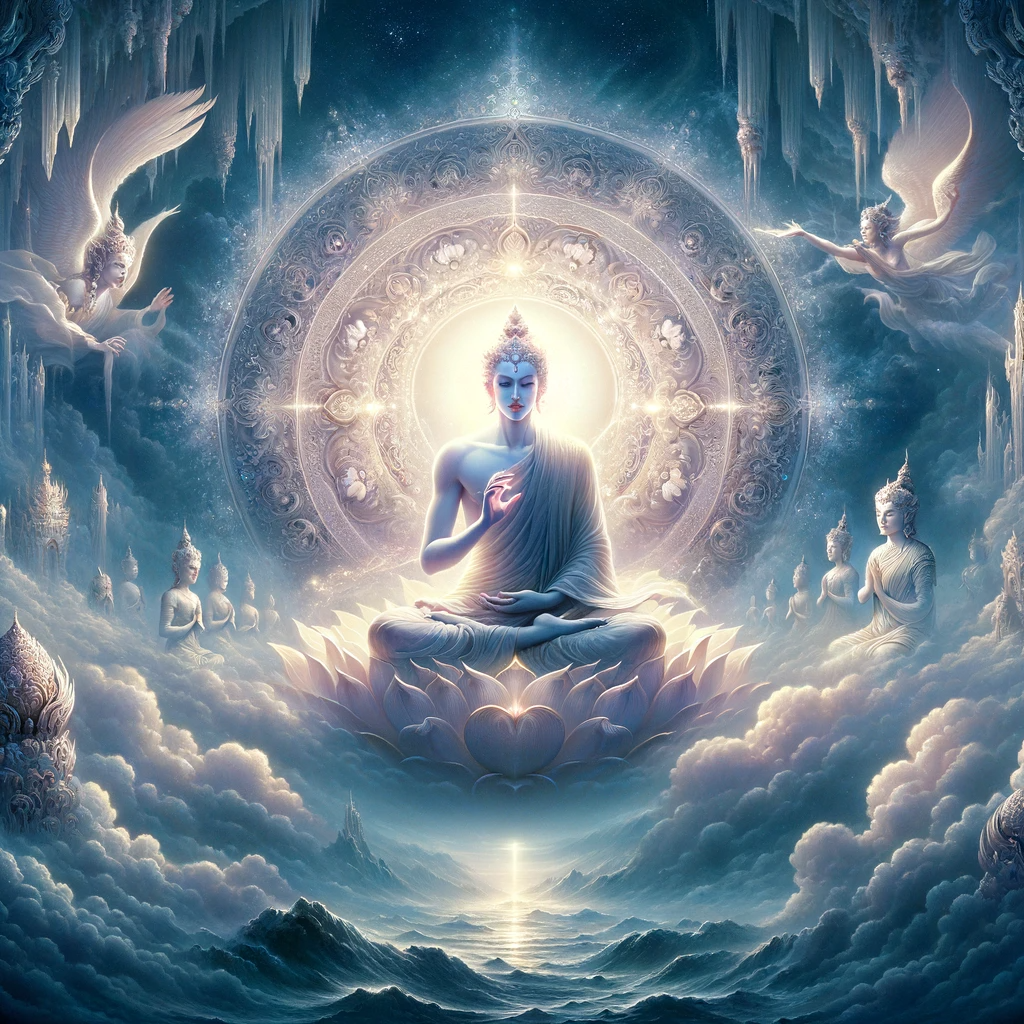
In these spiritual quests, Sadaparibhuta exemplified the perfection of sight, hearing, smell, taste, body, and mind, embodying the principles of enlightenment and compassion.
Mahāsthāmaprāpta (Embodiment of Wisdom’s Might), the story unfolds with the Bodhisattva Mahasattva Sadaparibhuta (Always Reviled), who honored countless Tathagatas with utmost reverence. With a profound root of goodness, he obtained the essence of the Lotus of the True Law and reached supreme enlightenment.
Mahāsthāmaprāpta, perhaps you may wonder if Sadaparibhuta from that time was another being. But know that it was I who was Sadaparibhuta. My grasp of the Lotus of the True Law allowed me to attain enlightenment swiftly. The journey, filled with teachings of ancient Tathagatas, led me to the ultimate awakening.
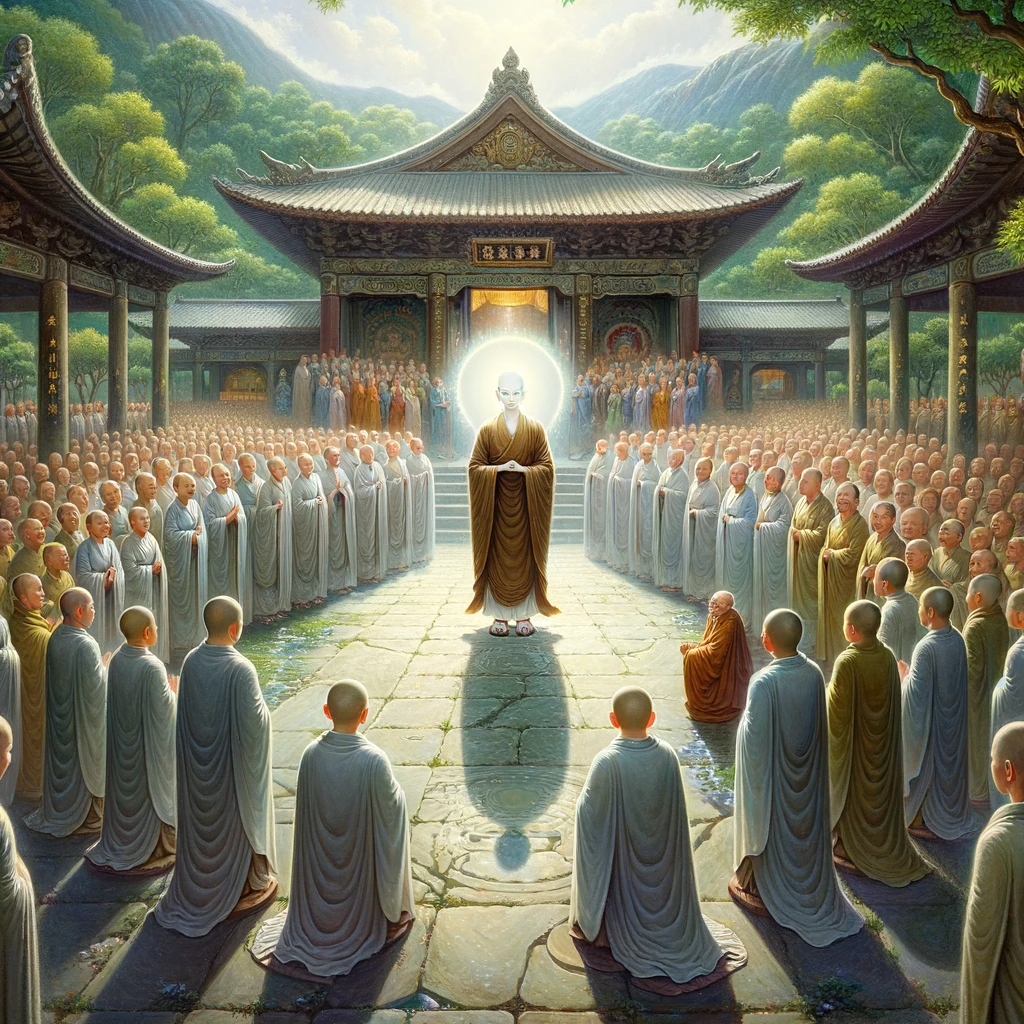
Those who once mocked Sadaparibhuta, resisting his teachings, endured eons of suffering in the great hell Avîki. But through the Bodhisattva’s compassion, they were guided to enlightenment. Among them are many in this very assembly, now steadfast in their spiritual path. Such is the transformative power of the Lotus of the True Law. It leads Bodhisattvas Mahasattvas to supreme enlightenment. Therefore, keep, read, and share this wisdom, even after the Tathagata has left this world.
 Mr. Altig’s Overview of the Wonderful Dharma of the Lotus Sutra
Leave a comment