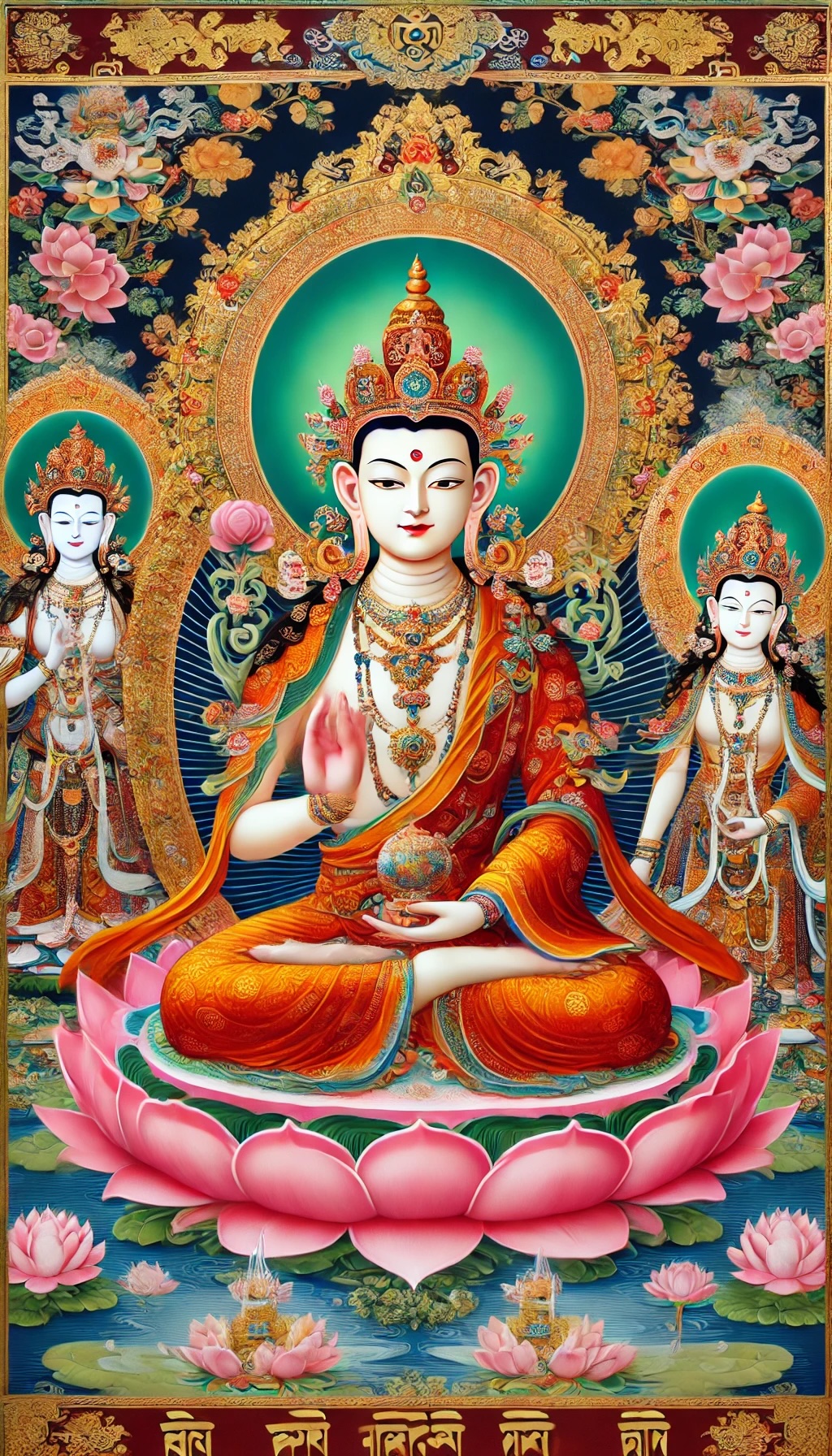
In the image, we see Padmaprabha. He is the radiant Buddha of the Lotus Flower. He is seated in the center on a vibrant lotus throne. He sits in a lotus position, with a calm and serene expression that radiates compassion and wisdom. His skin is depicted in a radiant red color, symbolizing his fiery wisdom and boundless energy. His eyes are gentle, conveying a sense of inner peace.
Padmaprabha is adorned with exquisite jewelry. This includes a jeweled crown, earrings, necklaces, and bracelets. All pieces are intricately detailed and shimmering with vibrant colors. He wears a flowing saffron robe. It gracefully drapes over his body. The robe is adorned with subtle lotus flower motifs. These motifs emphasize the theme of purity and enlightenment.
In his right hand, Padmaprabha holds a delicate lotus flower. It symbolizes purity. His left hand rests in the dhyana mudra. This represents meditation and inner tranquility.
On either side of Padmaprabha are his two consorts. To his right is Mandarava, depicted as a white Tara, symbolizing wisdom and compassion. She stands gracefully, her presence enhancing the peaceful aura of the scene. On his left is Yeshe Tsogyal, depicted as a dakini, embodying enlightened activity. She has an expressive, dynamic pose that contrasts beautifully with Padmaprabha’s serene stillness.
The background is a serene landscape, with rolling hills covered in lush greenery. A majestic range of snow-capped mountains rises in the distance, under a clear blue sky. This background symbolizes the expansive journey towards enlightenment. The use of colors in the thangka is vivid. The blue sky represents the purity of the Dharma. Red represents wisdom. Gold for the jewelry and throne highlights the preciousness of the teachings.
The overall impression of the thangka is one of peace, balance, and inspiration. Every detail is thoughtfully crafted to evoke the Buddha’s compassion and wisdom. It represents the spiritual journey towards enlightenment.
Padmaprabha’s name means “Lotus Light.” This represents the radiant and compassionate wisdom of the Buddha. It is specifically connected to the symbolism of the lotus. In Buddhist iconography, the lotus flower is significant as it grows in muddy water. It symbolizes purity and spiritual awakening. These can emerge from the challenges and difficulties of life. Padmaprabha embodies this transformative power of wisdom and compassion, guiding beings out of ignorance and suffering.
The imagery of Padmaprabha is rich with symbolism. His radiant red skin represents fiery wisdom and the boundless energy needed for spiritual transformation. The lotus throne upon which he sits also symbolizes purity, as well as the deep, unshakable foundation of enlightenment. The jewelry and ornaments adorning Padmaprabha reflect the preciousness of the Dharma. They show the spiritual richness available to all sentient beings who practice and understand the teachings.
Padmaprabha’s consorts include Mandarava and Yeshe Tsogyal. Mandarava is depicted as a white Tara, and Yeshe Tsogyal is depicted as a dakini. These representations emphasize his connection to the wisdom and compassion found in the feminine aspect of enlightened beings. Mandarava represents unconditional compassion and nurturing energy. Yeshe Tsogyal embodies spiritual insight, dynamism, and the transformative force of wisdom.
The presence of Mandarava and Yeshe Tsogyal by Padmaprabha’s side demonstrates his role as a source of wisdom. He embodies the integration of compassion and active engagement with the world. The three figures together symbolize the balance of wisdom, and compassion. They represent the enlightened actions necessary for the liberation of all beings.
As a Bodhisattva, Padmaprabha dedicates himself to aiding others on their path to enlightenment. His imagery as a poet of the Lotus Sutra shows he communicates spiritual insights in an accessible way. He uses heartfelt words, verse, and teachings to inspire and uplift. His qualities resonate deeply with those who are on a journey to cultivate personal awakening. They also seek compassionate service to others. This demonstrates that enlightenment is not an isolated state but a radiant light shared with all beings.
Padmaprabha’s embodiment of “Lotus Light” speaks to the idea of illuminating the path for others. He uses his own wisdom as a guiding light through the complexities of the human experience. Ultimately, this leads others towards the tranquility and clarity of enlightenment.
 Mr. Altig’s Overview of the Wonderful Dharma of the Lotus Sutra
Leave a comment