Category: Uncategorized
-
DAY 14: The Alchemy of the Evil Student

THESIS: Our enemies feel like pure obstruction. The critic, the rival, the one who undermines us at every turn. LOTUS LOGIC: The sutra saves its most shocking prophecy for Devadatta, the villain who tried to kill the Buddha and split the community. In the sutra’s own telling, he was the Buddha’s teacher in a former…
-
DAY 11: The Conjured City Trap

THESIS: Burnout culture says rest is quitting. Push through or fail. LOTUS LOGIC: In the sutra, a guide leads exhausted travelers toward a treasure land. When they give up, he conjures a city out of thin air so they can rest. When they recover, he dissolves it. The city was never the goal, but the…
-
DAY 7: The Ongoing Assembly

THESIS: Reading an ancient text can feel like archaeology. Dusty. Finished. About dead people. LOTUS LOGIC: The Lotus Sutra opens on Vulture Peak with an assembly of monks, nuns, gods, dragons, and kings that never disperses. The sutra’s own claim is that the gathering is STILL IN SESSION. When you open the book, you are…
-
DAY 2: Protection-as-Bloom

THESIS: We hear “protection” and picture a shield. A wall. An exemption from the storm. LOTUS LOGIC: The Sanskrit rakṣaṇa and the Chinese 護 (hu) mean guarding, sustaining, holding you inside the field of the dharma. Not a wall around you. New ground beneath you. The lotus does not escape the swamp. The lotus OUTBLOOMS…
-
Protection Is Not a Shield
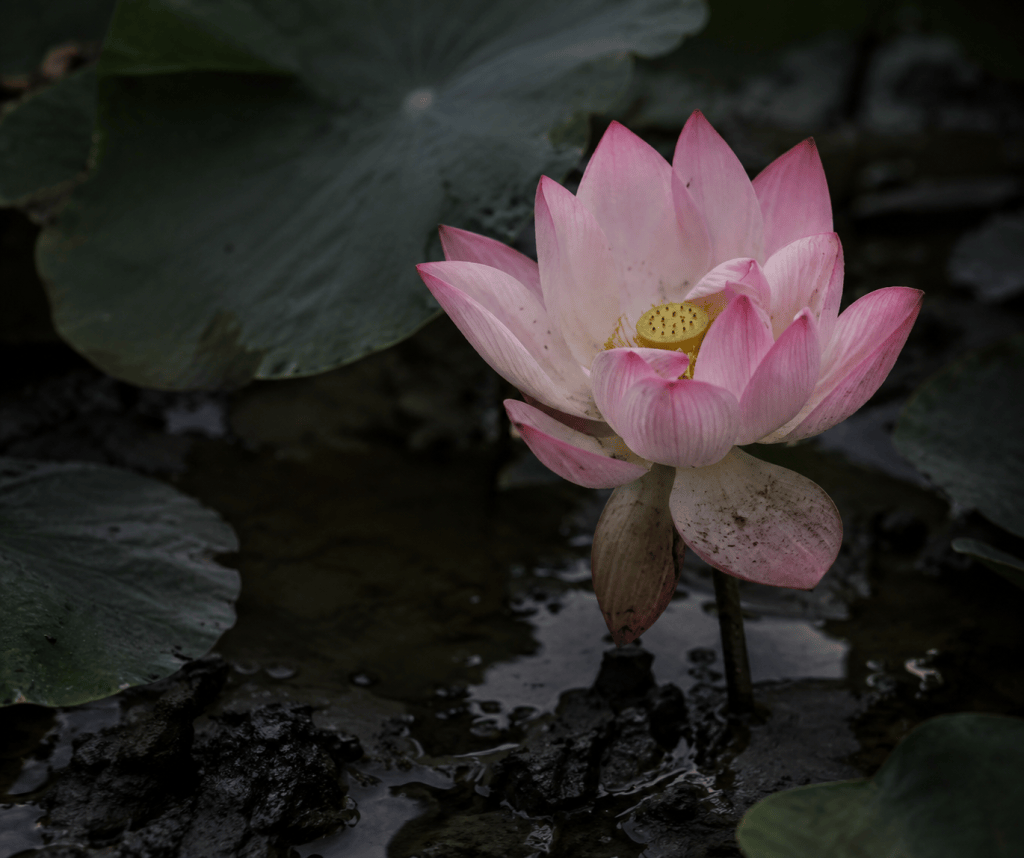
The Lotus Sutra promises protection to those who receive and keep it: bodhisattvas, heavenly kings, rescue from fire and flood. To a modern ear that sounds like superstition. It is closer to botany. The Sanskrit rakṣaṇa and the Chinese 護 (hu) do not mean a force field — they mean guarding, sustaining, holding a practitioner…
-
Buddha-Nature, Explained Without the Jargon

You have probably heard, more than once, that you already have Buddha-nature. That you are “already a Buddha, you just don’t know it yet.” It is one of the most repeated lines in all of Mahāyāna Buddhism, and one of the foggiest. Almost no one says what it actually means. It drifts past in a…
-
What Does Enlightenment Actually Mean? A Four-Minute Overview
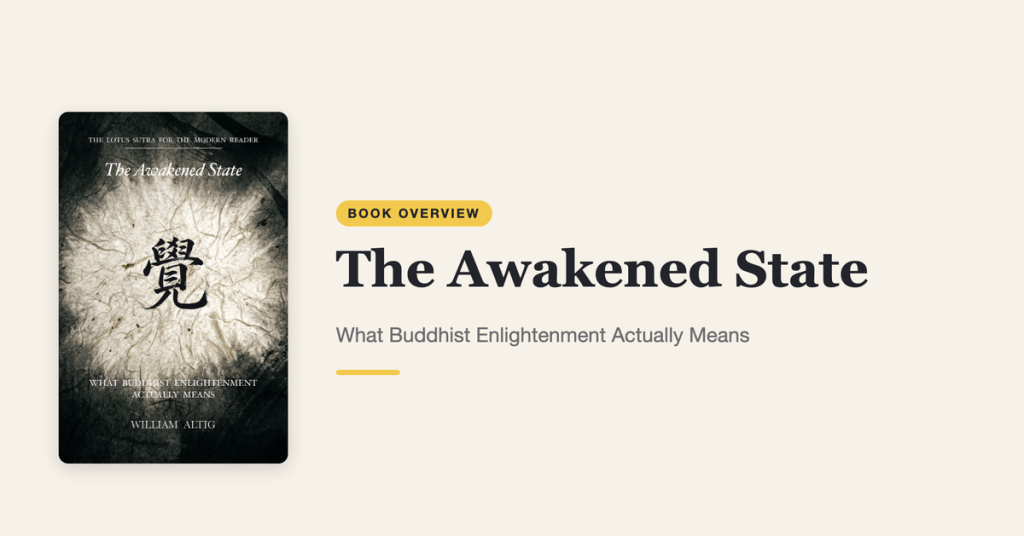
Over the past month I have been posting a four-part video series drawn from The Awakened State: What Buddhist Enlightenment Actually Means: the maps and the territory, the nature of what we are, the body that knows, and the practice of awakening. Those were the parts. This is the whole: a four-and-a-half-minute overview of the…
-
Sudden OR Gradual? The Tiantai Answer | The Awakened State (Part IV) #Shorts
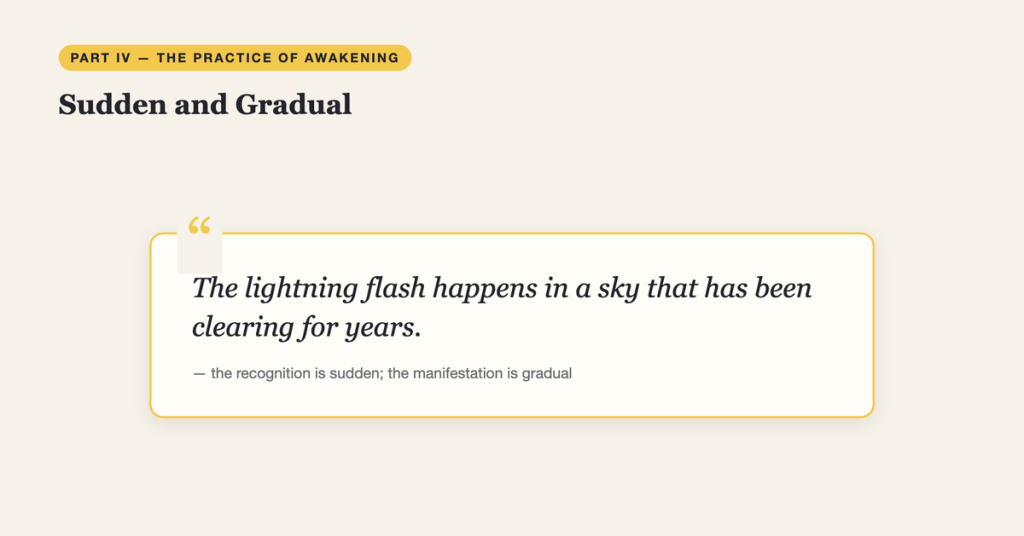
The last of the four parts drawn from *The Awakened State: What Buddhist Enlightenment Actually Means*. You have read the maps. This is where you begin to walk. Practice has two wings. Stillness moves the wood: it clears the space. Insight uproots the tree: it severs the root. Neither wing alone finishes the work. Then…
-
Does Buddhism Believe in a Soul? The Nirvāṇa Sūtra’s Surprising Answer

If you know one thing about Buddhism, it’s probably this: there is no soul. No permanent self. The teaching is called anattā (Pali) or anātman (Sanskrit), non-self, and it’s the line that separates Buddhism from almost every other religion. Hinduism has the ātman; Christianity has the soul; Buddhism, famously, has neither. What you call “you”…
-
“Watch Me Become a Buddha”: The Girl the Assembly Had Already Dismissed

The launch post for this book promised you a line. Here it is, in full. Chapter 12 of the Lotus Sutra introduces an eight-year-old daughter of the dragon king Sāgara. She has, we are told, fully grasped the sutra after hearing it taught in her father’s undersea palace. Two figures in the assembly object, for…

