Source: https://www.youtube.com/watch?v=TvtNElAmVqU&t=189s
Main Themes:
- Music’s ancient and fundamental role in human evolution and cognition.
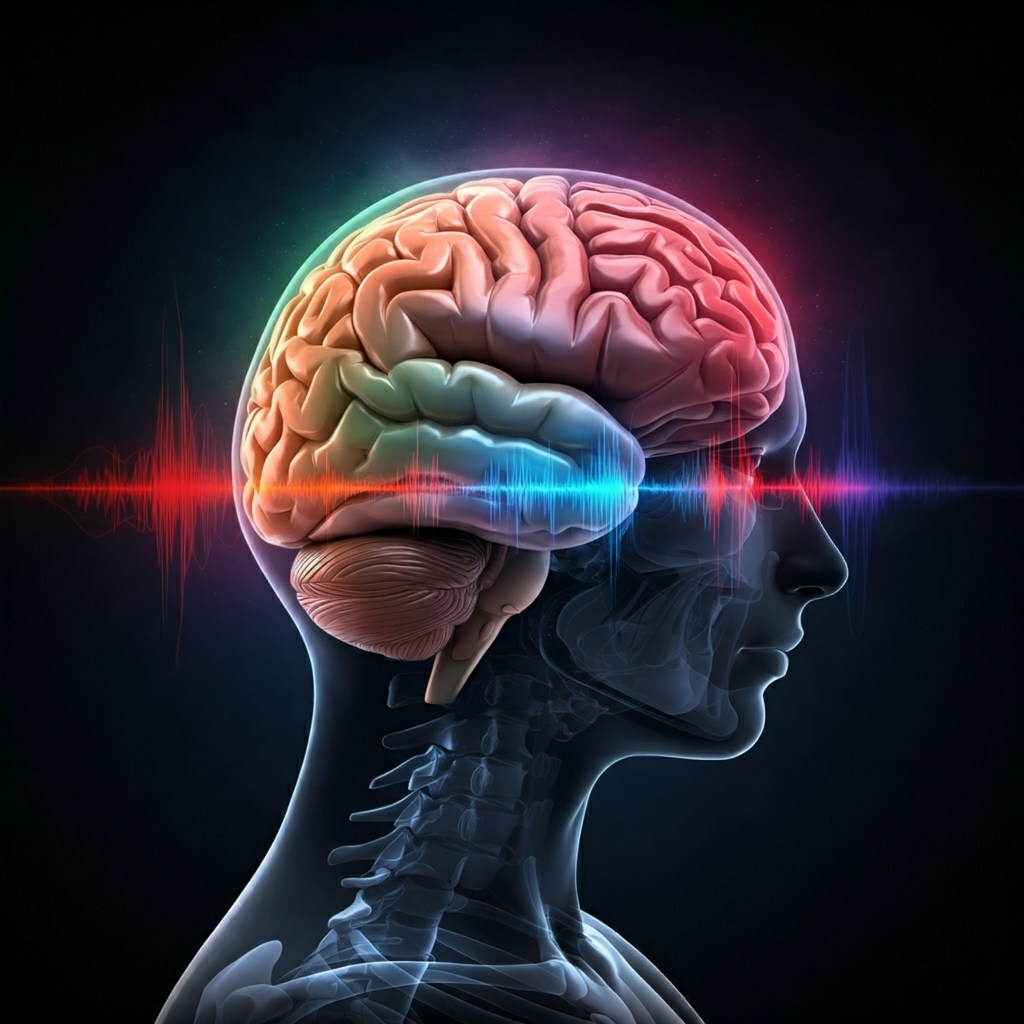
- Music’s powerful effects on the brain, influencing everything from memory and emotions to pain management and motor control.
- The emerging field of music as medicine, with the potential to treat a variety of neurological and psychological conditions.
Key Ideas and Facts:
- Music predates language: Archaeological evidence suggests musical instruments like bone flutes existed 40-60,000 years ago. Additionally, brain structures responsible for music processing are evolutionarily older than those for speech. This supports the theory that music played a crucial role in early human communication. It was vital for information transmission before the development of language.
“The available evidence is that the neural structures that encode music are phenetically older than those that encode speech…evolutionarily we were musicians before we were talking to one another from a brain development standpoint.”
- Music enhances memory and learning: Music helps encode and preserve information in memory, making it more resistant to distortion. Ancient cultures likely used song to transmit knowledge across generations. We still teach children through song today for this reason.
“Songs are able to resist to a large degree distortions that simple speech is not…simply because we teach all of our children in song first…everything we learn as a kid we…a lot of what we learn is sung.”
- Music activates the entire brain: Music engages every mapped area of the brain, influencing emotions, memory, motor control, and more.
“Holy moly music activates every part of the brain that we have so far mapped.”
- Music triggers memory retrieval: Specific songs can act as powerful retrieval cues. They bring back vivid memories associated with specific times and places. This is particularly significant in Alzheimer’s patients, who can often still sing familiar songs even when other memories are lost.
“The current theory of memory…is that everything you’ve experienced…gets in your memory…the problem is getting it out…what you need…is what we call a retrieval queue.”
- Music boosts the immune system: Studies show listening to music can increase the production of antibodies like immunoglobulin A. It also boosts natural killer cells and T cells. These are all essential for fighting infections.
- Music as medicine: Music therapy shows promise in treating various neurological and psychological conditions, including:
- Parkinson’s disease: Rhythmic auditory stimulation using music helps patients improve gait and motor control by activating redundant neural circuits.
“Play music for people at the tempo of their natural gait. This activates a subsidiary redundant circuit, allowing Parkinson’s patients to walk smoothly.” * Chronic pain: Music triggers the release of endogenous opioids. These are the brain’s natural painkillers. This can potentially reduce reliance on pharmaceutical painkillers. “My lab was the first to show this. When people listen to music they like, the brain produces its own endogenous opiates.” * Multiple sclerosis: Music can help manage movement disorders associated with MS. * Stuttering and Tourette’s syndrome: Music’s rhythmic structure can help regulate timing circuits in the brain, potentially improving speech fluency and reducing tics. * Depression: Music can provide emotional support and potentially access positive memories, particularly when combined with traditional therapies. “If you play a happy song for someone who’s depressed, it might make them feel worse. But if you put on a sad song, suddenly there’s someone there. They’re staring into the abyss with you by your side.” they understand how you feel…and they came out the other side and created a beautiful work of art.”
Emerging Research:
- The National Institutes of Health (NIH) is increasingly funding research into the medical applications of music.
- Scientists are investigating how music affects specific brain circuits and neurochemicals.
- New music-based therapies are being developed for a wide range of conditions.
Conclusion:
Music is not merely entertainment. It’s a deeply ingrained aspect of human biology. It has profound effects on our brains and bodies. The emerging field of music as medicine holds enormous potential for improving human health and well-being. Further research is needed to fully understand and harness music’s therapeutic power.
 Mr. Altig’s Overview of the Wonderful Dharma of the Lotus Sutra
Leave a comment