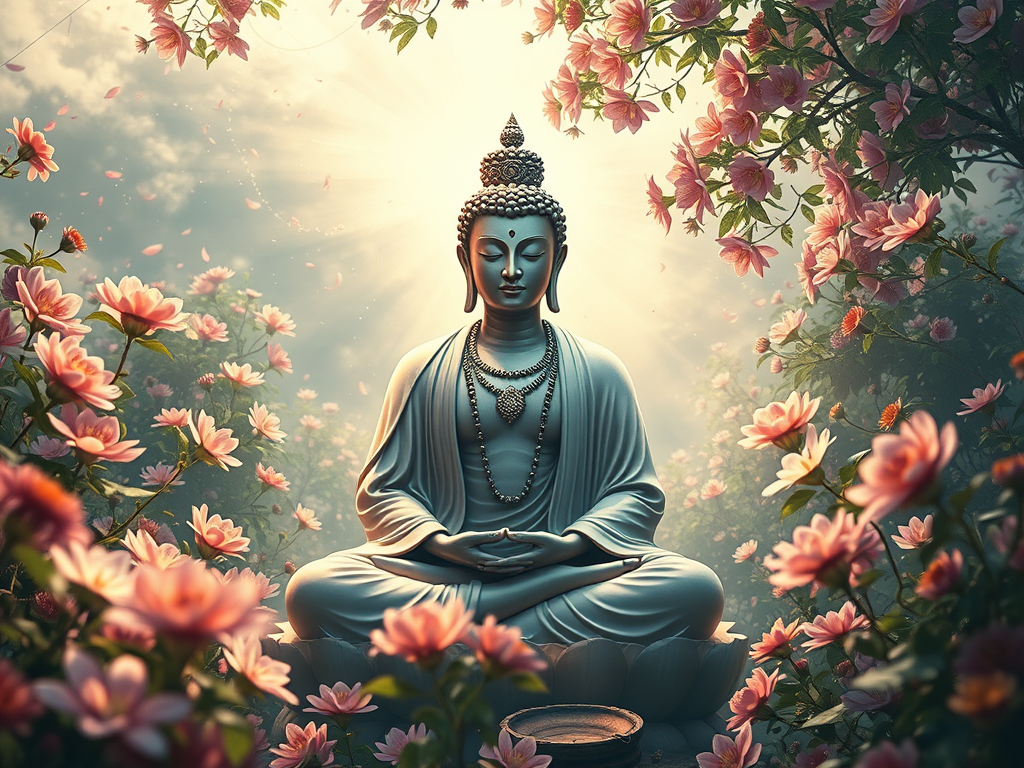
Document Source: Excerpts from “Chapter 19c – Perfuming the Universe” (From the “The Great Teachings of the Lotus of the True,” Law by William Altig)
Executive Summary
This text describes the extraordinary olfactory abilities of a Bodhisattva Mahasattva, a being deeply advanced on the path to enlightenment. The document highlights the Bodhisattva’s capacity to perceive and understand the entire universe through scent, demonstrating a level of awareness that transcends ordinary human senses. This ability is not just about smelling; it’s about a deep, insightful knowledge of the world and its inhabitants. It also showcases the ability of the Bodhisattva to perceive not just physical aspects of beings and objects, but also their spiritual states, intentions, and inner qualities. The text emphasizes that this extraordinary capacity is not supernatural, but rather a natural outcome of the Bodhisattva’s advanced spiritual practice.
Main Themes and Ideas
- The Power of the Senses (Especially Smell): The text elevates the sense of smell to a position beyond its common understanding, portraying it as a tool for profound perception and comprehension. The Bodhisattva’s ability is not just about identifying scents, but understanding the essence of the source of the scent, like its spiritual or emotional state.
- Quote: “The organ of smell, correct and pure, / Perceives the scents of the world, to be sure, / Fragrances manifold, both good and bad, / In his discerning nose, they’re clearly had.”
- Universal Awareness: The Bodhisattva’s scent-based perception encompasses the entire cosmos, from earthly flora and fauna to celestial realms and divine beings. This illustrates a level of awareness that is not limited by physical boundaries.
- Quote: “Remaining on Earth, he smells the fragrance of gods and heavenly flowers…He detects the perfume of divine powders…He senses the aroma from the bodies of gods…”.
- Discernment and Understanding: It’s emphasized that the Bodhisattva doesn’t just perceive the scents but also understands their origins and implications. This includes discerning the characteristics, states, and intentions of people and beings, even their spiritual states.
- Quote: “By scent, he knows, a woman’s stance and grace, / A power profound, in him, takes place.”
- Quote: “Men’s designs and passions, wicked or meek, / By scent, he senses, no need to speak.”
- Quote: “By scent, he knows, their beauty and their worth, / A fragrant wisdom, none like it on earth.”
- Natural Attainment (Not Supernatural): The text suggests that this extraordinary ability is not a divine gift but a natural consequence of spiritual practice. The Bodhisattva’s refined sense of smell is a result of purifying his senses through diligent practice.
- Quote: “A gift profound, yet not divine in its way, / Before the perfect, divine faculty’s day.”
- Detailed Cataloging of Scents: The text includes detailed lists of specific scents, such as various flowers, trees, creatures, precious metals, and jewels, emphasizing the vastness and variety of the Bodhisattva’s sensory experience. The extensive descriptions suggest a thorough and comprehensive understanding of the world.
- Examples: “Jasmines and sandalwood, fruits and blossoms sweet, Arabian fragrances, all scents he’ll meet, Xanthochymus, agallochum, each a fragrant grace…”
- Connection Between Scent and Inner Qualities: The text implies that physical scents are reflections of inner states. The Bodhisattva uses scent as a way to see past superficial appearances, understanding underlying intentions and spiritual conditions.
Key Facts
- Bodhisattva Mahasattva: The subject of the text is a highly advanced being known as a Bodhisattva Mahasattva, one who has embarked on the path to Buddhahood.
- Eight Hundred Fine Qualities: The Bodhisattva is described as possessing “eight hundred fine qualities,” suggesting an extraordinarily high level of spiritual development.
- Olfactory Mastery: The Bodhisattva’s primary ability lies in the refined and expanded capacity of his sense of smell.
- Comprehensive Understanding: This olfactory ability is not just about simple perception, but includes the ability to discern the nature, state, and intentions of beings.
- No Loss of Memory: This understanding comes with an ability to remember and recall what has been perceived through scent.
- Quote: “He can describe these odors to others without affecting his memory if needed.”
- Cosmic Scope: The Bodhisattva’s perception spans the terrestrial, celestial, and spiritual realms.
- Not Divine, But Developed: The text implies that the Bodhisattva’s power of scent perception is not a divine or magical ability, but is the result of years of spiritual training.
Potential Implications
- Spiritual Growth: This text implies that the path of spiritual growth leads to profound and transformative sensory experiences, and that advanced awareness may utilize the senses in vastly expanded capacities.
- Interconnectedness of Reality: The ability to perceive and understand the entire universe through scent highlights the interconnectedness of all things.
- Beyond the Physical: The Bodhisattva’s abilities suggest that perception is not limited to the physical; it can extend into emotional and spiritual realities as well.
Conclusion
“Chapter 19c – Perfuming the Universe” uses the extraordinary olfactory abilities of a Bodhisattva Mahasattva to illustrate the profound potential of human perception when developed through spiritual practice. It encourages the reader to see beyond ordinary sensory experience and recognize the interconnectedness of all things. It is a narrative that highlights that through cultivation of our senses, we can develop into more perceptive and knowledgeable individuals.
 Mr. Altig’s Overview of the Wonderful Dharma of the Lotus Sutra
Leave a comment