I. Introduction
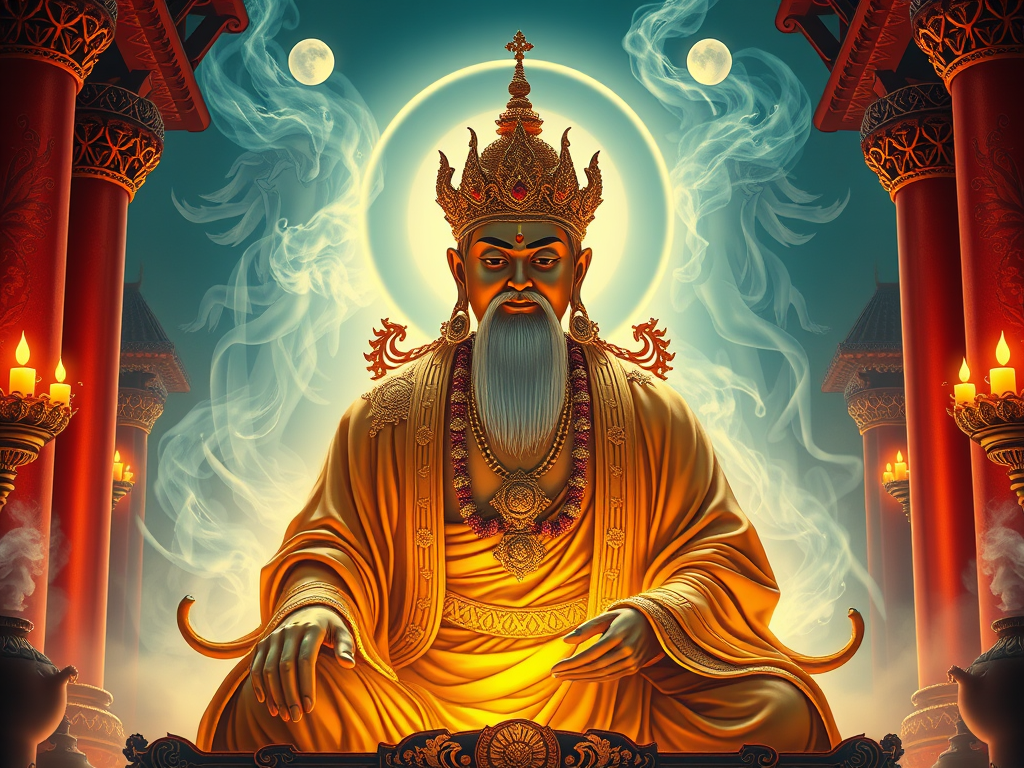
The Lotus Sūtra, revered as one of the most influential texts in Mahayana Buddhism, is celebrated for its profound teachings on the inherent potential for Buddhahood in all beings and its skillful use of parables to illuminate complex Buddhist principles.1 Central to its message is the concept of expedient means (upaya), where the Buddha employs various methods to guide beings toward ultimate enlightenment. Chapter Seven of this seminal text, often entitled “The Parable of the Magic City,” masterfully utilizes analogies to convey these deeper truths.4 Within this chapter, a significant moment arises when the Brahma King Great Compassion sings verses that encapsulate a profound reverence for the Buddha Dharma and an unwavering commitment to the salvation of all sentient beings. These verses, “Let us go even to the end of one thousand billion worlds, And find the place from where this light has come. A Buddha may have appeared somewhere in the universe In order to save the suffering beings,” serve as a powerful illustration of the value placed on encountering an enlightened being and the teachings that lead to liberation.
II. The Brahma King Great Compassion
In Buddhist cosmology, Brahma Kings occupy a distinguished position within the Brahmaloka, one of the highest realms of existence.12 These powerful deities are often associated with beings who have cultivated significant virtue through righteous actions and profound meditative practices.12 Their elevated status and the luxurious nature of their palaces underscore their advanced spiritual development within the cycle of Samsara.14 However, the quest undertaken by the Brahma King Great Compassion signifies a recognition of the limitations inherent even in these celestial realms, highlighting a deeper understanding of the ultimate goal of liberation.16 The very name “Great Compassion” strongly suggests a connection to Avalokiteśvara (Guanshiyin), the Bodhisattva renowned for boundless compassion.17 The Lotus Sūtra itself describes Avalokiteśvara manifesting in various forms, including that of a Brahma King, to skillfully guide and deliver beings from suffering.18 This potential link emphasizes the compassionate motivation driving the Brahma King’s actions and his profound concern for the well-being of all beings.18 Furthermore, the Buddhist tradition reveres Brahma Sahampati for his pivotal role in requesting the Buddha to teach the Dharma after his enlightenment.12 Recognizing the immense potential for liberation inherent in the Buddha’s realization, Brahma Sahampati’s plea established a precedent for Brahma Kings valuing and seeking the dissemination of the Buddha’s teachings.
III. Contextual Analysis of Chapter Seven: The Parable of the Magic City
Chapter Seven of the Lotus Sūtra unfolds the narrative of a group of weary travelers on a long and arduous journey led by a wise guide towards a treasure land.4 Overcome by fatigue and despair, the travelers contemplate abandoning their quest. Recognizing their plight, the compassionate guide employs his transcendental abilities to conjure a magnificent phantom city, offering it as a temporary respite where they can rest and rejuvenate before resuming their journey to the true treasure.4 This “magic city” serves as an expedient means (upaya), representing the provisional teachings of the Buddha – teachings that are beneficial and guide beings forward but do not constitute the ultimate truth.4 The Buddha featured in this chapter is known as the Buddha Great-Penetrating-Wisdom-Victory, a name indicative of profound wisdom and the capacity to perceive the true nature of reality.4 It is highly probable that this is the very Buddha to whom the Brahma King Great Compassion refers in his verses, given their placement within this specific chapter, suggesting a direct connection to the chapter’s themes and figures. The narrative further highlights the actions of the sixteen sons of this Buddha. Upon witnessing their father’s attainment of enlightenment, they renounced their cherished worldly possessions and implored him to “turn the wheel of the Law” 6, signifying their profound desire for the Buddha to share his teachings for the benefit and liberation of all beings. This act underscores the paramount importance of seeking and valuing the Buddha’s Dharma above all worldly attachments, a sentiment echoed in the Brahma Kings’ own pursuit.
IV. Deconstructing the Verses of the Brahma King Great Compassion
The opening line of the Brahma King’s verses, “Let us go even to the end of one thousand billion worlds, And find the place from where this light has come,” speaks to the immense scale and unwavering determination of their search. The phrase “one thousand billion worlds” is a symbolic representation of a “trichiliocosm” or “great thousand-world system” (trisāhasramahāsāhasralokadhātu) in Buddhist cosmology.24 This vast cosmic structure encompasses a billion world-systems, each containing countless galaxies and diverse realms of existence.27 This staggering number underscores the unimaginable expanse of the universe as understood in Buddhist teachings, highlighting the Brahma Kings’ profound resolve to seek out the source of enlightenment, no matter how far-reaching their quest must be. The “light” mentioned in the verse symbolizes the radiant light of wisdom and enlightenment (Bodhi) that emanates from a Buddha.30 This light serves to dispel the darkness of ignorance and the suffering that arises from it, representing the profound understanding of reality that a Buddha attains and subsequently shares with the world. The second line, “A Buddha may have appeared somewhere in the universe In order to save the suffering beings,” reveals the Brahma Kings’ deep awareness of the rarity and profound significance of a Buddha’s appearance in the cosmos.36 Such an event is considered exceptionally rare, occurring only after immeasurable eons. The Brahma Kings’ use of the phrase “may have appeared” reflects both their hopeful anticipation and their recognition of the infrequency of such an auspicious occasion. They understand the immense good fortune of encountering a Buddha and the precious opportunity this presents for liberation from the endless cycle of birth and death (Samsara). Furthermore, the verse emphasizes the fundamental motivation behind a Buddha’s manifestation: an all-encompassing compassion (karuna) for the suffering (dukkha) experienced by all sentient beings trapped within this cycle.30 This aligns perfectly with the name of the Brahma King Great Compassion and the central tenets of Mahayana Buddhism, which places a strong emphasis on the Bodhisattva’s vow to work tirelessly for the enlightenment of all.
V. The Profound Meaning of Buddha Dharma
The term “Buddha Dharma” holds deep and multifaceted significance in Buddhism.41 It encompasses the entirety of the Buddha’s teachings, including foundational principles such as the Four Noble Truths and the Eightfold Path.41 It also refers to the practical application of these teachings through ethical conduct, the cultivation of mindfulness and concentration through meditation, and the development of wisdom.48 Ultimately, the Buddha Dharma leads to the realization of enlightenment, whether it is termed Nirvana in some traditions or Bodhi in others, representing liberation from suffering.48 The Brahma Kings, despite their status as powerful deities who, within the context of Buddhist cosmology, are described as creators of entire worlds 12, place a higher value on the Buddha’s words, the Dharma, than on their own creations.2 This highlights a core tenet of Buddhist philosophy: that spiritual liberation and the attainment of ultimate truth possess a value that transcends even the most magnificent worldly or heavenly achievements.2 These creations, being within the realm of Samsara, are subject to the fundamental principle of impermanence (Anicca).30 The Dharma, however, addresses the very nature of reality and offers a path beyond this cycle of birth and death, providing a lasting liberation that their created worlds cannot.30
VI. The Significance of Enlightenment and the Buddha’s Role
Enlightenment (Bodhi) stands as the ultimate aspiration in Buddhist practice, representing the pinnacle of spiritual awakening and complete liberation from the cyclical nature of suffering and rebirth known as Samsara.30 This profound realization involves the cessation of all forms of suffering, the eradication of ignorance and clinging desires, and a direct understanding of the true nature of reality as impermanent, devoid of a permanent self, and ultimately empty of inherent existence.30 The Brahma Kings’ quest to find a Buddha reflects their desire to not only attain this ultimate state for themselves but also to facilitate its attainment for all suffering beings, demonstrating a deep compassion and a comprehensive understanding of the ultimate aim of Buddhist practice. A Buddha is an enlightened being who has, through their own diligent efforts, discovered the path to liberation and subsequently teaches the Dharma to guide others toward their own enlightenment.32 A Buddha’s teachings provide the essential wisdom and guidance necessary for beings to comprehend the nature of suffering and the means by which to overcome it, ultimately leading them to their own awakening. Buddhist traditions recognize different types of Buddhas, including Samyaksambuddhas, who achieve full enlightenment and teach the Dharma to benefit others, Pratyekabuddhas, who attain enlightenment independently but do not teach, and Arhats, who achieve liberation by following the teachings of a Samyaksambuddha.35 In their compassionate endeavor to save suffering beings, the Brahma Kings are most likely seeking a Samyaksambuddha, one who actively disseminates the Dharma and guides countless beings towards the path of enlightenment.
VII. The Precious Rarity of Encountering a Buddha
Buddhist teachings consistently emphasize the exceptional rarity and immense value associated with encountering a Buddha or any truly enlightened being.36 This rarity is famously illustrated through the analogy of the one-eyed turtle in the vast ocean.36 The analogy describes a blind turtle that surfaces from the depths of the ocean only once every hundred years. By sheer chance, it must then insert its neck into a single hole in a sandalwood log floating on the surface. This improbable event serves as a metaphor for the extreme unlikelihood of being born as a human and, even more so, of encountering a Buddha or the authentic Buddha Dharma.36 This profound rarity underscores the immense merit and good fortune inherent in such an encounter, explaining the Brahma Kings’ willingness to undertake such an extraordinary and far-reaching search. The value of encountering an enlightened being for spiritual progress and inspiration is immeasurable.39 Such beings embody the realized fruits of Buddhist practice and can offer direct, personal guidance and profound insights on the path to liberation. The Brahma Kings, themselves advanced spiritual practitioners, would deeply appreciate the transformative impact a Buddha can have on the journey towards enlightenment for all beings.
VIII. The Symbolism of “One Thousand Billion Worlds”
The vast number of worlds mentioned in the Brahma King’s verses, “one thousand billion worlds,” carries rich symbolism within the context of Buddhist teachings on the universe.24 This number often represents a “trichiliocosm” or “great thousand-world system” (trisāhasramahāsāhasralokadhātu), which is generally understood as a billion world-systems, each containing an incalculable number of realms and sentient beings.27 This signifies the immense scale and complexity of the universe as envisioned in Buddhist cosmology. While a literal count of such a number is beyond human comprehension, these vast figures in Buddhist scriptures often serve metaphorical purposes.57 They can symbolize the countless realms of existence within the cycle of Samsara, the infinite diversity of sentient beings inhabiting these realms, or even the boundless potential that resides within each individual’s mind, as exemplified by the concept of “three thousand worlds in a single thought-moment” (Ichinen Sanzen).57 Therefore, the Brahma Kings’ willingness to traverse such an immense cosmic expanse underscores not only the rarity of a Buddha’s appearance but also the potential vastness of the suffering they seek to alleviate. Their search could also be interpreted as a symbolic inner journey through the intricate complexities of existence and the inherent potential for enlightenment within oneself and all beings.
IX. Brahma Kings in Buddhist Cosmology
Brahma Kings hold a significant role in Buddhist cosmology, primarily residing in the Brahmaloka, the realm of pure form.12 This realm is attained through the dedicated cultivation of advanced meditative states known as Jhanas.12 As high-ranking deities, Brahma Kings possess considerable power, enjoy exceptionally long lifespans, and experience the refined pleasures of their heavenly abode.12 Their decision to willingly depart from these celestial realms, despite their elevated status and the profound comforts they enjoy, underscores their deep reverence for the Buddha and the Dharma, as well as their unwavering commitment to the welfare and liberation of all beings.14 In some Buddhist traditions, Brahma Kings are also regarded as protectors of the Dharma (Dharmapala).12 This role highlights their active support for the Buddha’s teachings and their dedication to ensuring the preservation and widespread dissemination of these teachings for the benefit of countless beings. It is crucial to distinguish the Buddhist understanding of Brahma from the Hindu concept of Brahma as the creator god.12 In Buddhism, Brahma is not considered the ultimate creator but rather a powerful deity who is still within the cycle of Samsara, albeit in a highly exalted realm.12 This distinction is fundamental to understanding the Brahma Kings’ profound reverence for the Buddha, who has transcended Samsara entirely and attained a state of liberation beyond even the highest heavenly realms.
Table 1: Comparison of Brahma in Hinduism and Buddhism
| Attribute | Hinduism | Buddhism |
| Role in Creation | Creator god (in some traditions) 16 | Not a creator god 12 |
| Status relative to Buddha/other deities | Often listed in a trinity with Vishnu and Shiva 16 | Less important than the Buddha 12 |
| Primary realm | Brahmaloka 16 | Brahmaloka (one of many realms) 12 |
| Key characteristics | Four faces, four arms, vehicle is a swan 16 | Leading deva, protector of teachings (Dharmapala) 12, various forms and roles (e.g., Brahma Sahampati) 12 |
X. The Act of Treasuring the Buddha Dharma
The example set by the Brahma Kings in their fervent pursuit of a Buddha, even to the farthest reaches of countless worlds, offers a powerful lesson in the practical application of treasuring the Buddha Dharma in one’s own life.2 Their willingness to relinquish their worldly pleasures and positions of power, and to embark on an immense cosmic search, vividly illustrates the immeasurable value they place on the Dharma as the ultimate source of liberation and genuine happiness. Their actions serve as a profound model for Buddhist practitioners, emphasizing the critical importance of prioritizing spiritual pursuits and the Buddha’s teachings above all other concerns. Individuals can learn to treasure the Buddha Dharma in their own lives through various means.41 This includes diligent and consistent study of the Buddhist scriptures, the regular practice of meditation to cultivate mindfulness and insight, the adherence to ethical conduct in daily life, and active engagement with the Sangha, the community of Buddhist practitioners, for mutual support, learning, and guidance. By actively engaging with the Dharma through these practices, individuals can cultivate their own path towards enlightenment, drawing inspiration from the unwavering dedication exemplified by the Brahma King Great Compassion and his fellow Brahma Kings.
XI. Conclusion
The verses sung by the Brahma King Great Compassion in the Lotus Sūtra offer profound insights into the Buddhist understanding of enlightenment, the role of a Buddha, and the immense value of the Buddha Dharma. The Brahma Kings’ compassionate determination to seek a Buddha across countless worlds underscores their deep respect for the path to liberation and their profound concern for the suffering of all beings. Their example highlights the rarity and preciousness of encountering an enlightened being and the transformative power of the Buddha’s teachings. Even for beings residing in the highest realms of existence, the ultimate pursuit lies in transcending the cycle of Samsara, and the Buddha Dharma is recognized as the indispensable guide in this endeavor. The enduring relevance of this passage lies in its powerful message to all Buddhist practitioners, emphasizing the importance of unwavering dedication, the precious opportunity presented by encountering the Dharma in this lifetime, and the boundless compassion that motivates the quest for enlightenment for the benefit of all.
Works cited
- Chapter XII – Devadatta, accessed April 5, 2025, https://www.wisdomlib.org/buddhism/book/the-lotus-sutra/d/doc62788.html
- Lotus Sutra – Wikipedia, accessed April 5, 2025, https://en.wikipedia.org/wiki/Lotus_Sutra
- Lotus Sutra : The King of Sutras – Exotic India Art, accessed April 5, 2025, https://www.exoticindiaart.com/article/lotus-sutra-the-king-of-sutras/
- Akshobhya’s Magic City: Lotus Chapter 7, Metaphor of Expedient Means and Shunyata, accessed April 5, 2025, https://buddhaweekly.com/lotus-sutra-chapter-7-the-transformed-city-analogy/
- Chapter 7: The Mission and Practice of the Bodhisattvas of the Earth | Soka Gakkai (global), accessed April 5, 2025, https://www.sokaglobal.org/resources/study-materials/buddhist-study/the-basics-of-nichiren-buddhism-for-the-new-era-of-worldwide-kosen-rufu/chapter-7.html
- Lotus Sutra – Chapter 7, accessed April 5, 2025, https://www.buddhistdoor.com/OldWeb/resources/sutras/lotus/sources/lotus7.htm
- “The Parable of the Phantom City” chapter: seven important points | OTT | Nichiren Buddhism Library, accessed April 5, 2025, https://www.nichirenlibrary.org/en/ott/PART-1/7
- The Lotus Sutra[7] – The Parable of the Phantom City – nichiren.info, accessed April 5, 2025, https://nichiren.info/buddhism/lotussutra/text/chap07.html
- Lotus Sutra – Chapter 7 – Shurangama Temple, accessed April 5, 2025, https://langnghiem.com/en/lotus-sutra-chapter-7/
- Key Passages From The Record of the Orally Transmitted Teachings (Part 6), accessed April 5, 2025, https://www.worldtribune.org/2024/key-passages-from-the-record-of-the-orally-transmitted-teachings-part-6/
- The Wonderful Dharma Lotus Flower Sutra with Commentary 7 – City of Ten Thousand Buddhas, accessed April 5, 2025, https://www.cttbusa.org/dfs7/dfs7.asp.html
- Brahmā (Buddhism) – Wikipedia, accessed April 5, 2025, https://en.wikipedia.org/wiki/Brahm%C4%81_(Buddhism)
- Brahmā (Buddhism) – Scholarly Community Encyclopedia, accessed April 5, 2025, https://encyclopedia.pub/entry/36943
- Who is the Brahma and Great Being that is being talked about here? Is this a creator deity? : r/Buddhism – Reddit, accessed April 5, 2025, https://www.reddit.com/r/Buddhism/comments/135j42j/who_is_the_brahma_and_great_being_that_is_being/
- Brahma Heaven king: Significance and symbolism, accessed April 5, 2025, https://www.wisdomlib.org/concept/brahma-heaven-king
- What is the Buddhist perspective on Brahma, Vishnu, and Shiva? : r/Buddhism – Reddit, accessed April 5, 2025, https://www.reddit.com/r/Buddhism/comments/1cgwxk9/what_is_the_buddhist_perspective_on_brahma_vishnu/
- Nīlakaṇṭha Dhāraṇī – Wikipedia, accessed April 5, 2025, https://en.wikipedia.org/wiki/N%C4%ABlaka%E1%B9%87%E1%B9%ADha_Dh%C4%81ra%E1%B9%87%C4%AB
- Lotus Sutra – Chapter 25 – Buddhistdoor, accessed April 5, 2025, https://www.buddhistdoor.com/OldWeb/resources/sutras/lotus/sources/lotus25.htm
- Brahma king: Significance and symbolism, accessed April 5, 2025, https://www.wisdomlib.org/concept/brahma-king
- Lotus Sutra – Chapter 24, accessed April 5, 2025, https://www.buddhistdoor.com/OldWeb/resources/sutras/lotus/sources/lotus24.htm
- Brahma in Buddhism – Thai Buddha statues, accessed April 5, 2025, https://www.thai-buddhas.com/blog/brahma-in-buddhism/
- Brahma Sahampati: Significance and symbolism, accessed April 5, 2025, https://www.wisdomlib.org/concept/brahma-sahampati
- The Historical Buddha (article) | Buddhism – Khan Academy, accessed April 5, 2025, https://www.khanacademy.org/humanities/ap-art-history/introduction-cultures-religions-apah/buddhism-apah/a/the-historical-buddha
- The White Lotus of Compassion – Dharma Wheel, accessed April 5, 2025, https://www.dharmawheel.net/viewtopic.php?t=42710
- Trichiliocosm: Significance and symbolism, accessed April 5, 2025, https://www.wisdomlib.org/concept/trichiliocosm
- Great trichiliocosm: Significance and symbolism, accessed April 5, 2025, https://www.wisdomlib.org/concept/great-trichiliocosm
- The meaning of trichiliocosm. : r/OnePiece – Reddit, accessed April 5, 2025, https://www.reddit.com/r/OnePiece/comments/113ueke/the_meaning_of_trichiliocosm/
- Meaning of TRICHILIOCOSM | New Word Proposal | Collins English Dictionary, accessed April 5, 2025, https://www.collinsdictionary.com/us/submission/12370/trichiliocosm
- Trichiliocosm – Mamiya Wiki, accessed April 5, 2025, https://mamiyawiki.com/index.php/Trichiliocosm
- What is Enlightenment? | Buddhism A–Z – Lion’s Roar, accessed April 5, 2025, https://www.lionsroar.com/buddhism/enlightenment-bodhi/
- What is enlightenment? Can anyone be enlightened? – Tricycle: The Buddhist Review, accessed April 5, 2025, https://tricycle.org/beginners/buddhism/what-is-enlightenment/
- The Tibetan Enlightenment Buddha: A Symbol of Spiritual Awakening – HD Asian Art, accessed April 5, 2025, https://www.hdasianart.com/blogs/news/the-tibetan-enlightenment-buddha-a-symbol-of-spiritual-awakening
- Buddha enlightenment: Significance and symbolism, accessed April 5, 2025, https://www.wisdomlib.org/concept/buddha-enlightenment
- Buddha’s Enlightenment Day 2024 – New Kadampa Tradition, accessed April 5, 2025, https://kadampa.org/2024/04/buddhas-enlightenment-day-2024
- Enlightenment in Buddhism – Wikipedia, accessed April 5, 2025, https://en.wikipedia.org/wiki/Enlightenment_in_Buddhism
- one-eyed turtle | Dictionary of Buddhism, accessed April 5, 2025, https://www.nichirenlibrary.org/en/dic/Content/O/17
- Do only Humans become a Buddha? And how many Buddhas were there. : r/theravada – Reddit, accessed April 5, 2025, https://www.reddit.com/r/theravada/comments/1d2g7mm/do_only_humans_become_a_buddha_and_how_many/
- Birth as a human is very rare and fortunate – Buddhism – Reddit, accessed April 5, 2025, https://www.reddit.com/r/Buddhism/comments/5uxwam/birth_as_a_human_is_very_rare_and_fortunate/
- The Rare Chance: Meeting a Buddha Face to Face – Lower Lights, accessed April 5, 2025, https://lowerlightswisdom.org/blog/2020/7/22/the-rare-chance-meeting-a-buddha-face-to-face
- Basics of Buddhism – PBS, accessed April 5, 2025, https://www.pbs.org/edens/thailand/buddhism.htm
- The Dharma: The Teachings of the Buddha | The Pluralism Project, accessed April 5, 2025, https://pluralism.org/the-dharma-the-teachings-of-the-buddha
- Buddhism – Wikipedia, accessed April 5, 2025, https://en.wikipedia.org/wiki/Buddhism
- Introduction to Buddhism | FSI – SPICE – Stanford, accessed April 5, 2025, https://spice.fsi.stanford.edu/docs/introduction_to_buddhism
- Saṃsāra (Buddhism) – Wikipedia, accessed April 5, 2025, https://en.wikipedia.org/wiki/Sa%E1%B9%83s%C4%81ra_(Buddhism)
- http://www.britannica.com, accessed April 5, 2025, https://www.britannica.com/topic/dharma-religious-concept
- Dharma – Wikipedia, accessed April 5, 2025, https://en.wikipedia.org/wiki/Dharma
- Buddhadharma, Buddha-dharma: 9 definitions – Wisdom Library, accessed April 5, 2025, https://www.wisdomlib.org/definition/buddhadharma
- Dharma | Lion’s Roar, accessed April 5, 2025, https://www.lionsroar.com/buddhism/dharma/
- The Dharma: the Teachings and the Path | buddhism – The Buddhist Centre, accessed April 5, 2025, https://thebuddhistcentre.com/buddhism/the-dharma-the-teachings-and-the-path
- Three Jewels | Lion’s Roar, accessed April 5, 2025, https://www.lionsroar.com/buddhism/three-jewels/
- What Buddhists Mean by the Term Buddha Dharma – Learn Religions, accessed April 5, 2025, https://www.learnreligions.com/what-is-the-buddha-dharma-449710
- Day 11 | 500 Yojanas, accessed April 5, 2025, https://www.500yojanas.org/day-11-69/
- Bodhi | Enlightenment, Four Noble Truths & Dharma – Britannica, accessed April 5, 2025, https://www.britannica.com/topic/bodhi-Buddhism
- What does it mean to be “enlightened” in Buddhism? – Reddit, accessed April 5, 2025, https://www.reddit.com/r/Buddhism/comments/14mz0hz/what_does_it_mean_to_be_enlightened_in_buddhism/
- Can enlightenment be traced to specific neural correlates, cognition, or behavior? No, and (a qualified) Yes, accessed April 5, 2025, https://pmc.ncbi.nlm.nih.gov/articles/PMC3837242/
- The Four Stages of Enlightenment – Spirit Rock Meditation Center, accessed April 5, 2025, https://www.spiritrock.org/practice-guides/four-stages-of-enlightenment
- Chapter 10: Three Thousand Worlds in a Single Thought-Moment – NBA Nichiren Shu San Francisco Bay Area, accessed April 5, 2025, https://www.nichirenbayarea.org/chapter-10-three-thousand-worlds-in-a-single-thoughtmoment
- Three Thousand Worlds in a Single Thought-Moment – NBANichiren Shu San Francisco Bay Area, accessed April 5, 2025, https://www.nichirenbayarea.org/three-thousand-worlds-in-a-single-thoughtmoment
- Three Thousand Realms in a Single Moment of Life | Soka Gakkai (global), accessed April 5, 2025, https://www.sokaglobal.org/resources/study-materials/buddhist-concepts/three-thousand-realms-in-a-single-moment-of-life.html
- The Ten Worlds – SGI USA, accessed April 5, 2025, https://www.sgi-usa.org/2022/08/11/the-ten-worlds/
Former Affairs of King Wonderful Adornment | LSOC – Nichiren Buddhism Library, accessed April 5, 2025, https://www.nichirenlibrary.org/en/lsoc/Content/27
 Mr. Altig’s Overview of the Wonderful Dharma of the Lotus Sutra
Leave a comment