
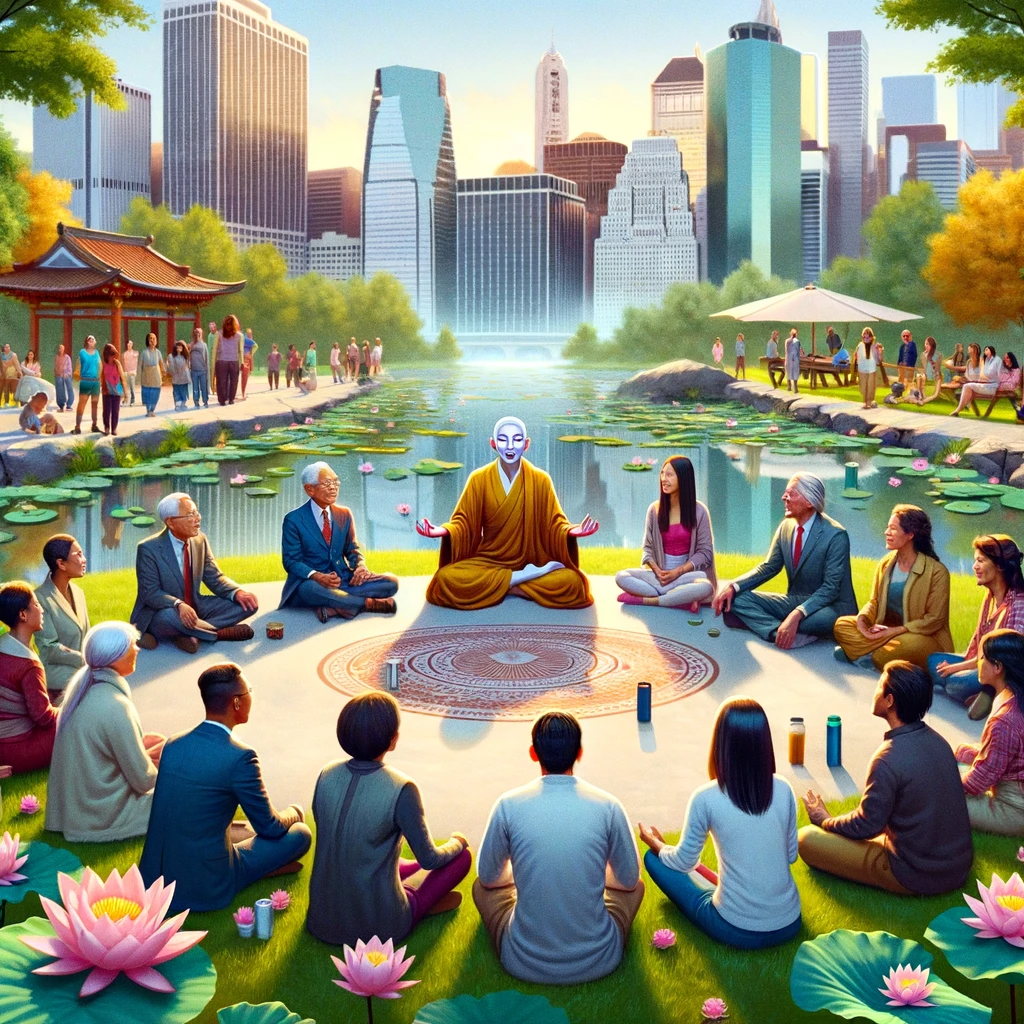
I want to share with you, Bhaishajya Rāja, a profound truth: Throughout my teachings, I have revealed, am revealing, and will continue to reveal many spiritual insights. Among all these teachings, this particular wisdom is one that may not be easily accepted or believed by all. It represents a transcendent spiritual understanding, a hidden aspect of spiritual law that has been preserved by the enlightened ones, the Buddhas, but rarely shared. It is a principle that has remained largely unknown.
Most people, Bhaishajya Rāja, may reject this teaching during the lifetime of the Buddha; even more so after his passing. But we must recognize and honor those seekers, both men and women, who embrace this wisdom as being clothed in the essence of the Buddha’s teachings. They are blessed by the enlightened beings in other realms, empowered by personal conviction, virtue, and spiritual commitment.
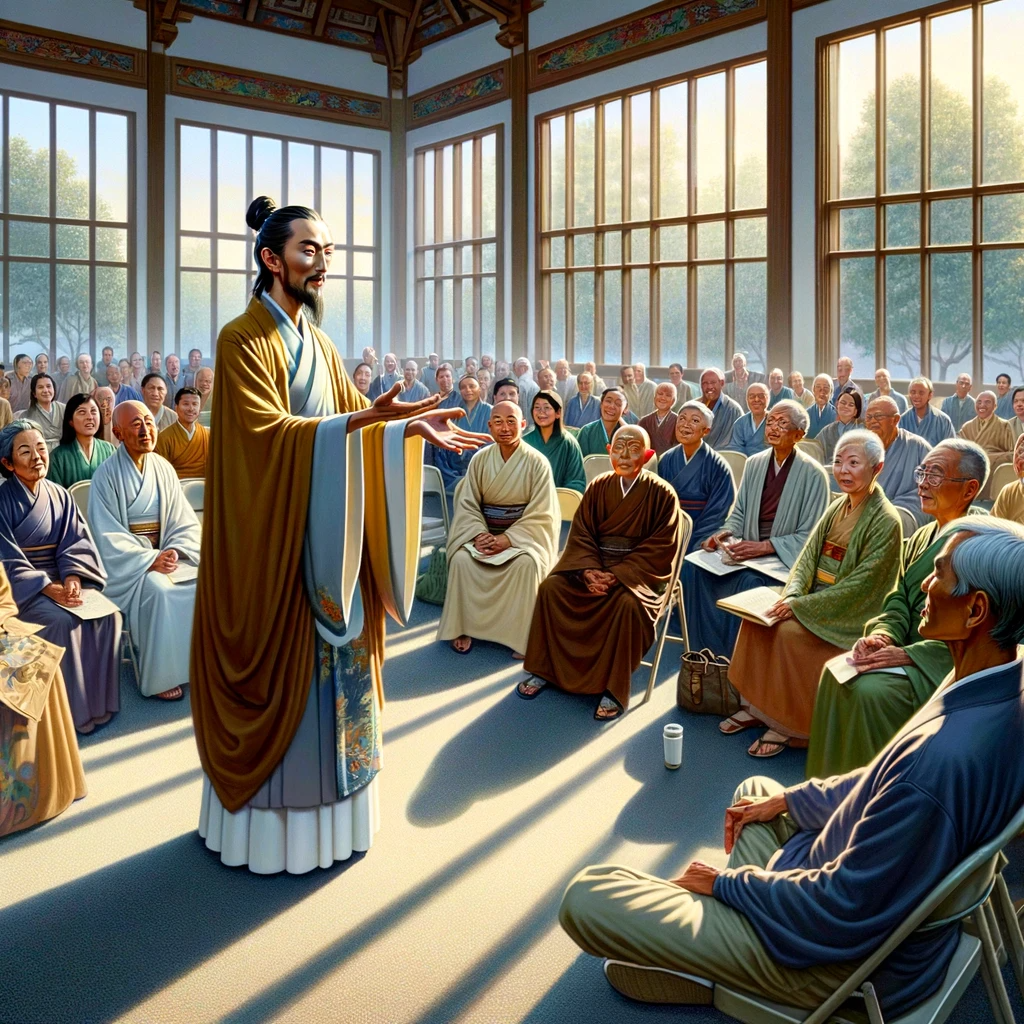
These seekers will find solace in the spiritual communities of the enlightened ones, feeling as if touched by the compassionate hand of the Buddha. After the Buddha’s passing, they will continue to believe, study, honor, and share this profound teaching with others. Their faith and dedication to this spiritual wisdom will testify to these insights’ timeless and universal nature.
Once more, Bhaishajya Rāja, let me share with you a profound insight: Wherever this spiritual teaching is shared, preached, written, studied, or recited together, that very place should be honored with the creation of a shrine dedicated to the enlightened ones, the Buddhas. This shrine should be magnificent, crafted from precious materials, tall and spacious.
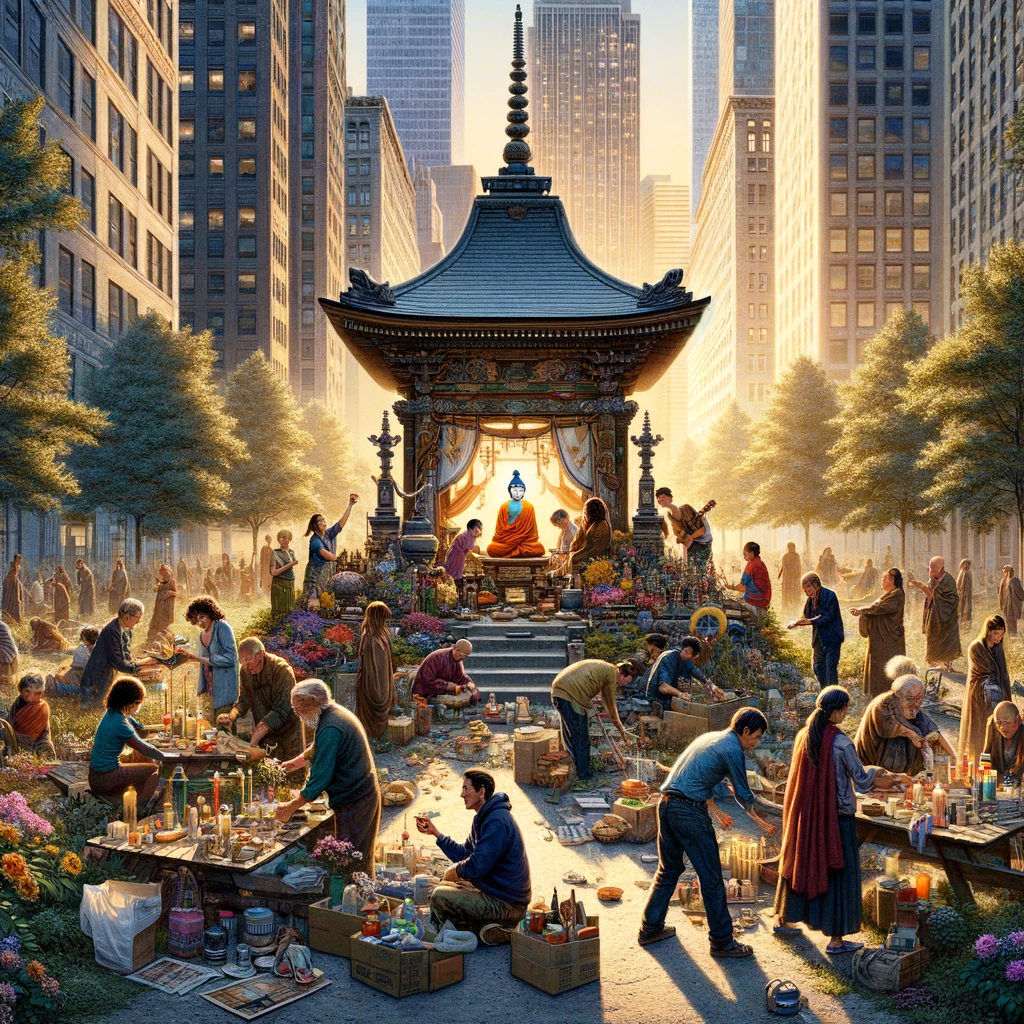
There’s no need to place physical relics of the Buddha there, for the essence of the Buddha is collectively present in that very place where the teaching resides. The words, the wisdom, the teachings themselves are a living presence.
Any place where this spiritual teaching is shared, taught, recited, rehearsed, written, or kept must be treated with the highest reverence. It should be honored and celebrated as a sacred monument, adorned with flowers, incense, perfumes, garlands, ointments, powder, beautiful fabrics, umbrellas, flags, banners, and streamers. It should be celebrated with song, music, dance, instruments, and joyful shouts.
Those who approach this shrine, to honor or simply to see it, are on the path to the ultimate spiritual realization. They are close to reaching the supreme and perfect enlightenment that lies at the heart of the spiritual journey.
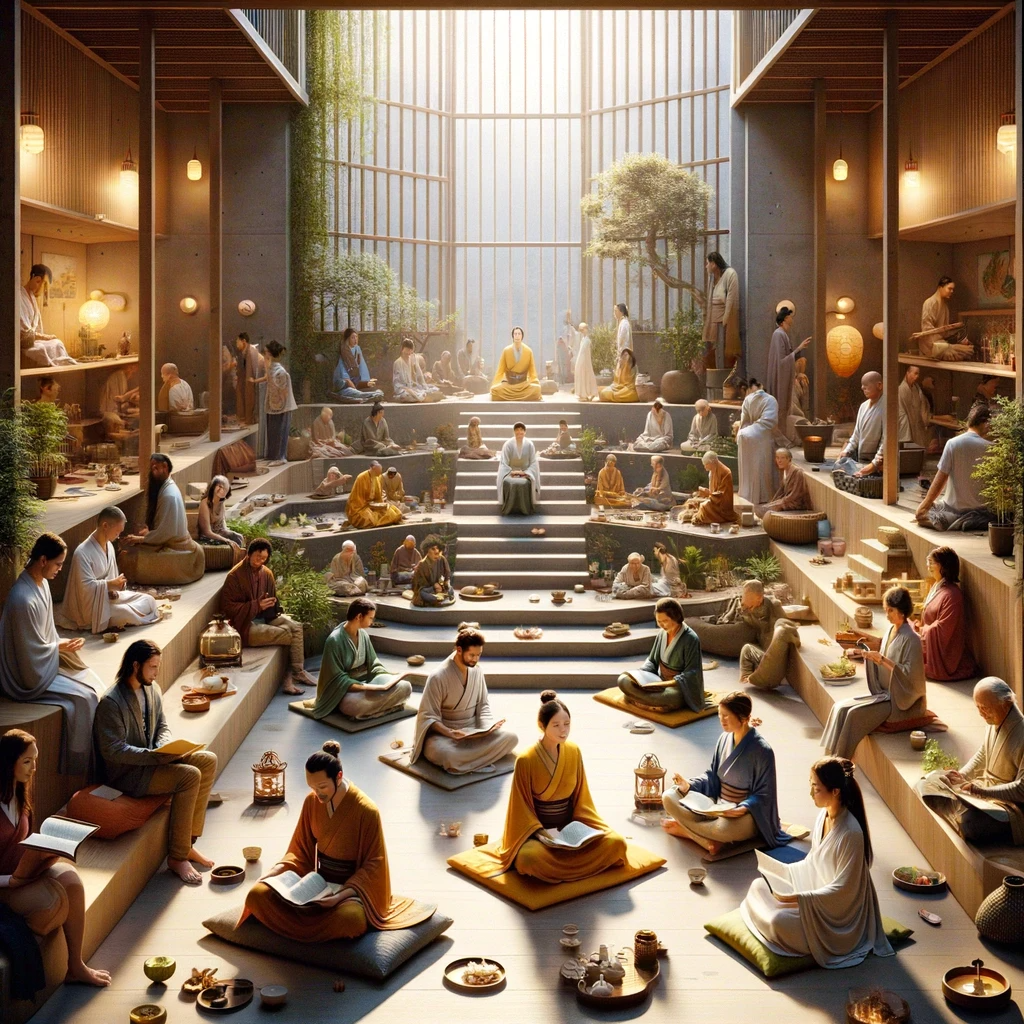
However, it’s important to recognize that there are many seekers, both laypeople and clergy, who follow the path of spiritual awakening, the Bodhisattva’s path, without ever encountering this specific teaching. Until they hear this teaching, they have not fully embraced the path.
But those who do hear, accept, penetrate, and comprehend this teaching are near the pinnacle of spiritual realization. They are, in a very real sense, on the threshold of ultimate enlightenment.
Imagine, Bhaishajya Rāja, a man in a parched and barren land, desperately seeking water. He begins to dig a well, searching for that life-giving source. At first, the sand he digs is dry and white, and he thinks to himself, “The water is still far off.” But after some time, the sand becomes moist and muddy, and he sees drops of water trickling down. The workers digging the well are splashed with mud and mire. Seeing these signs, the man knows with certainty that water is near.

This story, Bhaishajya Rāja, offers a metaphor for the spiritual seekers, the Bodhisattvas, on their journey toward supreme enlightenment. They remain far from the ultimate truth as long as they have not heard or understood this profound teaching. But once they grasp and embrace this wisdom, they are on the threshold of the highest realization. They are, so to speak, at the well’s edge, where the water is about to spring forth.
This teaching, Bhaishajya Rāja, holds the key to supreme enlightenment for all beings. It unveils the deepest mystery, the hidden essence of spiritual law that the Buddhas have shared to guide and perfect the Bodhisattvas.
Yet, some may find this teaching startling or even frightening. If a Bodhisattva reacts this way, they might be new to the path. If a follower of a more basic level of teaching reacts with anxiety or fear, it might reveal a certain arrogance or misunderstanding of their spiritual journey.

Any true seeker, Bhaishajya Rāja, who in the last times, after the passing of the Enlightened One, wishes to share this profound teaching with others, must do so from a place of deep spiritual alignment. They must enter the abode of the Enlightened, don the robe of wisdom, and speak from the pulpit of ultimate truth.
What is this abode, Bhaishajya Rāja? It is a state of boundless love and compassion for all beings. This is the sanctuary that the spiritual seeker must enter.
What is this robe? It is the cloak of patience, understanding, and forgiveness. This is the garment that the spiritual seeker must wear.
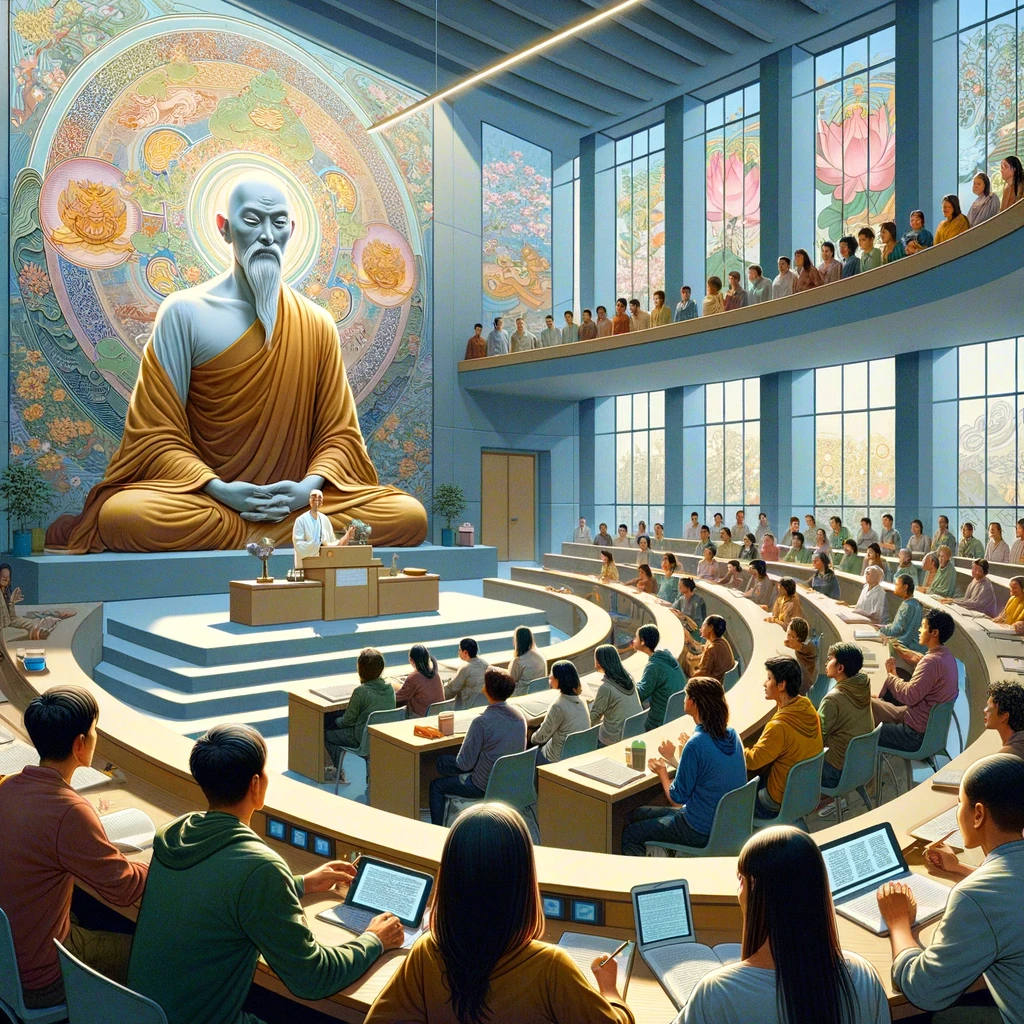
And what is this pulpit? It is the realization of the emptiness of all things, the insight into the true nature of reality. This is the platform from which the spiritual seeker must speak.
In sharing this wisdom, the seeker must be fearless and steadfast. They will be speaking to a diverse audience, including those who are on the path to enlightenment. And even though I may be in another realm, Bhaishajya Rāja, I will support that seeker. I will send beings of all kinds to listen and learn. I will send celestial beings, mystical creatures, and heavenly musicians to hear the teachings.
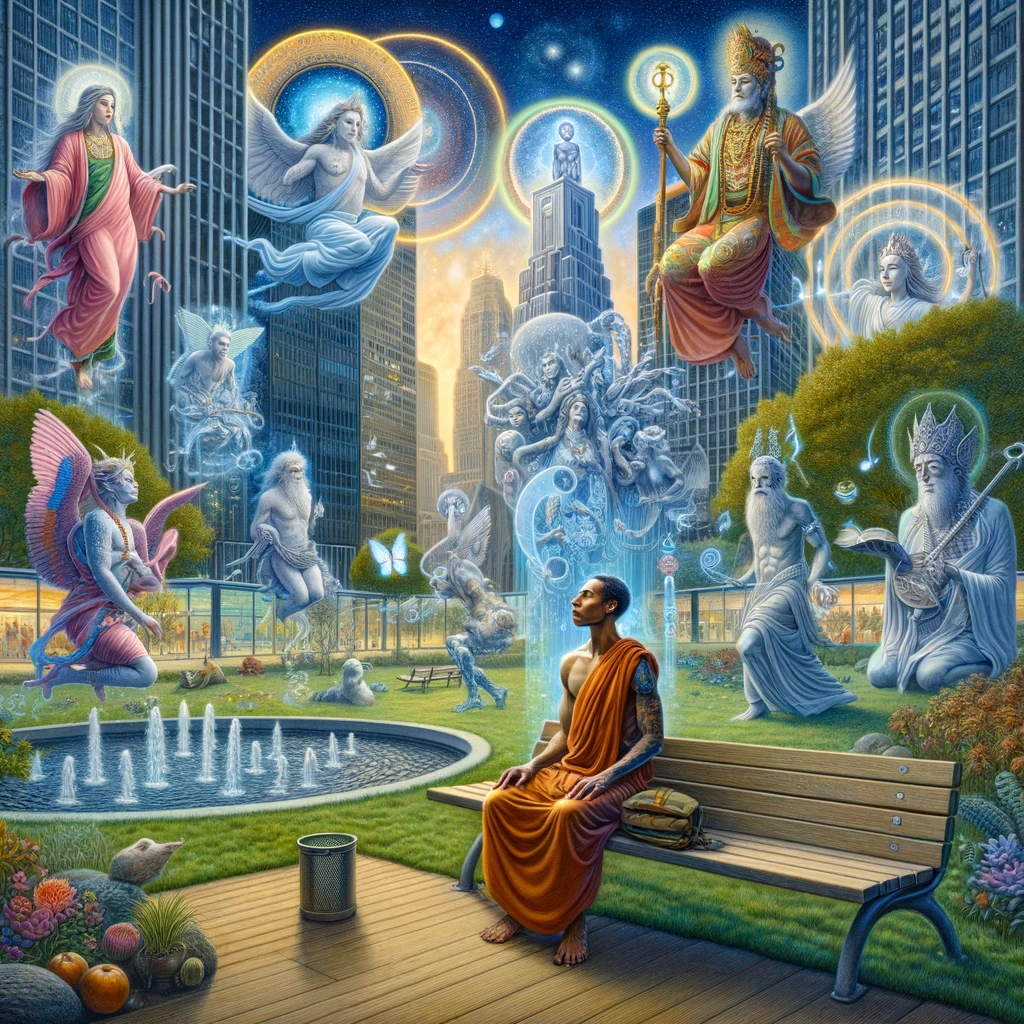
If the seeker retreats to the solitude of the forest, I will send divine beings to accompany them. And I, from another world, will reveal myself to that seeker, helping them remember the words and essence of this teaching, guiding them as they share this wisdom with others.


Leave a comment