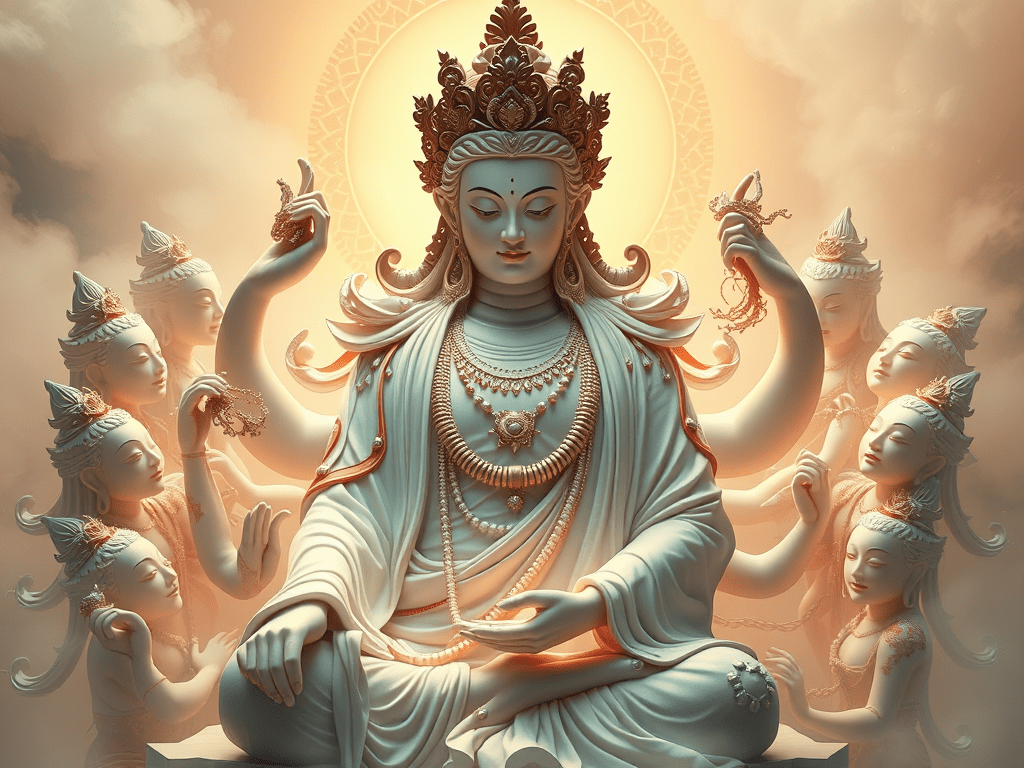
Chapter 25 of the Lotus Sutra is the most widely circulated protection text in East Asian Buddhism, and it makes a claim that is easy to read past. Help is available, in any form, at any time, to any being who cries out. There is no means test. There is no doctrinal examination. There is no requirement that the person calling be Buddhist. The only condition is distress.
I have been sitting with that chapter for a long time, and what keeps me there is not the miracle stories. It is the structure underneath them. The chapter lists seven disasters, and every one of them has a modern equivalent: fire is the inflammation of chronic stress, water is the overwhelm that pulls you under, imprisonment is the legal trouble and the bureaucracy and the stuckness. Then it lists thirty-three forms the bodhisattva takes, and the logic of that list is that the form is always fitted to the person who needs it. The prisoner needs a jailer with keys. The child needs a parent with arms.
Below is the full chapter on this from my forthcoming book, free to read or download. It covers the seven disasters, the thirty-three forms, what Zhiyi says is actually happening when you chant the name, and a practical protocol for using the chapter when something has gone wrong in your own life.
Sources are cited to the Taishō canon, so anything I claim about the text can be checked against the text.
Read the full chapter (PDF, 7 pages)
The chapter comes from The Lotus Sutra’s Promise: What the Lotus Sutra Promises Its Students, a companion volume in The Lotus Sutra for the Modern Reader, publishing in February 2027. If you want something to read before then, The Awakened State: What Buddhist Enlightenment Actually Means is available now, and The Ongoing Assembly, Volume One of the series, publishes August 4, 2026.


Leave a Reply