Tag: Buddhist Philosophy
-
5 Surprising Lessons from an Ancient Bodhisattva on How to Face an Overwhelming World
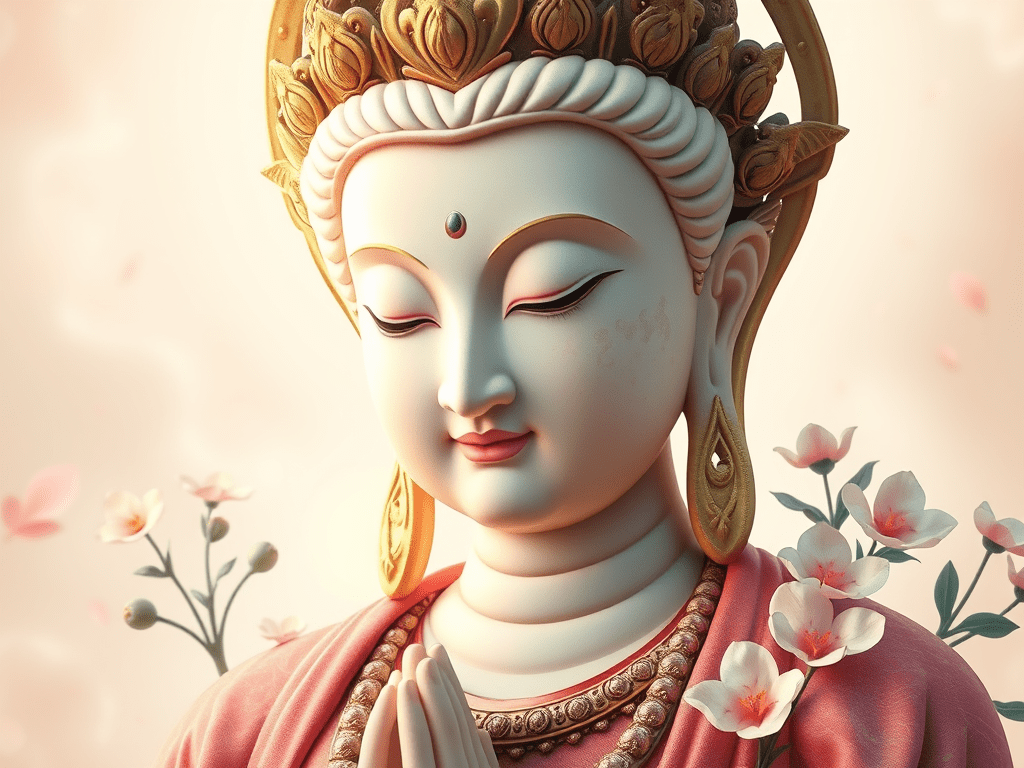
It is a deeply familiar weight in our modern age: we are confronted daily with a seemingly endless tide of global problems, and in the face of such overwhelming need, we feel crushingly inadequate. We look at the scale of what is necessary and, as one ancient text observes, come to “believe that we are…
William Altig
Abhaya, Amitabha Buddha, Anatta, Avalokitesvara, Bodhicitta, Bodhisattva, Bodhisattva vow, Buddhist Compassion, Buddhist deity, Buddhist Ethics, Buddhist iconography, Buddhist meditation, Buddhist Philosophy, Buddhist practice, Buddhist psychology, Buddhist Symbolism, Buddhist teachings, Buddhist vows, Buddhist Wisdom, Chapter 25 Lotus Sutra, Chenrezig, Chinese Buddhism, comparative religion, Compassion, compassionate action, dealing with suffering, dependent origination, East Asian Buddhism, emptiness, fearlessness, gender in Buddhism, Goddess of Mercy, Guanyin, helping others, interconnectedness, kannon, karuna, Kumarajiva, Lotus Sutra, Mahayana Buddhism, mindfulness practice, Non-self, oceanic vow, overcoming despair, prajna, pratityasamutpada, Pure Land Buddhism, religious studies, Shantideva, Skillful Means, spiritual hope, Spiritual Transformation, Sunyata, thousand-armed Avalokitesvara, Upaya, wisdom and compassion -
The One That Stays

“The One That Stays” wrestles with an ancient question: How do ordinary people offer something sacred when the old stories demand the impossible? Inspired by Buddhist teachings about sacrifice and perseverance, this song explores the tension between spectacular acts of devotion and the quiet heroism of simply continuing—of getting up, showing up, and staying present…
William Altig
Americana, bluesy folk, Buddhist Philosophy, contemplative music, contemporary folk, daily struggle, devotion, endurance, faith and doubt, folk pop, gospel influenced, human spirit, inner strength, meaningful life, ordinary heroism, perseverance, philosophical lyrics, protest song, Religious Poetry, resilience, roots music, sacred ordinary, social justice, soul folk, spiritual songs, standing firm, staying power, suffering and transformation, survival -
The Unspoken Teaching

Beyond the boundaries of thought, where words collapse like waves, the Buddha rises from his samādhi—eyes opening on what cannot be said. Infinite, immeasurable, bottomless—the wisdom that defeats all measure. The śrāvakas stand at the transformed city, satisfied with their small escape, calling provisional shelter “home.” But the depths call deeper still. What skill could…
William Altig
accessible dharma, acoustic spirituality, awakening poetry, beyond language, beyond words, body speech mind, bridge metaphor, Buddha wisdom, Buddhist modernism, Buddhist Philosophy, Buddhist Poetry, chanting, conceptual attachment, contemplative verse, contemporary Buddhist poetry, daimoku, devotional poetry, dharani, direct experience, Eastern philosophy, Ekayāna, emptiness and form, enlightenment poetry, esoteric Buddhism, Faith and Practice, ineffable truth, interfaith spirituality, liberation poetry, linguistic transcendence, Lotus Sutra, Mahayana Buddhism, mantra poetry, Medicine King Bodhisattva, meditation poem, mindfulness verse, mystical poetry, Nichiren, Non-conceptual wisdom, non-dual awareness, One Vehicle, philosophical verse, protective incantations, provisional and ultimate, Religious Poetry, ritual poetry, sacred sound, sacred syllables, samadhi, silence and sound, Skillful Means, sonic meditation, sound as path, spiritual folk wisdom, spiritual poetry, Spiritual Practice, spiritual resonance, teaching beyond teaching, Three Karmas, Tiantai, Transcendence, transformation poetry, Upaya, vibrational teaching, wisdom tradition -
The Threefold Crown

A parent’s heart, warm as dawn,But lacking skill, the path goes wrong.A teacher’s mind, sharp as flame,Without compassion, it twists to blame. A ruler’s hand, strong and sure,But without wisdom, power is cruel.Each fragment shines, yet none complete—The fractured crown leaves souls in need. But here within this world of pain,The Buddha walks, the bond…
William Altig
Bodhisattva Path, buddha’s virtues, Buddhism, buddhist insight, Buddhist Philosophy, Buddhist Poetry, Buddhist practice, Compassion, debt of gratitude, Dharma practice, Enlightenment, folk blues inspiration, integrated authority, kito sho, Lotus Sutra, Mahayana Buddhism, Nichiren, protection, Sahā world, sokushin jobutsu, sovereign teacher parent, spiritual awakening, spiritual poem, Three Virtues, wisdom -
The Bodhisattva Ideal and World Purification in the Lotus Sūtra Chapter Twenty-Three

Date: September 4, 2025 Subject: Review of “The Luminous Path: An Examination of the Bodhisattva Ideal in Chapter Twenty-Three of the Lotus Sūtra” This briefing document summarizes the key themes, ideas, and facts presented in the provided source, “The Luminous Path: An Examination of the Bodhisattva Ideal in Chapter Twenty-Three of the Lotus Sūtra,” focusing…
William Altig
Bodhisattva Ideal, Buddha Virtue Pure and Bright Like the Sun and Moon, Buddhist Philosophy, Chapter Twenty-Three, Compassion, Dharma, Dharma Offering, Enlightenment, Gladly-Seen-By-All-Beings, Gratitude, Healing the World, Karma Purification, karuṇā, light, Lotus Sūtra, Mahayana Buddhism, Medicine-King Bodhisattva, Non-attachment, prajñā, Pure Land, Purification, Radiance, Rebirth, Samsara, Self-Immolation Metaphor, Selfless Devotion, Spiritual Practice, Spiritual Transformation, True Mind, True Vigor, upāya, wisdom -
The Buddha’s Declaration and the Universal Way

Date: September 3, 2025 Subject: An analysis of the Buddha’s declaration in Chapter Five of the Lotus Sūtra and its implications for understanding universal enlightenment. Executive Summary: Chapter Five of the Lotus Sūtra features a seemingly audacious declaration by the Buddha: “I know the Way. I have opened the Way. I will expound the Way.…
William Altig
Absolute Happiness, Buddha’s Declaration, Buddhist Community, Buddhist Philosophy, Buddhist teachings, Chapter Five, Compassionate Function, Cosmic Audience, daimoku, Devotional Text, Dharma, Dharma Rain, Diverse Beings, Enlightenment, Eternal Buddha, Gods Men Asuras, Great Cloud Metaphor, human revolution, Individual Effort, liberation, Living Buddha, Lotus Sūtra, Mahayana Buddhism, Nichiren School, Non-Duality, One Vehicle, Parable of the Medicinal Herbs, Rhetorical Strategy, sangha, Self-mastery, Shakyamuni, Skillful Means, Spiritual Authority, Spiritual Capacities, Spiritual Progress, Three Thousand Realms in One Thought Moment, Tiantai School, Universal Buddhahood, upaˉya, Zhiyi -
The Lotus Sūtra’s Ceremony in the Air and its Embodiment in Nichiren Buddhism

Date: September 2, 2025 Purpose: This document provides a detailed review of the “Ceremony in the Air” as depicted in the Lotus Sūtra, its allegorical meanings, and its profound reinterpretation and practical application within Nichiren Buddhism. I. Overview of the Ceremony in the Air (Lotus Sūtra, Chapters 11-22) The “Ceremony in the Air” is a…
William Altig
Bodhisattvas of the Earth, Buddhahood, Buddhism, Buddhist Allegory, Buddhist art, Buddhist Doctrine, Buddhist Philosophy, Buddhist practice, Ceremony in the Air, chanting, Enlightenment, Gohonzon, Heian Period, Human Potential, Ichinen Sanzen, Lotus Sutra, Mahayana Buddhism, Many Treasures Buddha, Mystic Law, Nam-myoho-renge-kyo, Nichiren Buddhism, Reality and Wisdom, Shakyamuni Buddha, Spiritual Transformation, Spiritual Virtues, Sutra Commentary, Tendai, Tiantai, Treasure Stupa, Universal Enlightenment -
Nichiren’s Path to Enlightenment

This briefing document provides a comprehensive review of key themes and essential facts from the provided source, “Nichiren’s Path to Enlightenment,” focusing on the transformative power of consistent individual action within a collective context. I. Introduction: The Transformative Power of Persistent Individual and Collective Action The core message of Nichiren’s philosophy, particularly as articulated in…
William Altig
13th century Japan, Adversity, and delusion, Buddhahood, Buddhism, Buddhist Philosophy, collective action, collective spiritual unity, cosmic axis, daily spiritual actions, drops of water, Enlightenment, Establishing the Correct Teaching for the Peace of the Land, faith, faith like fire, faith like water, fires of greed, Gohonzon, hardship, hatred, human revolution, Ichinen Sanzen, individual action, inseparability of life and environment, Kamakura period, kosen-rufu, Latter Day of the Law, Lotus Sutra, many in body, Mappō, Meditation, Merit, Mongol invasion, Mt. Sumeru, Nam-myoho-renge-kyo, natural disasters, Nichiren, Nirvāṇa, On Selecting the Right Time, one in mind, particles of dust, perfect enlightenment, Persecution, perseverance, personal revolution, Philosophy, political instability, Pure Land on earth, pure Law, Religion, Rissho Ankoku Ron, rivers of hardship, roots of goodness, sangha, sea of the Lotus Sutra, Senji-shō, Shakyamuni Buddha, single element of mind, social unrest, societal peace, spiritual attainment, spiritual crisis, Spiritual Development, spiritual grit, Spirituality, three thousand realms in a single moment of life, transformation of the land, transforming karma into mission, unshakeable life state, votary of the Lotus Sutra, widespread propagation of the Mystic Law -
Buddhist Perspectives on Time, Purpose, and Enlightenment: A Briefing

This briefing synthesizes key themes from the provided source, “Lotus Sūtra: Time’s Immeasurability,” focusing on the Buddhist understanding of time, its implications for spiritual practice, and the path to enlightenment. It aims to address the modern anxiety of “not enough time” by demonstrating how the Sūtra’s teachings transform this perception into a liberating framework for…
William Altig
14th Dalai Lama, Abhidharmakośabhāṣyam, Ajahn Brahm, Arhat, Ayya Khema, Bodhisattva, Bodhisattva’s vow, Buddha, Buddha-nature, Buddhism, Buddhist Philosophy, Busyness (modern delusion), Compassion (Karuṇā), cosmic time, Cosmology, Cyclical time, Dukkha, Enlightenment, Geshe Kelsang Gyatso, Great Compassion (Mahākaruṇā), Great-Universal-Wisdom-Excellence, Ink-powder parable, Kalpas (Aeons), karma, Linear time, Lotus Sūtra, Mahāyāna Buddhism, Mindfulness, Nirvāṇa, Parinirvāṇa, Pema Chödrön, Phantom City Parable, Philosophy, Pratyekabuddha, Precious human birth, Present moment, Religion, Saṃsāra, Skillful means (Upāya), spiritual path, Spiritual Practice, Spirituality, Sumeru-worlds (Cakravāḍa), Temporal Anxiety, Thich Nhat Hanh, Thousand-million-fold world (Trisāhasra-mahāsāhasra-loka-dhātu), time, Wisdom (Prajñā), Yojanas, Śākyamuni Buddha -
Faith, Eternal Buddhahood, and the Attainment of Supreme Enlightenment in the Lotus Sūtra (Chapter Seventeen)

Date: June 3, 2025 Subject: Analysis of Lotus Sūtra Chapter Seventeen, focusing on the declaration of the Buddha’s eternal lifespan and its implications for attaining supreme enlightenment. Sources: Excerpts from “Lotus Sūtra Chapter Seventeen Analysis,” with specific references to cited texts. Key Takeaways: This briefing document analyzes the profound teachings presented in Chapter Seventeen of…
William Altig
Anuttarasamyaksambodhi, Avinivartaniya, Bodhisattva Path, Buddha’s Eternal Life, Buddhism, Buddhist Hope, Buddhist Merit, Buddhist Philosophy, Buddhist practice, Buddhānusmṛti, Chapter 16 Lotus Sutra, Chapter 17 Lotus Sutra, Dharma, faith, Lotus Sutra, Mahayana Buddhism, Maitreya, Non-Retrogression, Overcoming Forgetfulness, Saddharma Pundarika Sutra, sangha, Spiritual Certainty, Spiritual Development, spiritual enlightenment, Spiritual Transformation.