Tag: Buddha-nature
-
Does Buddhism Believe in a Soul? The Nirvāṇa Sūtra’s Surprising Answer

If you know one thing about Buddhism, it’s probably this: there is no soul. No permanent self. The teaching is called anattā (Pali) or anātman (Sanskrit), non-self, and it’s the line that separates Buddhism from almost every other religion. Hinduism has the ātman; Christianity has the soul; Buddhism, famously, has neither. What you call “you”…
-
What If No One Is Hopeless? | The Awakened State (Part I) #Shorts
The Nirvāṇa Sūtra reverses the early Buddhist map: even the being written off as hopeless is a burned seed that still contains life. Part I of IV — The Maps and the Territory — from The Awakened State: What Buddhist Enlightenment Actually Means by William Altig.
-
The Flower That Blooms Once in Three Thousand Years — and the Two I Saw
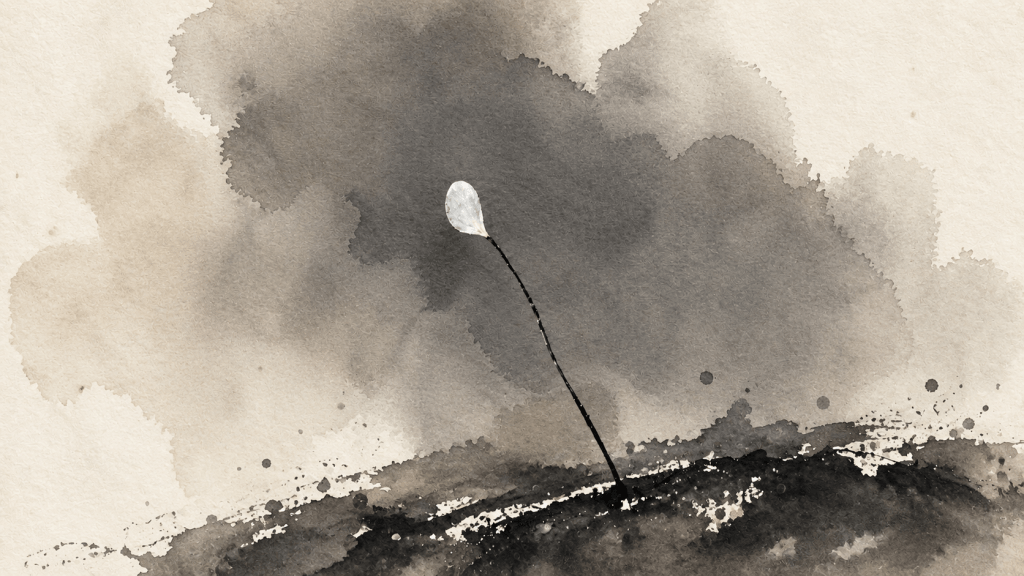
I want to tell you about something I saw. I’m still not entirely sure what to do with it, which is part of why I’m telling you. It was a flower. A single white petal, smaller than a fire ant, on a stem like a black thread—a little thicker than the silk a spider lets…
-
The Secret to Deeper Relationships Is an Ancient Act of ‘Summoning’

We’ve all said it, or at least thought it, about someone we know: “They live in their own world.” It’s a common phrase, a shorthand to describe someone who seems distant, preoccupied, or tuned into a different frequency than our own. We usually mean it as a casual observation, a way to explain a gap…
-
4 Shocking Lessons on Devotion from a Bodhisattva Who Set Himself on Fire
Introduction: The Outer Limits of Devotion What is the greatest sacrifice you could imagine making for something you truly believe in? For an idea, a truth, or a sense of gratitude so profound that no ordinary gift would suffice? The ancient Buddhist text, the Lotus Sutra, contains one of history’s most extreme and startling tales…
-
The 13th-Century Monk Who Said ‘Ignore Everyone’—And Why It’s the Secret to Deeper Listening

Introduction: The Practitioner’s Paradox In any spiritual path, a fundamental tension exists between two essential guides: the wisdom of others and the truth of our own experience. On one hand, we have sacred texts, traditions, and teachers—a map charted by those who have already walked the path. To ignore this map is to risk getting…
-
The Treasure Tower: Unpacking a 2,000-Year-Old Vision of Your Untapped Potential
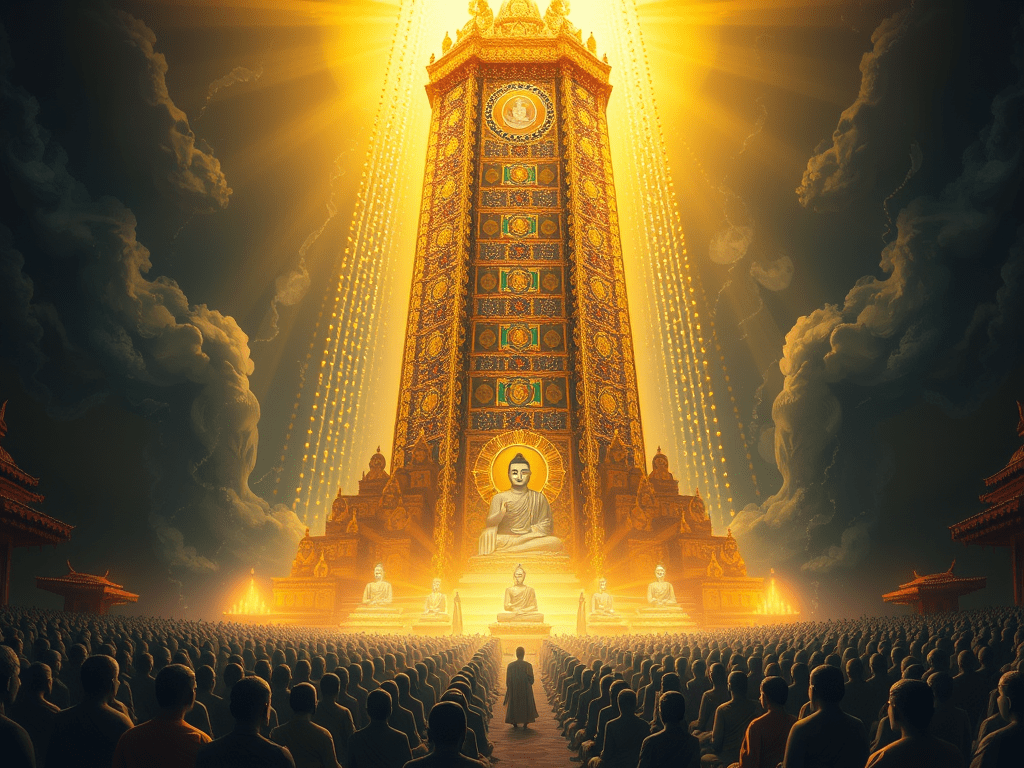
In our modern lives, the search for meaning can feel like a trek through a vast and confusing landscape. We look for purpose in our careers, our relationships, and our personal growth, often feeling that the profound answers we seek are somewhere “out there,” just beyond our reach. We read, we strive, we search, hoping…
-
A 13th-Century Monk’s Paradox That Reimagines Enlightenment
We often picture spiritual wisdom as a distant peak, accessible only to the most dedicated climbers. The common cultural image suggests that the deepest truths are complex, abstract, and reserved for an elite few—monks, scholars, or gurus who have spent decades in seclusion and study. We assume that the path to enlightenment is an arduous…
-
More Than a Reward: 5 Radical Ideas Hidden in a 2,000-Year-Old Buddhist Text
For many, religious or spiritual practice is often seen through a transactional lens: perform specific actions, say the right words, do good deeds, and you will receive a reward—a better life, good fortune, or a favorable place in the hereafter. This view presents spiritual development as a kind of karmic accounting, where we steadily accumulate…
-
The Parable of the Physician’s Ultimate Prescription
In a city plagued by chronic illness, there lived a wise Physician whose knowledge contained “the store of the hidden core of all the Buddhas”. This Physician possessed a single, ultimate Prescription that promised a cure for all suffering and revealed that the inherent nature of every resident was perfect health—a supreme state of “boundless…

