Tag: Lotus Sutra
-
A 2,000-Year-Old Teaching That Reframes Your Suffering as a Sacred Mission
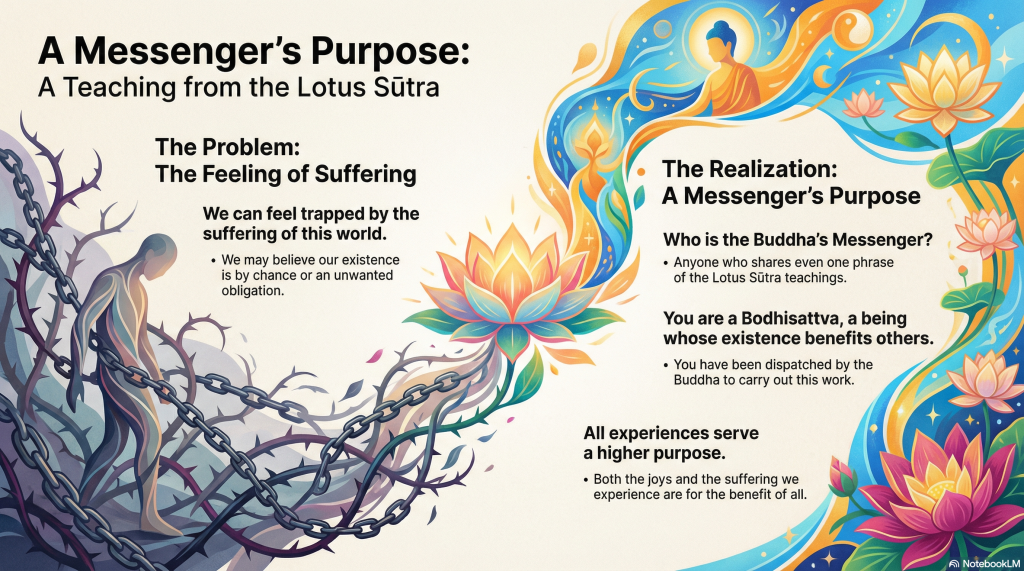
It’s a heavy time to be alive. The endless scroll of crises, the psychic weight of global conflict, the quiet helplessness that settles in when the world feels broken—it can all become too much. This feeling can lead to a deep yearning for escape, a sense that life is not a choice we made but…
-
A 2,000-Year-Old Guide to a Wiser Life: The Buddha’s 3 Simple Rules
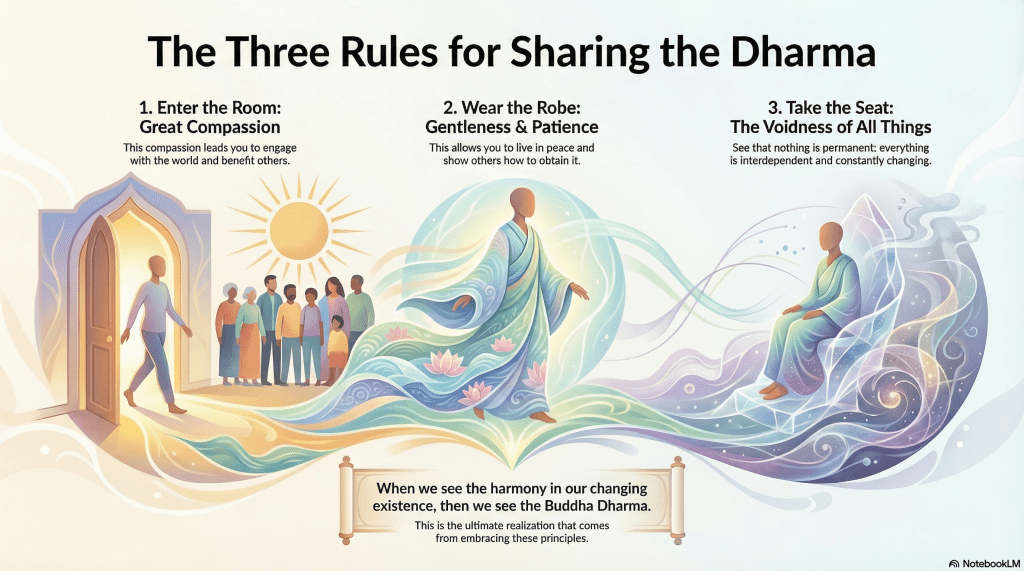
In a world that seems to spin faster every day, many of us are searching for a still point—a source of clarity and grounding that can help us navigate the complexities of life with more grace. We look for frameworks to make sense of the chaos, often feeling that our challenges are uniquely modern. Yet…
-
Beyond Merit and Miracles: A 13th-Century Monk’s Radical Guide to True Power and Purpose

What if a lifetime of accumulated good deeds didn’t guarantee you a life of ease and privilege? Most spiritual traditions suggest a direct link between merit and reward, but the profound wisdom of an unlikely figure—the 13th-century Japanese monk Nichiren—offers a far more challenging and insightful perspective. Though centuries old, his teachings contain revolutionary takeaways…
-
The Hidden Chapters: How a Textual Detective Story Is Reshaping a Sacred Buddhist Scripture
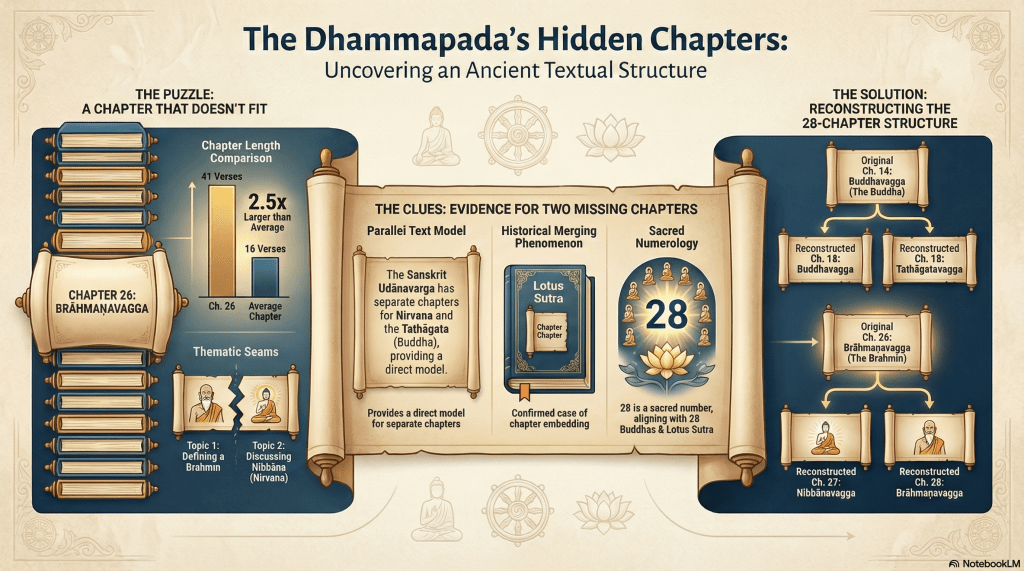
The Dhammapada is one of Buddhism’s most beloved, accessible, and widely-translated texts. For over two millennia, its 423 verses, neatly organized into twenty-six chapters, have offered profound wisdom in a simple and memorable format. Practitioners and scholars alike have revered this structure as a definitive presentation of the Buddha’s core teachings. But what if the…
-
Why a Buddhist Demon’s Violent Threat is Really a Lesson in Compassion
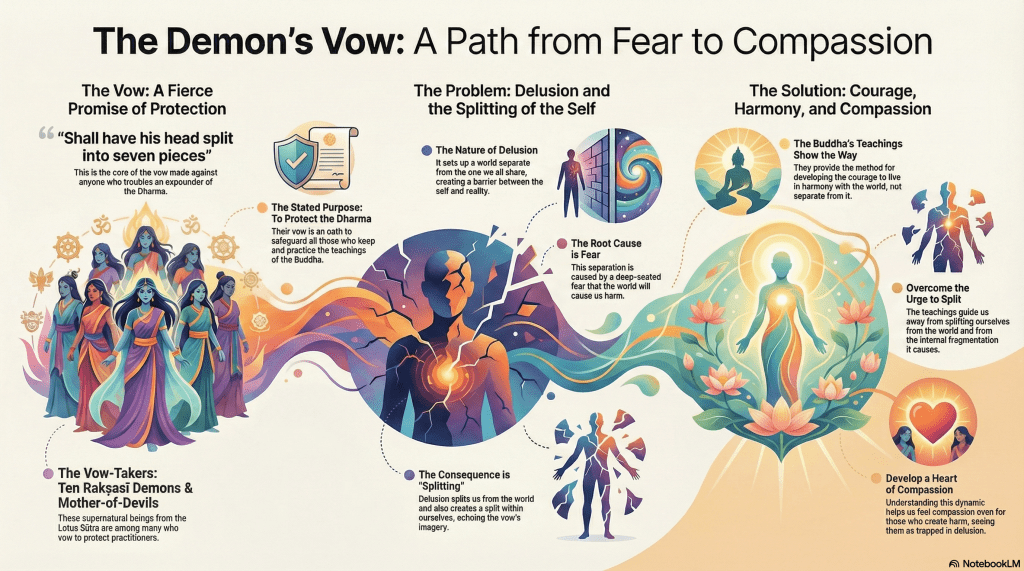
We often turn to sacred texts expecting to find words of peace and solace. It can be jarring, then, to encounter a passage that sounds like a violent threat, especially when it comes from beings vowing to protect a sacred teaching. How can a demon’s harsh vow to split someone’s head into seven pieces become…
-
This Ancient Sutra Isn’t a Book—It’s a Voice. Here’s What It Says.
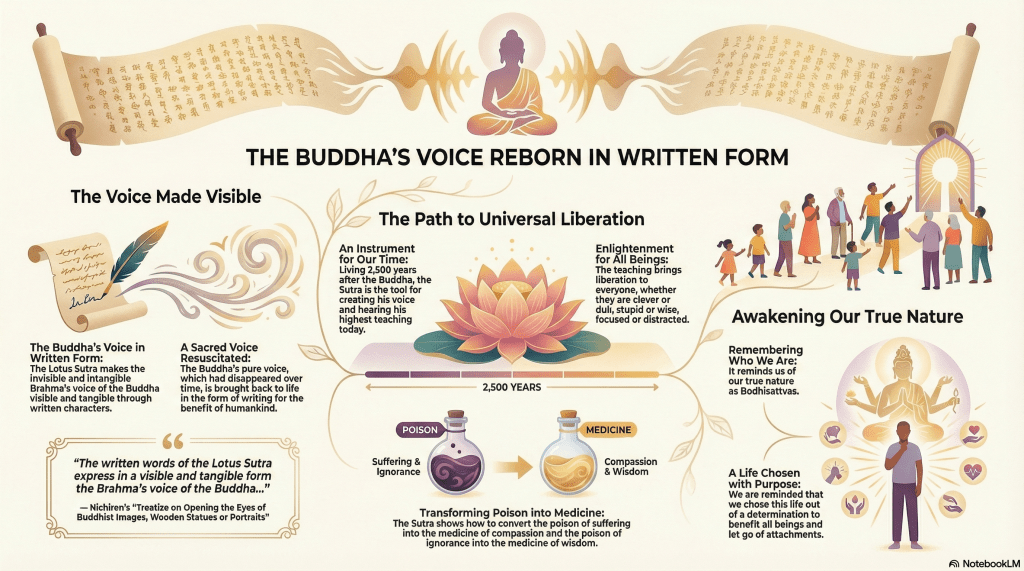
In our modern world, how can we truly access the wisdom of great teachers who lived thousands of years ago? It has been 2,500 years since the Buddha Śākyamuni walked the Earth, a gap of time so vast it can feel like an unbridgeable silence. How can a voice that has long since disappeared continue…
-
Why the Buddha Claimed to Die: A Surprising Lesson on Motivation from the Lotus Sutra
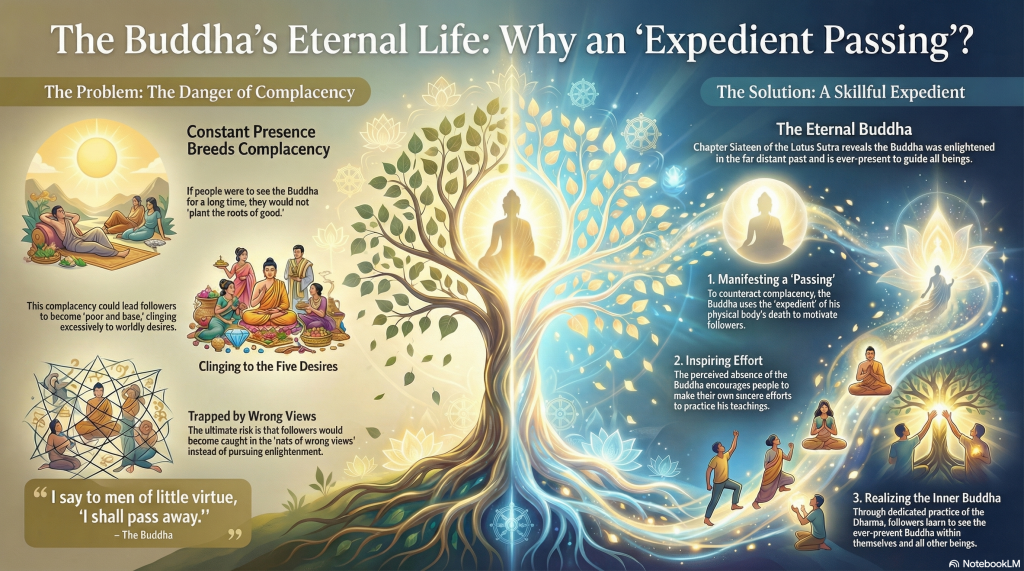
We’ve all felt it. It is a profound paradox of the human heart: we often discover the true value of a thing only in its perceived absence. This strange quirk of human psychology is central to one of the most profound and surprising teachings in Buddhist philosophy. What if the historical Buddha’s death wasn’t an…
-
The Spiritual Paradox: Why Absence Can Be a Greater Teacher Than Presence
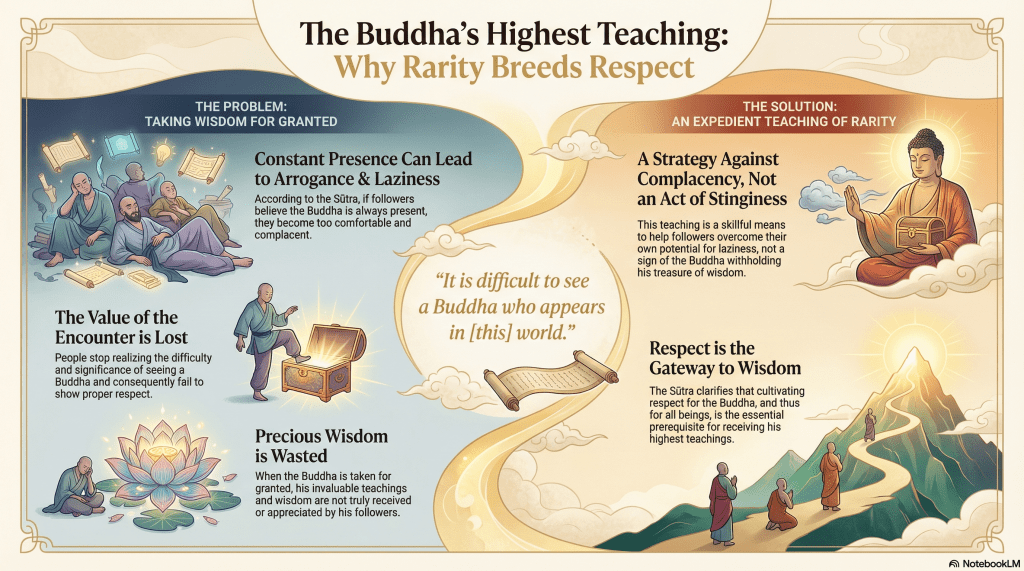
It is a deeply ingrained part of human nature to take for granted that which is always available. A friend who is always there, a resource that seems limitless, or an opportunity we believe will never expire—their constant presence can paradoxically diminish their perceived value. We grow accustomed to them, and in our comfort, we…
-
A Compassionate Absence: The Surprising Reason We Can’t See the Buddha
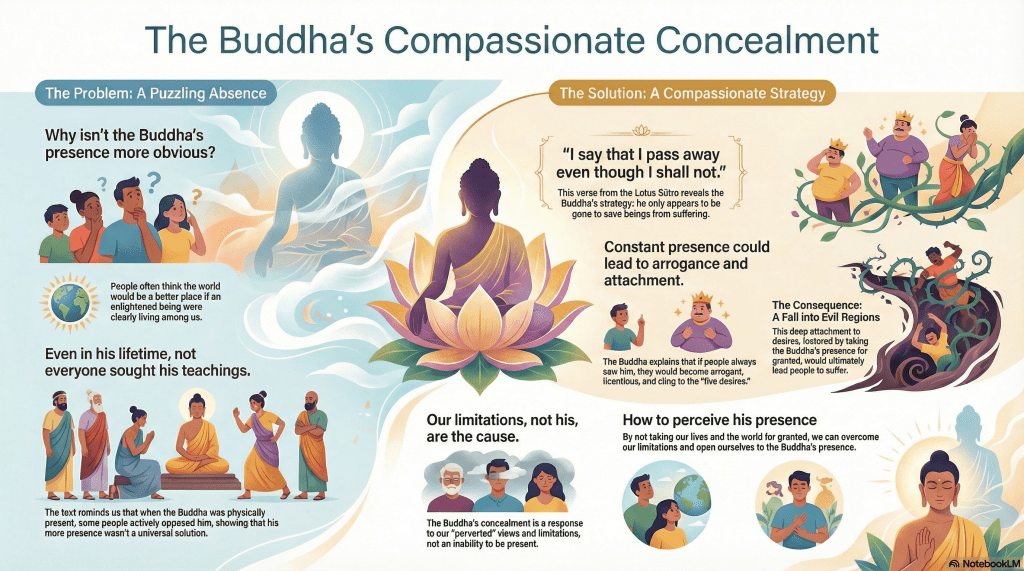
In moments of personal struggle or when faced with global suffering, it’s natural to ask: if enlightened wisdom exists, why does it feel so absent? We often think that if only we could see a living Buddha or a perfect guide, our own spiritual paths would become clearer, our suffering would lessen, and the world…
-
Why the Wisest Teachers Sometimes Pretend They Know Nothing

Introduction: The Comfort of Our Own Confusion We have a deep-seated fear of profound change. Even when we are acutely aware that our current situation causes us to suffer, we often cling to the familiar pain rather than risk the unknown territory of genuine transformation. As one ancient text suggests, we are deeply attached to…
 Mr. Altig’s Overview of the Wonderful Dharma of the Lotus Sutra