Tag: One Vehicle
-
The Lotus Sutra’s Paradox: Rarity vs. Eternal Buddha

1. Introduction: The Dynamic Revelations of Truth in the Lotus Sūtra The Lotus Sūtra (Saddharma Puṇḍarīka Sūtram) is a foundational and highly influential text in Mahāyāna Buddhism, particularly in East Asia. It presents key Mahāyāna tenets such as the One Vehicle (ekayāna), the distinction between expedient and ultimate teachings, and the revolutionary concept of the…
-
The Profound Encouragement of Universal-Sage Bodhisattva in Chapter 28 of the Lotus Sutra

The Lotus Sutra, revered as a cornerstone of Mahayana Buddhism, presents a comprehensive vision of the path to Buddhahood, asserting that this supreme state is attainable by all beings without exception.1 Central to its teachings is the doctrine of the One Vehicle (Ekayana), which posits that all Buddhist paths ultimately converge on Buddhahood, and the…
-
The Merits of Practice and Understanding in Lotus Sūtra Chapter Seventeen

The Lotus Sūtra, a foundational text within Mahayana Buddhism, articulates the doctrine of the One Vehicle, asserting that all paths ultimately lead to Buddhahood.1 This influential scripture, revered across various East Asian Buddhist traditions, is considered by many to encapsulate the complete and final teachings of Shakyamuni Buddha, sufficient for attaining salvation.2 Chapter Seventeen of…
-
The Power of Faith and Patient Practice: Unlocking the Ultimate Dharma in the Lotus Sūtra’s Chapter Fifteen

I. Introduction: The Lotus Sūtra and the Call to Engaged Faith A. The Apex of Mahayana Teachings The Saddharma Puṇḍarīka Sūtra, commonly known as the Lotus Sūtra, occupies a position of paramount importance within the vast corpus of Mahayana Buddhist scriptures. Revered across East Asia and beyond, it is often hailed as the “King of…
-
The Inconceivable Supernatural Powers of the Buddha in the Lotus Sūtra

1. Introduction Overview This report undertakes a comprehensive analysis of the concept of “inconceivable supernatural powers” (acintya−ṛddhi) attributed to the Buddha, particularly as referenced in Chapter Six, “Bestowal of Prophecy,” of the Saddharma Puṇḍarīka Sūtra (Lotus Sūtra). The specific impetus for this investigation is the verse sung by Śākyamuni Buddha following his prophecy of future…
-
The Lotus Sutra as the Buddha’s True Mind: An Analysis of Nichiren’s Interpretation in the Zui-jii Gosho

I. Introduction: Setting the Context – The Lotus Sutra, Nichiren, and the Zui-jii Gosho A. Overview The Saddharma Puṇḍarıˉka Suˉtra, or Lotus Sutra, stands as a cornerstone scripture within the Mahayana Buddhist tradition, revered for its profound doctrines and expansive vision of salvation. Its influence has permeated Buddhist thought, practice, and culture across Asia for centuries. Among…
-
The Merits of Encouraging Others to Hear the Lotus Sutra: An Expert Analysis of Chapter Eighteen

Key Phrase Translation from Buddhist Text Translation Society Translation from Nichiren Information Translation from 500 Yojanas Lotus Flower of the Wonderful Dharma Dharma Flower Sutra sutra called the Lotus sūtra called the Lotus Flower of the Wonderful Dharma dhāraṇīs Dharani Bodhisattva dharani bodhisattvas Bodhisattvas who obtain dharanis living with the Bodhisattvas who obtain dhāraṇīs born…
-
An Analysis of the Cosmic Assembly in Chapter Eleven of the Lotus Sūtra: Emanation Buddhas, the Treasure Stupa, and the Supreme Dharma

1. Introduction: The Pivotal Eleventh Chapter of the Lotus Sūtra The Saddharma Puṇḍarīka Sūtra, or Lotus Sūtra, stands as a foundational text within Mahāyāna Buddhism, profoundly shaping the religious landscape of East Asia.1 Revered as containing the final and complete teachings of Śākyamuni Buddha, it is particularly central to the Tiāntāi (Tendai), Cheontae, and Nichiren…
-
The Enduring Example of the Never-Despising Bodhisattva in the Lotus Sūtra
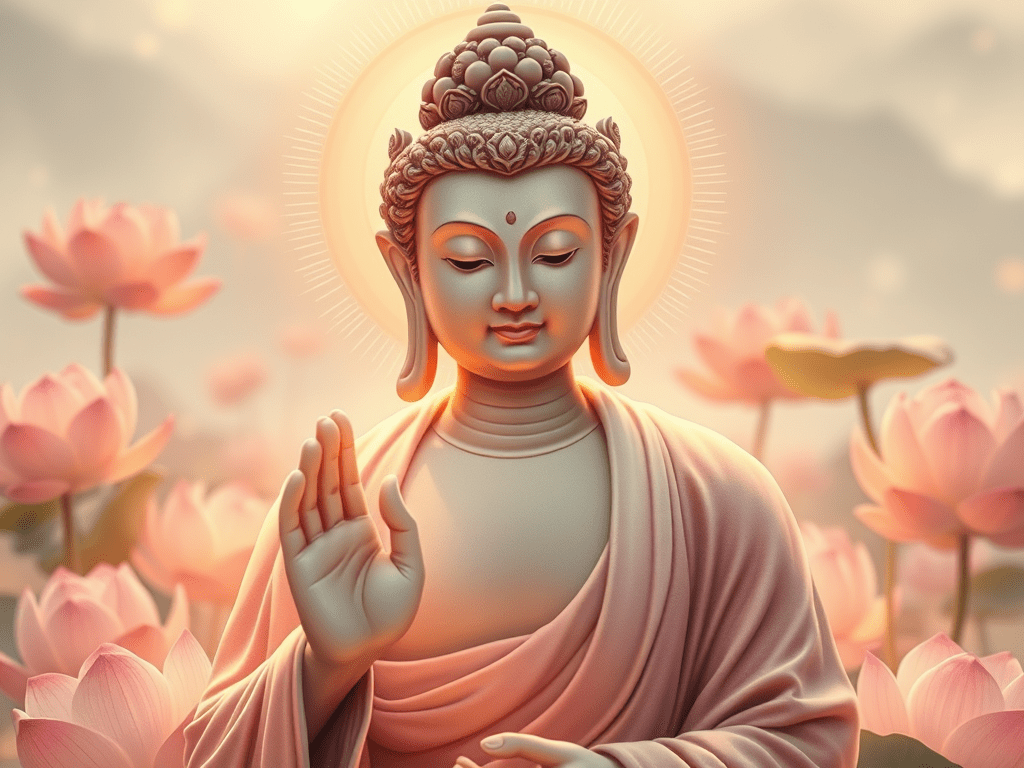
I. Introduction: The Lotus Sūtra stands as a cornerstone of Mahayana Buddhism, revered for its profound teachings on the nature of enlightenment and the path to Buddhahood.1 This influential scripture utilizes a rich tapestry of parables and narratives to convey complex philosophical ideas in an accessible manner.2 A central theme within the Lotus Sūtra is…
-
An Examination of Nichiren’s Assertions on Attaining Buddhahood and Societal Well-being in his Treatise on Prayers

1. Introduction: Nichiren Buddhism, a significant school within the Mahayana tradition, centers its teachings and practices on the Lotus Sutra, revered as the culmination of Shakyamuni Buddha’s fifty years of teachings.1 Founded in 13th-century Japan by Nichiren Daishonin (1222-1282), this school emphasizes the inherent Buddha-nature within all individuals and the possibility of attaining enlightenment in…
 Mr. Altig’s Overview of the Wonderful Dharma of the Lotus Sutra