Tag: Soka Gakkai
-
The Art of Refuting Ideas Without Attacking People

Introduction: The Challenge of Meaningful Disagreement In our modern world, it often feels impossible to disagree on important topics without the conversation descending into personal attacks. We encounter ideas we believe are genuinely harmful, yet we are urged to be tolerant. This leaves us with a piercing question: How can we challenge ideas we find…
William Altig
Admonishing the State, Atsuhara Affair, Bodhisattva Practice, daimoku, Faith Practice Study, Final Dharma Age, Gohonzon, Gyōchi, hōbō, Hōnen, Kamakura Shogunate, Kokka Kangyō, kosen-rufu, Lotus Sutra, Mappō, Martyrdom, Mongol Threat, Namu-myōhō-renge-kyō, Nanjō Tokimitsu, Nichiren, Nichiren Shoshu, Nikkō, Nyosetsu Shugyō-shō, One Vehicle, Persecution, Provisional Teachings, Pure Land Buddhism, Risshō Ankoku Ron, Sado exile, Shakubuku, shōju, Slander of the Dharma, Soka Gakkai, Tatsunokuchi Persecution, T’ien-t’ai, Three Powerful Enemies, zen -
The Lotus Sūtra: Bridging Faith and Reason through Embodied Practice
Date: August 25, 2025 Subject: An analysis of “The Lotus Sūtra’s Paradox: Faith, Reason, and Embodied Dharma” Purpose: To summarize the core arguments, key themes, and essential concepts presented in the provided text concerning the teachings of the Lotus Sūtra.—–Executive Summary “The Lotus Sūtra’s Paradox: Faith, Reason, and Embodied Dharma” examines the perceived contradiction within…
William Altig
Active, Bodhisattvas, Bodhisattvas of the Earth, Boundless Wisdom and Courage, Buddhism, Burning House Parable, Chapter 16: The Life Span of the Thus Come One, Compassion, Confident Prayer, Cosmic Tableau, Democratic and Empowering Ideal, Dramatic and Narrative Framework, Dynamic, Embodied Dharma, Engaged Practice, Engaging with Mundane Life, Eternal Buddha, Eternal Dharma, Ethical and Philosophical Foundation, expedient means, Explicit Revelation of Teachings, Faith-Based Practice, Global Citizens, Grassroots Compassionate Action, Here and Now Manifestation, Humanitarian Competition, Immortal, Infininitely Profound and Immeasurable Wisdom, Infinite Potential and Dignity, Inherent Transcendental Essence, Innate Buddhahood, Inner Determination, Liberating Others, Living Beings of the Dharma Realm, Living Text, Lotus Sūtra, Meditation, Namu Myōhō Renge Kyō, Nichiren, Non-Conceptual Realization, Non-Dualistic Worldview, One Vehicle (Ekayāna), Paradox of Revelation and Incomprehensibility, Performative Vehicle for Enlightenment, Philosophy, Prodigal Son Parable, Pure Buddha-Land, Religion, Saha World of Suffering, Self-Benefit, Self-Realization and Empowerment, Shakyamuni Buddha, Skillful means (Upāya), Soka Gakkai, Solitary Buddhas, Spirituality, Superior-Practice Bodhisattva (Jōgyo), Supernatural Powers of the Tathāgata, Tathāgatagarbha (Buddha-Nature), Ten Life-States, Textual Container, three thousand realms in a single moment of life, three vehicles, Tiantai, Tiered Understanding of Dharma, Transformative Faith, Transforming Environment into Pure Land, Transforming Society, Transforming Suffering into Happiness, Treasury of the Hidden Core of the Tathāgata, True Self of the Buddha, Unattainable by Reasoning Alone, Voice-Hearers -
Embodying the Lotus Sūtra – The Buddha’s Voice in Our Words
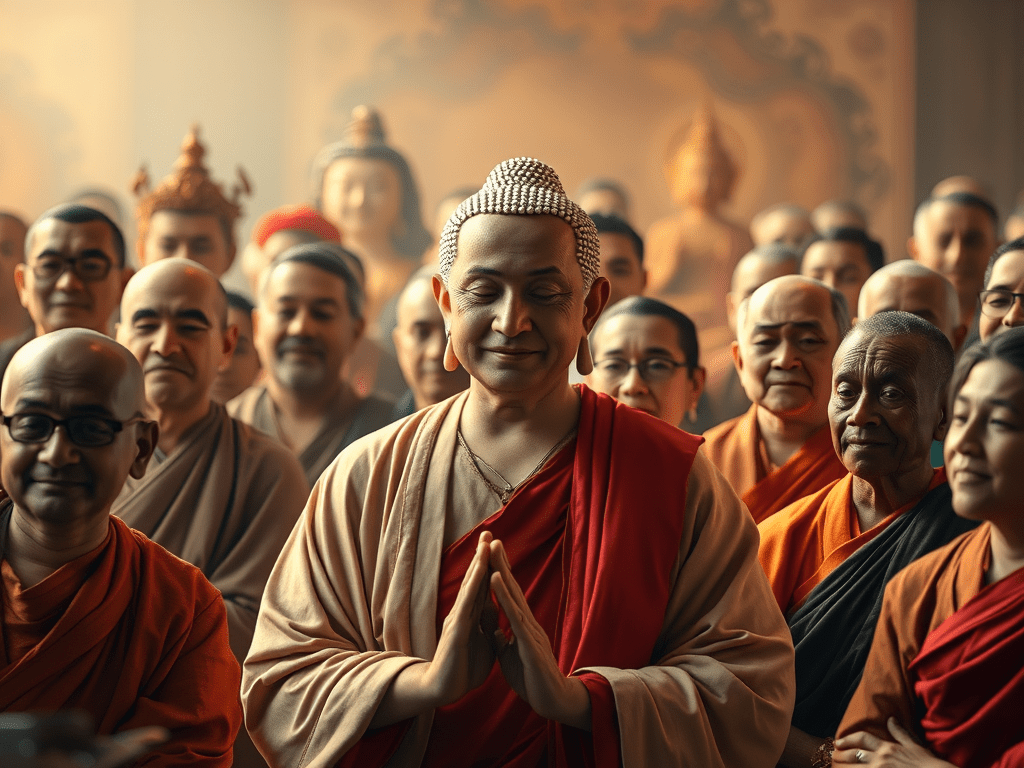
This briefing synthesizes key themes from the provided source, “Embodying the Lotus Sūtra: The Buddha’s Voice in Our Words,” focusing on the concept of how a practitioner’s actions and words, rooted in the Lotus Sūtra, can become a vehicle for the Buddha’s compassion and wisdom. It draws extensively from the Lotus Sūtra itself, Nichiren Daishonin’s…
William Altig
Bodhisattva Constant-Endeavor, Bodhisattva Never Disparaging, Bodily Reading, Buddha-nature, Buddha’s Voice, Chapter 10, Chapter 19, Chapter 20, Compassion, Constant Exertion, Daisaku Ikeda, Dharani Chapter, Dharma, Dharma propagation, Enlightenment, Integrating word and deed, Josei Toda, Lion’s Roar, Lotus Sūtra, Merits of the Tongue, Mystic Law, Nam-myōhō-renge-kyō, Nichiren Daishonin, Nichirō, open heart, Peaceful action, perseverance, Practicing the sutra with body and mind, Respect for Buddha-nature, Sadāparibhūta, Shakyamuni, Sharing Buddhism, Six Sense Faculties, Soka Gakkai, The Benefits of the Teacher of the Law, The Teacher of the Law, The Three Kinds of Treasure, Thich Nhat Hanh, Thus Come One, Twenty-four-character Lotus Sutra, universal salvation -
An Analysis of Nichiren’s Metaphor: The Buddha, His Children, Gratitude, and the Calm Mind

1. Introduction The writings of Nichiren Daishonin (1222–1282), the founder of Nichiren Buddhism, are replete with profound metaphors and analogies designed to convey the core tenets of his teachings, rooted firmly in the Lotus Sutra. One such evocative passage asserts: “Since time immemorial all the people on the earth have been the Buddha Śākyamuni’s beloved…
William Altig