Tag: One Vehicle (Ekayāna)
-
The Lotus Sūtra: Bridging Faith and Reason through Embodied Practice
Date: August 25, 2025 Subject: An analysis of “The Lotus Sūtra’s Paradox: Faith, Reason, and Embodied Dharma” Purpose: To summarize the core arguments, key themes, and essential concepts presented in the provided text concerning the teachings of the Lotus Sūtra.—–Executive Summary “The Lotus Sūtra’s Paradox: Faith, Reason, and Embodied Dharma” examines the perceived contradiction within…
William Altig
Active, Bodhisattvas, Bodhisattvas of the Earth, Boundless Wisdom and Courage, Buddhism, Burning House Parable, Chapter 16: The Life Span of the Thus Come One, Compassion, Confident Prayer, Cosmic Tableau, Democratic and Empowering Ideal, Dramatic and Narrative Framework, Dynamic, Embodied Dharma, Engaged Practice, Engaging with Mundane Life, Eternal Buddha, Eternal Dharma, Ethical and Philosophical Foundation, expedient means, Explicit Revelation of Teachings, Faith-Based Practice, Global Citizens, Grassroots Compassionate Action, Here and Now Manifestation, Humanitarian Competition, Immortal, Infininitely Profound and Immeasurable Wisdom, Infinite Potential and Dignity, Inherent Transcendental Essence, Innate Buddhahood, Inner Determination, Liberating Others, Living Beings of the Dharma Realm, Living Text, Lotus Sūtra, Meditation, Namu Myōhō Renge Kyō, Nichiren, Non-Conceptual Realization, Non-Dualistic Worldview, One Vehicle (Ekayāna), Paradox of Revelation and Incomprehensibility, Performative Vehicle for Enlightenment, Philosophy, Prodigal Son Parable, Pure Buddha-Land, Religion, Saha World of Suffering, Self-Benefit, Self-Realization and Empowerment, Shakyamuni Buddha, Skillful means (Upāya), Soka Gakkai, Solitary Buddhas, Spirituality, Superior-Practice Bodhisattva (Jōgyo), Supernatural Powers of the Tathāgata, Tathāgatagarbha (Buddha-Nature), Ten Life-States, Textual Container, three thousand realms in a single moment of life, three vehicles, Tiantai, Tiered Understanding of Dharma, Transformative Faith, Transforming Environment into Pure Land, Transforming Society, Transforming Suffering into Happiness, Treasury of the Hidden Core of the Tathāgata, True Self of the Buddha, Unattainable by Reasoning Alone, Voice-Hearers -
Merit and Wisdom in the Lotus Sūtra

Date: August 23, 2025 Subject: An Exegetical Analysis of Chapter Seventeen of the Lotus Sūtra: The Accumulation of Merit and the Path to Clarity Key Sources: Excerpts from “Lotus Sūtra: Merit and Wisdom” 1. Executive Summary This briefing document provides a detailed review of Chapter Seventeen of the Lotus Sūtra, “Discrimination of Merit and Virtue,”…
William Altig
bhikṣu, bhāvanā, Buddha, Buddhism, Buddhist practices, Chapter Seventeen, clarity, Dharma, dāna, ego-clinging, emptiness (śūnyatā), Internal Transformation, Kṣānti, Lotus Sūtra, Maitreya Bodhisattva, maitrī, Meditation, mental purification, Merit (Puṇya), Nirvana, non-self (anātman), One Vehicle (Ekayāna), Philosophy, Religion, Saṃsāra, sangha, self-conceit (māna), Skillful means (Upāya), Spiritual Development, Spirituality, stūpa-mausoleum, Two Accumulations, virtuous actions, Wisdom (Prajñā), śīla -
The Dragon Girl’s Enlightenment: A Briefing on Universal Buddhahood and the Challenge to Tradition in the Lotus Sūtra

Date: August 8, 2024 Subject: Analysis of the Dragon Girl’s Narrative in the Lotus Sūtra‘s Chapter Twelve Purpose: This briefing provides a detailed review of the main themes and most important ideas presented in the provided sources regarding the Dragon Girl’s story in the Lotus Sūtra, highlighting its significance for Mahāyāna Buddhist doctrine, particularly concerning…
William Altig
Avalokiteśvara, Bodhi, Bodhisattva Mañjuśrī, Buddhism, Buddhist art, Chapter Twelve, Devadatta, Dharma, Dragon Girl, Dragon King Sāgara, East Asian Buddhism, Emptiness (Śūnyatā), Enlightenment, Expedient Means (Upāya), Female Buddhahood, Five Obstacles, Gender Transformation, Guanyin, Henjō Nanshi, Instantaneous Enlightenment, Lotus Sūtra, Mahāyāna Buddhism, Meditation, Nichiren Buddhism, Nichiren Daishonin, Nāga, One Vehicle (Ekayāna), Patriarchal Prejudices, Philosophy, Precious Jewel, Religion, Sokushin Jōbutsu, Spiritual Equality, Spirituality, Spotless World of the South, Subitism, Sudden Enlightenment, Sudhana, Three Thousand Realms in a Single Moment of Life (Ichinen Sanzen), Tiantai School, universal salvation, Wisdom Accumulated, Zhiyi, Śāriputra -
The Parable of the Burning House

1. Executive Summary The Parable of the Burning House, found in Chapter Three of the Lotus Sūtra, is a central Mahayana Buddhist allegory illustrating the nature of suffering, the Buddha’s compassionate “skillful means” (upaya), and the doctrine of universal liberation. It depicts samsara (the world of suffering) as a decaying, fire-engulfed mansion, where sentient beings,…
William Altig
Attachment, Buddha, Buddha-nature, Buddhism, Children (Sentient Beings), Climate Crisis, Compassion, Digital Age, Distraction, faith, Four Noble Truths, Ignorance, Impermanence (Anicca), Lotus Sūtra, Mahayana Buddhism, Meditation, Modern Relevance, Nichiren Buddhism, One Vehicle (Ekayāna), Parable of the Burning House, personal transformation, Philosophy, Religion, Samsara, Skillful Means (Upaya), Spirituality, Suffering (Dukkha), Three Vehicles (Triyana), Universal Buddhahood, Zen Buddhism -
The Universal Vow: Merit, Enlightenment, and the Legacy of the Brahma Kings in the Lotus Sutra
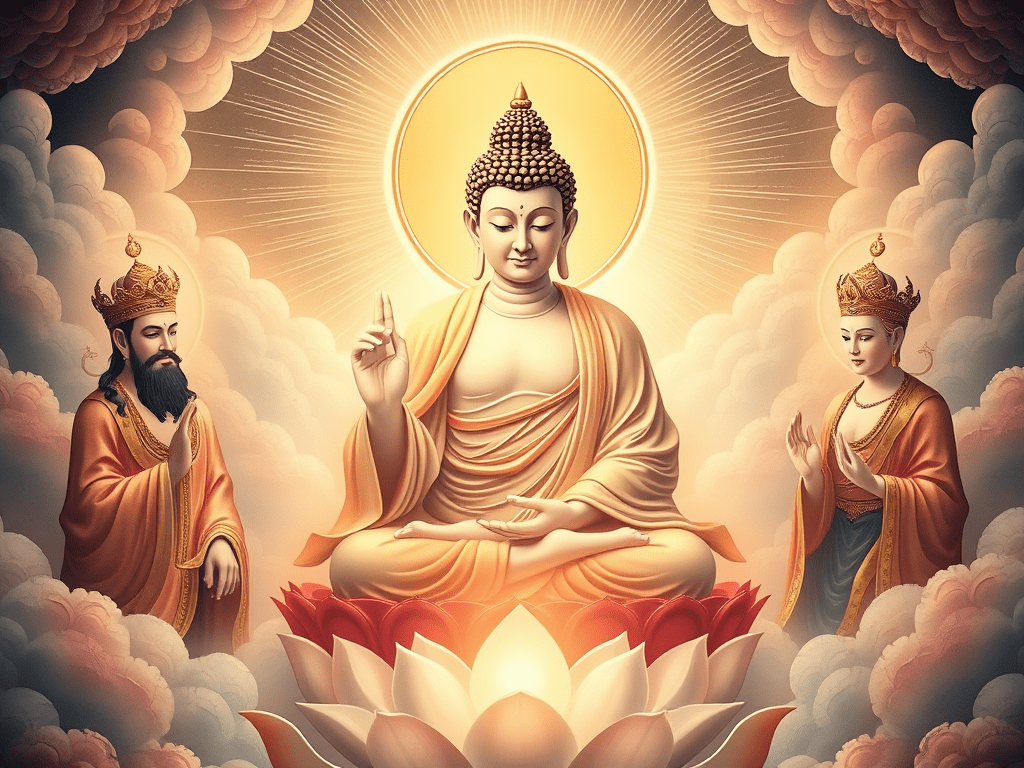
I. Introduction: The Universal Aspiration for Enlightenment The human spirit often harbors a profound yearning for its endeavors to resonate beyond the personal sphere, contributing to a larger, universal good. The verses presented— May the merits we have accumulated by this offeringBe distributed among all living beings,And may we and all other living beingsAttain the…
William Altig
Bodhicitta, Bodhisattva Path, Brahma Kings, Buddha, Buddhism, Chapter Seven, Daitsū Chishō Butsu, Dedication of Merit (Pariṇāmanā), Dharmapāla, Enlightenment, Great-Universal-Wisdom-Excellence Buddha, Inherent Buddha-Nature (Tathāgatagarbha), Lotus Sutra, Mahayana Buddhism, Meditation, Merit (Puṇya), Nam-myoho-renge-kyo, One Vehicle (Ekayāna), Parable of the Conjured City, Philosophy, Religion, Skillful Means (Upāya-kauśalya), The Record of the Orally Transmitted Teachings (OTT)., universal salvation, universal vow