Category: The Garden of Resilience
-
DAY 20: Eye-Opening Your Space

THESIS: We live surrounded by “dead objects” — mass-produced things we use, ignore, and discard without a glance. LOTUS LOGIC: Buddhist tradition has a ceremony for exactly this blindness. Kaigen — “eye-opening” — is the ritual by which a block of wood or a sheet of paper becomes a sacred image. Nichiren explained the mechanics…
-
DAY 19: The Vegetal Path

THESIS: Equanimity looks impossible to us. The news, the inbox, the weather of our lives — something is always knocking us over. LOTUS LOGIC: Tendai thinkers extending the Lotus logic—Zhanran first, then Annen and the tradition around Ryōgen—made their calmest teachers the grasses and trees. Sōmoku jōbutsu, “the Buddhahood of grasses and trees:” a tree…
-
DAY 18: Eshō Funi

THESIS: We divide the work: first fix ourselves, then fix our surroundings. Or first fix the surroundings, and hope the self follows. LOTUS LOGIC: Later Tiantai and Nichiren thought refuses the division. Eshō funi — “two but not two” — holds that the self (shō) and its environment (e) are non-dual: two poles of one…
-
DAY 17: Sacred Biology
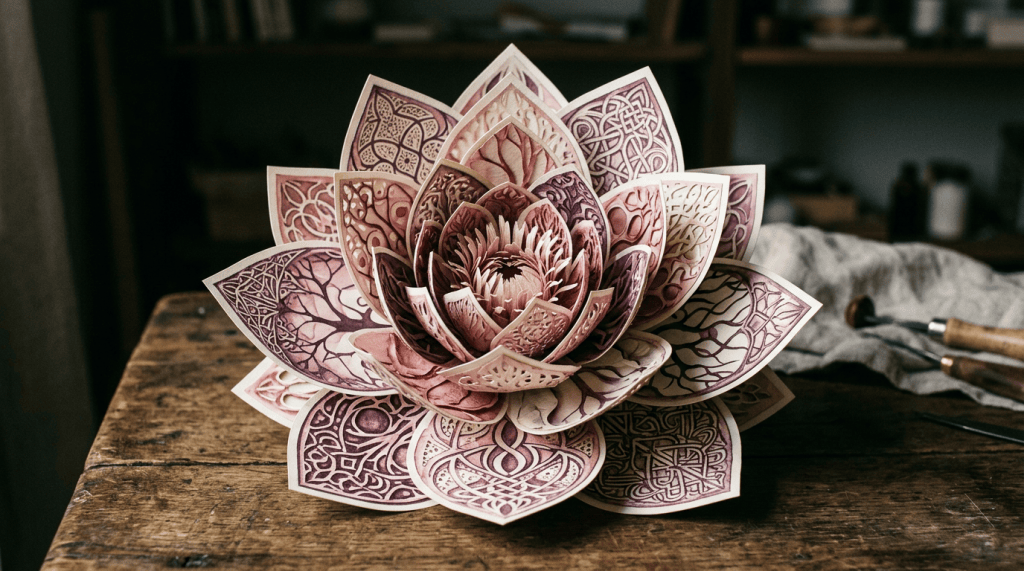
THESIS: We treat the body’s great processes — gestation, aging, illness — as embarrassments, or at best as malfunctions to be managed quietly. LOTUS LOGIC: The medieval kirigami documents went the other direction. Pregnancy became a ritual progression through the Ten Worlds. The womb became the Womb Realm, the primordial site of creation. Childbirth became…
-
DAY 16: Beyond Biological Stigma

THESIS: Some stigmas claim to be written into our bodies — blood, birth, biology itself counted as a “sin.” LOTUS LOGIC: In medieval Japan, the apocryphal Blood Bowl Sutra taught that menstruation and childbirth doomed women to a Blood Pool Hell — guilt assigned not to any act, but to biology itself. Itinerant Kumano nuns…
-
DAY 15: The Five-Wheeled Pagoda
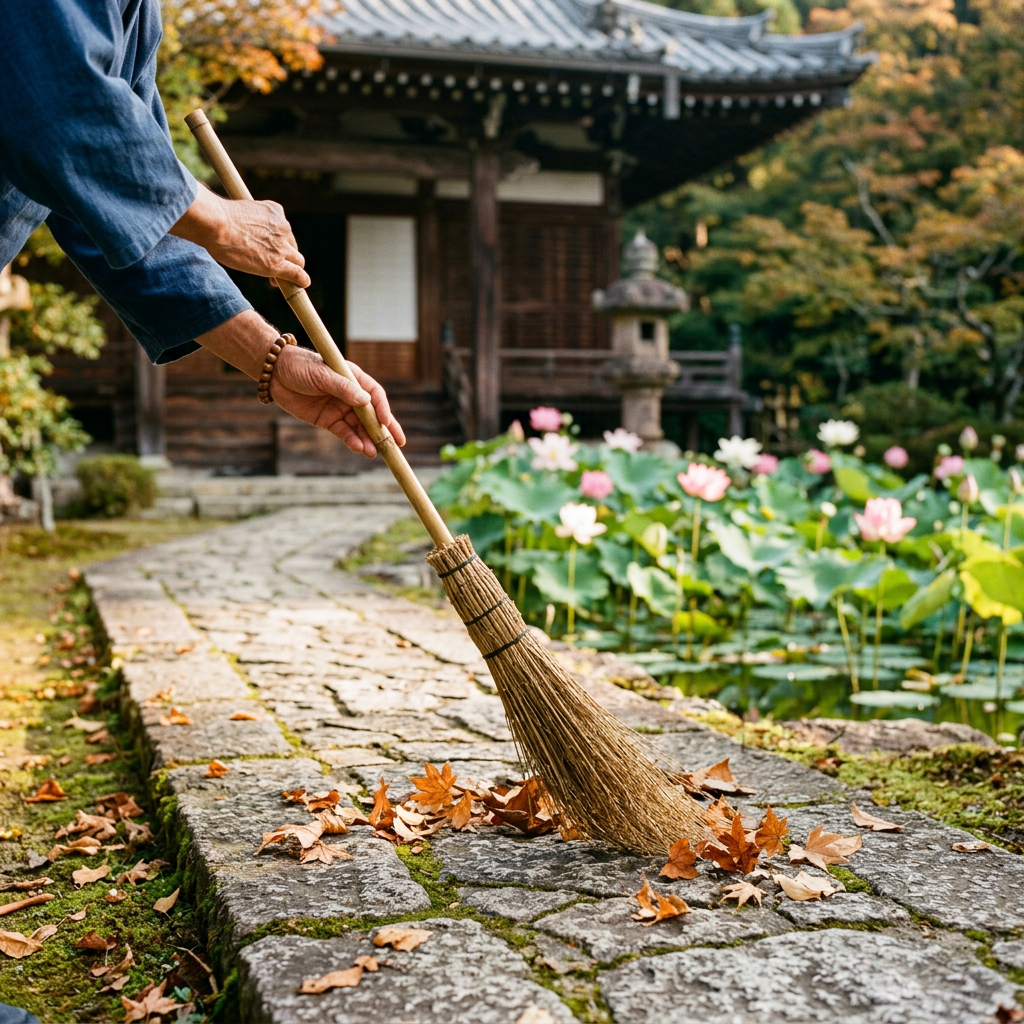
THESIS: We treat the body as a machine: to be optimized, repaired, or traded in. When it breaks down we feel betrayed, as if the warranty expired early. LOTUS LOGIC: Medieval Japanese initiation documents had a different blueprint. They envisioned the embryo assembling, month by month, into a Five-Element Stupa (gorintō): cube, sphere, pyramid, hemisphere,…
-
DAY 13: Bypassing the Glass Ceiling

THESIS: We treat authority as something granted from above: a title, a license, an appointment. LOTUS LOGIC: The Nāga Princess held no office and no credentials. The power she showed was manifested from within, and the assembly’s approval followed it rather than conferred it. The pattern repeats through the tradition’s history: Zhiyi, Nichiren, Senoʼo Girō,…
-
DAY 12: The Nāga Princess Retort

THESIS: We wait for permission. The right age, the right credentials, the gatekeeper’s nod. LOTUS LOGIC: An eight-year-old dragon girl appears before the greatest assembly in the tradition and demonstrates full awakening on the spot, while the old guard is still mid-objection. The sutra’s point lands like a gavel: potential is swift, and it does…
-
DAY 10: The Prodigal Son Syndrome

THESIS: Many of us secretly rate ourselves “staff, not family” in our own lives. We take the smaller portion because we cannot imagine deserving the estate. LOTUS LOGIC: In the sutra’s parable, a runaway son comes home after decades and cannot recognize his own wealthy father. He takes a job shoveling manure on his own…
-
DAY 9: Sāriputra’s Holy Shock
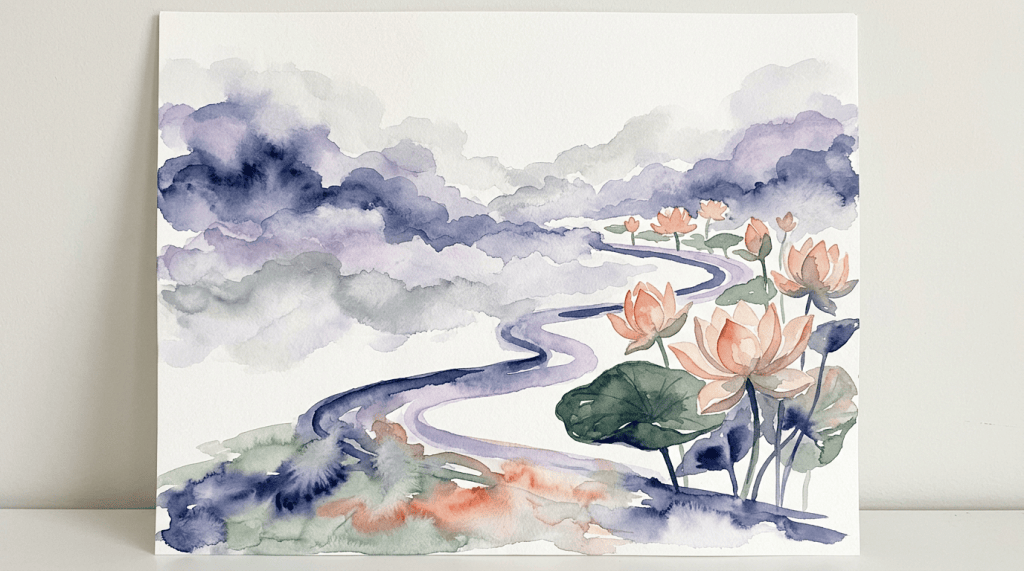
THESIS: We treat confusion as failure. If you were really wise, you would understand. LOTUS LOGIC: Sāriputra, the wisest disciple in the assembly, hears the One Vehicle and his first response is bewilderment. He says so, out loud, more than once. The Buddha does not scold him. The confusion is the doorway: the old framework…

