-
DAY 2: Protection-as-Bloom

THESIS: We hear “protection” and picture a shield. A wall. An exemption from the storm. LOTUS LOGIC: The Sanskrit rakṣaṇa and the Chinese 護 (hu) mean guarding, sustaining, holding you inside the field of the dharma. Not a wall around you. New ground beneath you. The lotus does not escape the swamp. The lotus OUTBLOOMS…
-
Protection Is Not a Shield
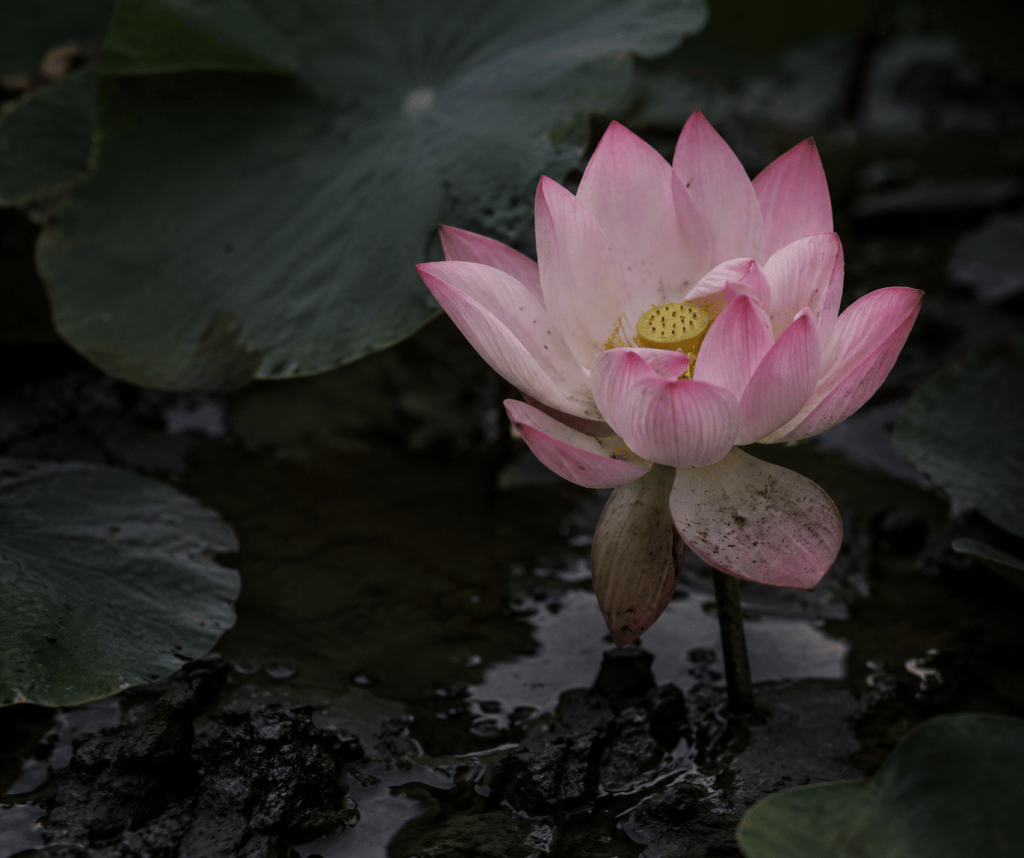
The Lotus Sutra promises protection to those who receive and keep it: bodhisattvas, heavenly kings, rescue from fire and flood. To a modern ear that sounds like superstition. It is closer to botany. The Sanskrit rakṣaṇa and the Chinese 護 (hu) do not mean a force field — they mean guarding, sustaining, holding a practitioner…
-
Buddha-Nature, Explained Without the Jargon

You have probably heard, more than once, that you already have Buddha-nature. That you are “already a Buddha, you just don’t know it yet.” It is one of the most repeated lines in all of Mahāyāna Buddhism, and one of the foggiest. Almost no one says what it actually means. It drifts past in a…
-
What Does Enlightenment Actually Mean? A Four-Minute Overview
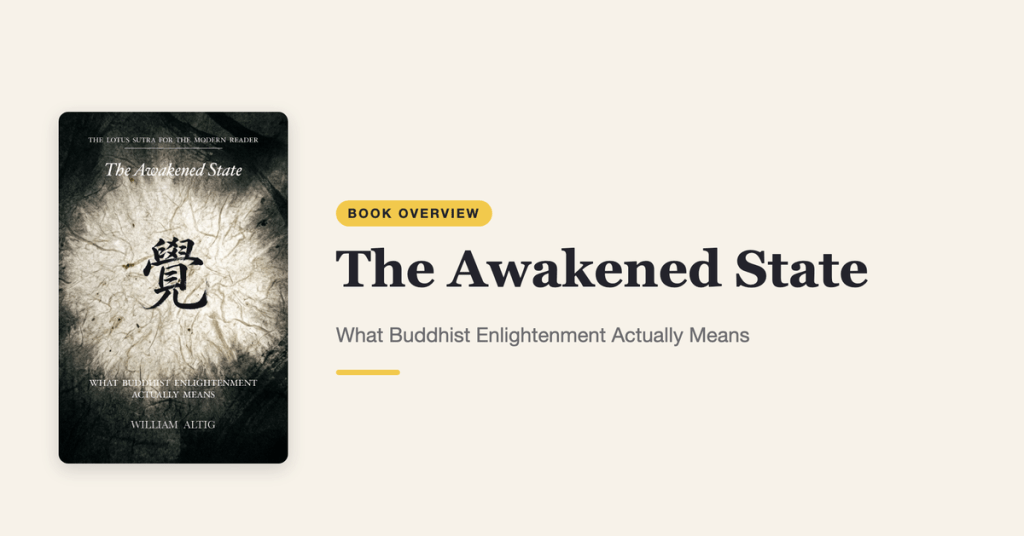
Over the past month I have been posting a four-part video series drawn from The Awakened State: What Buddhist Enlightenment Actually Means: the maps and the territory, the nature of what we are, the body that knows, and the practice of awakening. Those were the parts. This is the whole: a four-and-a-half-minute overview of the…
-
Sudden OR Gradual? The Tiantai Answer | The Awakened State (Part IV) #Shorts
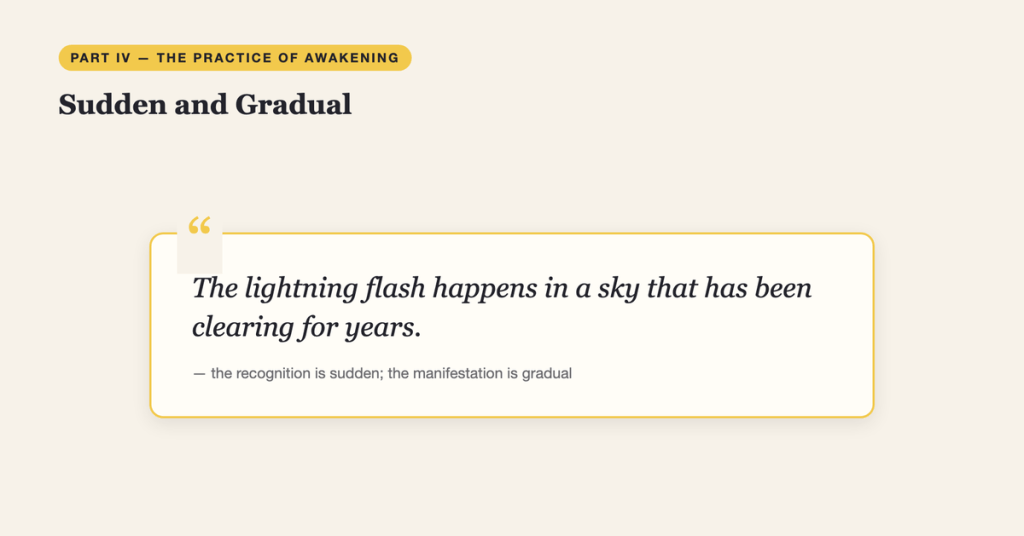
The last of the four parts drawn from *The Awakened State: What Buddhist Enlightenment Actually Means*. You have read the maps. This is where you begin to walk. Practice has two wings. Stillness moves the wood: it clears the space. Insight uproots the tree: it severs the root. Neither wing alone finishes the work. Then…
-
Does Buddhism Believe in a Soul? The Nirvāṇa Sūtra’s Surprising Answer

If you know one thing about Buddhism, it’s probably this: there is no soul. No permanent self. The teaching is called anattā (Pali) or anātman (Sanskrit), non-self, and it’s the line that separates Buddhism from almost every other religion. Hinduism has the ātman; Christianity has the soul; Buddhism, famously, has neither. What you call “you”…
-
“Watch Me Become a Buddha”: The Girl the Assembly Had Already Dismissed

The launch post for this book promised you a line. Here it is, in full. Chapter 12 of the Lotus Sutra introduces an eight-year-old daughter of the dragon king Sāgara. She has, we are told, fully grasped the sutra after hearing it taught in her father’s undersea palace. Two figures in the assembly object, for…
-
Enlightenment Is Embodied | The Awakened State (Part III) #Shorts
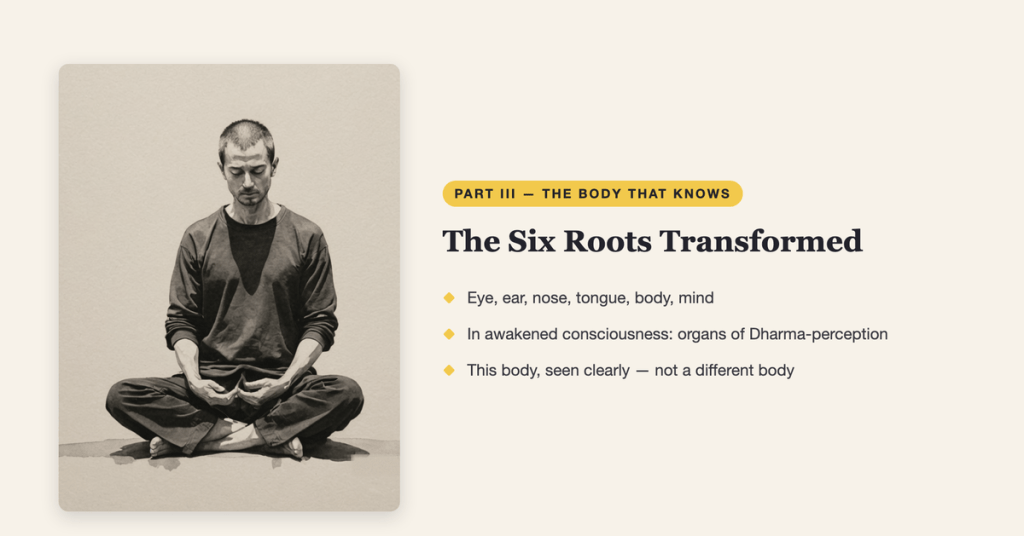
Part three of the four-part series drawn from *The Awakened State: What Buddhist Enlightenment Actually Means*. This one is about the body. There is an old habit of treating awakening as an escape from the body: leave the flesh behind, and something purer is waiting on the other side. The Lotus tradition does not read…
-
The Assembly Never Dispersed: Who Are the Students of the Lotus Sutra?

For some time I have had a quiet feeling about this. When I sit with the Lotus Sutra, reading it, holding it in my mind, returning to it, something happens that I cannot quite name. A sense of being held. Of being placed in a particular kind of attention. As though the sutra knows me…
-
The Army That Rose Out of the Ground
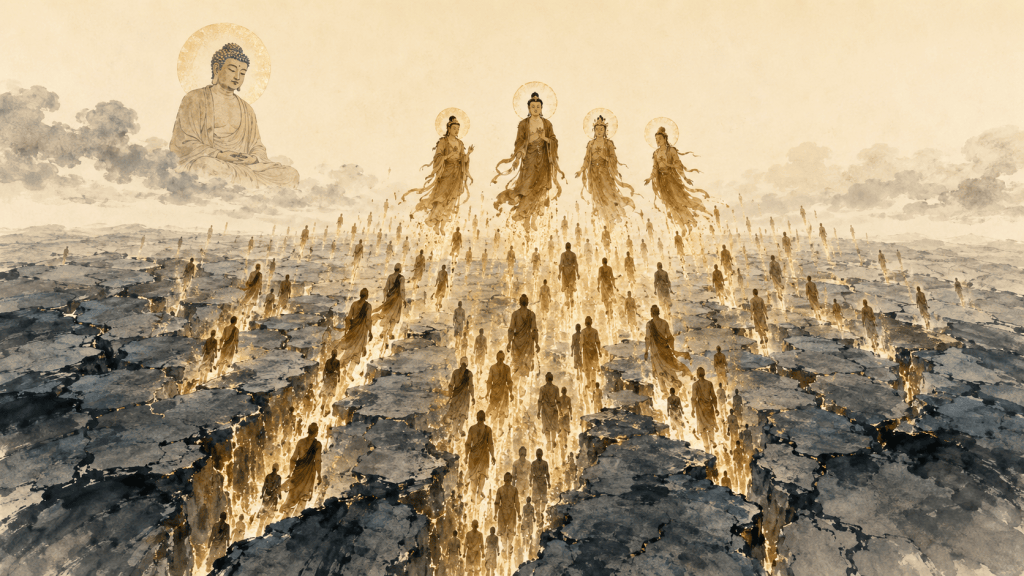
Post 9 of the Awakened State series. The fifth and final volume-bridge post—this one into The Bodhisattvas of the Earth (Vol V of The Lotus Sutra for the Modern Reader*). About a seven-minute read. There is a moment in Chapter 15 of the Lotus Sutra that is, in cinematic terms, the most important scene in…
-
Subscribe
Subscribed
Have a WordPress.com account? Log in now.

